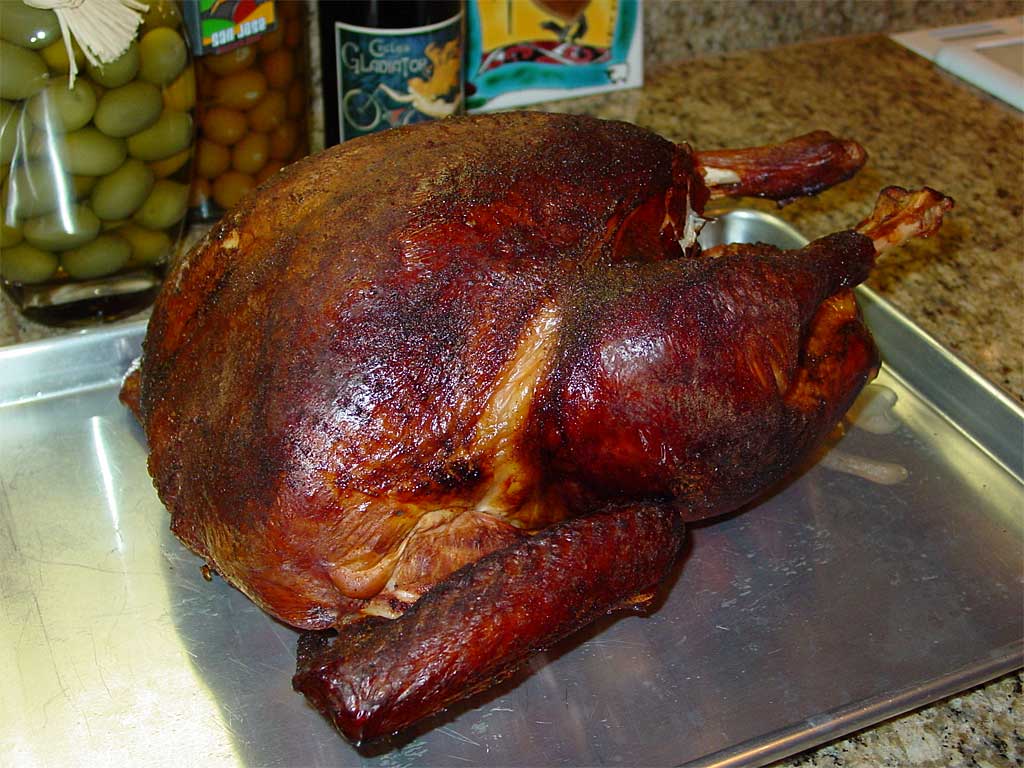
This is probably the easiest and most foolproof way to cook a turkey in the Weber Smokey Mountain Cooker. Best of all, it requires no attention to the cooker’s temperature.
What You’ll Need For This Recipe
- Weber Smokey Mountain Cooker
- Weber Chimney Starter
- Instant-read thermometer
- 9 pounds Kingsford Charcoal Briquettes
- 3 small chunks smoke wood
- 1 Butterball self-basting turkey, 12-14 pounds
- Your favorite homemade or store-bought barbecue rub
- Vegetable oil
Important: This recipe may not turn out well if you do not use Kingsford Charcoal Briquettes and a Weber Chimney Starter for measuring the amount of charcoal used. The amount of charcoal used in this recipe is overkill, but it ensures that no matter what the conditions, your WSM will run nice and hot, and you won’t run out of fuel before the turkey is cooked. You can experiment with using less fuel the next time you cook this recipe.
Choose The Smoke Wood
Use three chunks of apple wood, if available. Cherry, oak, or another mild fruit wood can be used if apple is not available. Do not use hickory or mesquite for this recipe.
Each smoke wood chunk should be small, for example 3″ x 2″ x 2″ or similar.
There is no need to soak the wood or remove the bark before use.
Learn More Later: All About Smoke Woods
Buy A Self-Basting Turkey
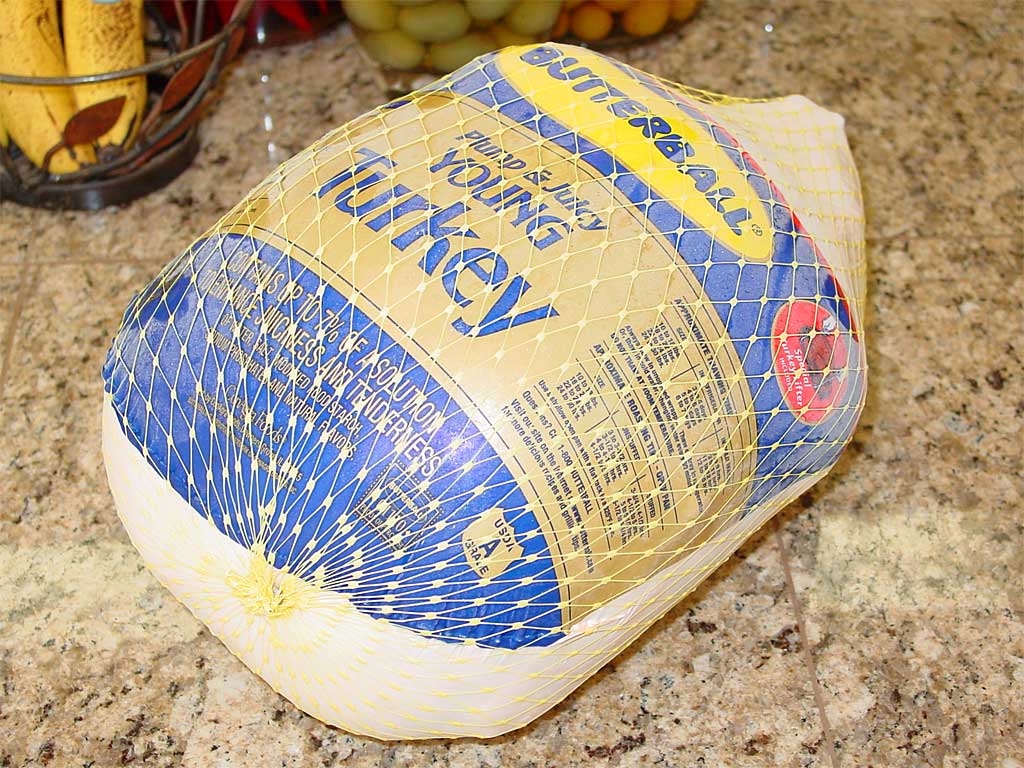
Choose a self-basting turkey weighing 12-14 pounds. Look for the phrase “basted” or “self-basting” on the label and the phrase, “Contains up to x% of a solution to enhance juiciness and tenderness” or something similar.

When we think of self-basting turkeys, the famous Butterball brand turkey is the first to come to mind—America’s best-selling turkey for over 60 years. However, you’ll find other name brand and store brand self-basting turkeys at the supermarket of similar quality and perhaps lower price.
Note that Butterball also makes a fresh (not frozen) turkey that’s not self-basting. Remember, look for “Contains up to X% of a solution” on the label to make sure you’re getting a self-basting turkey.
Prepare The Turkey
Thaw according to the package directions. Remove and discard any leg restraint, then remove the giblets from the neck cavity and the neck from the body cavity. Trim away large areas of fat or excess skin around the body cavity, and cut off the tail (if attached). Rinse thoroughly inside and out, and pat dry with paper towels.
Tuck the wing tips under the bird so they’re out of the way.
Learn More Later: Turkey Selection & Preparation
Season The Turkey
Sprinkle a generous amount of your favorite barbecue rub inside the turkey’s neck cavity and body cavity.
Apply a thin coating of vegetable oil to the outside of the turkey and sprinkle with rub to your liking.
If you don’t have a favorite homemade rub, a product like Tony Chachere’s Creole Seasoning is a good choice and is available in most supermarkets.
Allow the seasoned turkey to sit at room temperature while firing up the cooker.
Foil The Water Pan
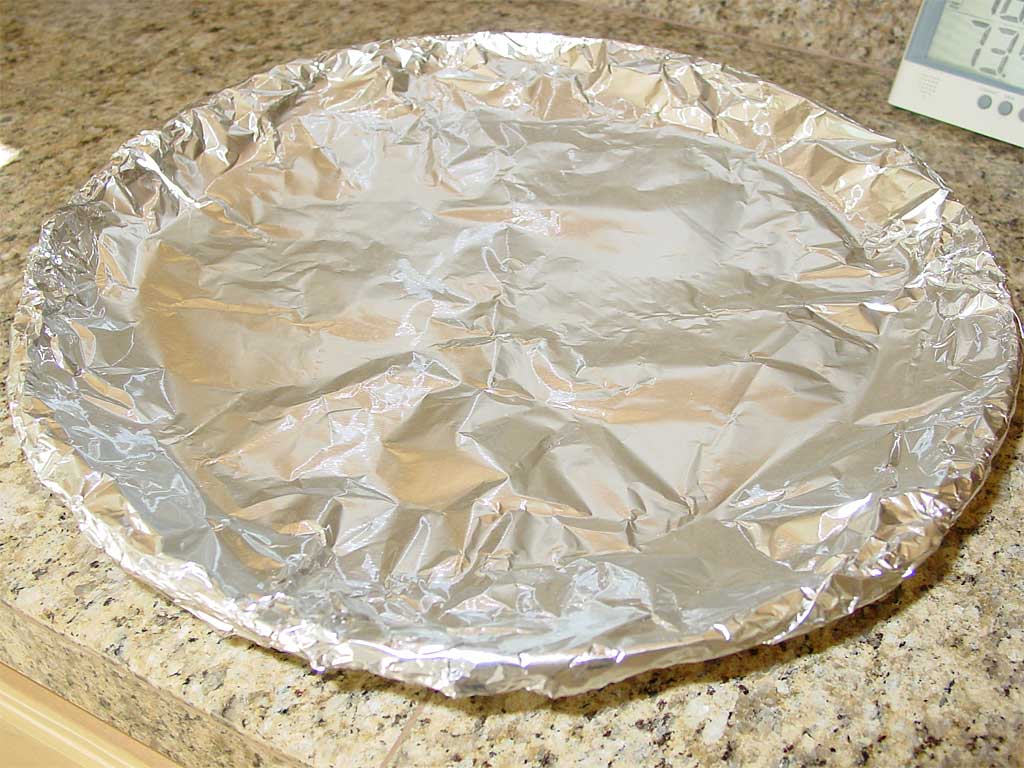
Cover the inside and outside of the water pan with wide, heavy duty aluminum foil. See Turkey Selection & Preparation for tips on how to foil the pan to collect drippings for gravy without burning them.
Fire The Cooker
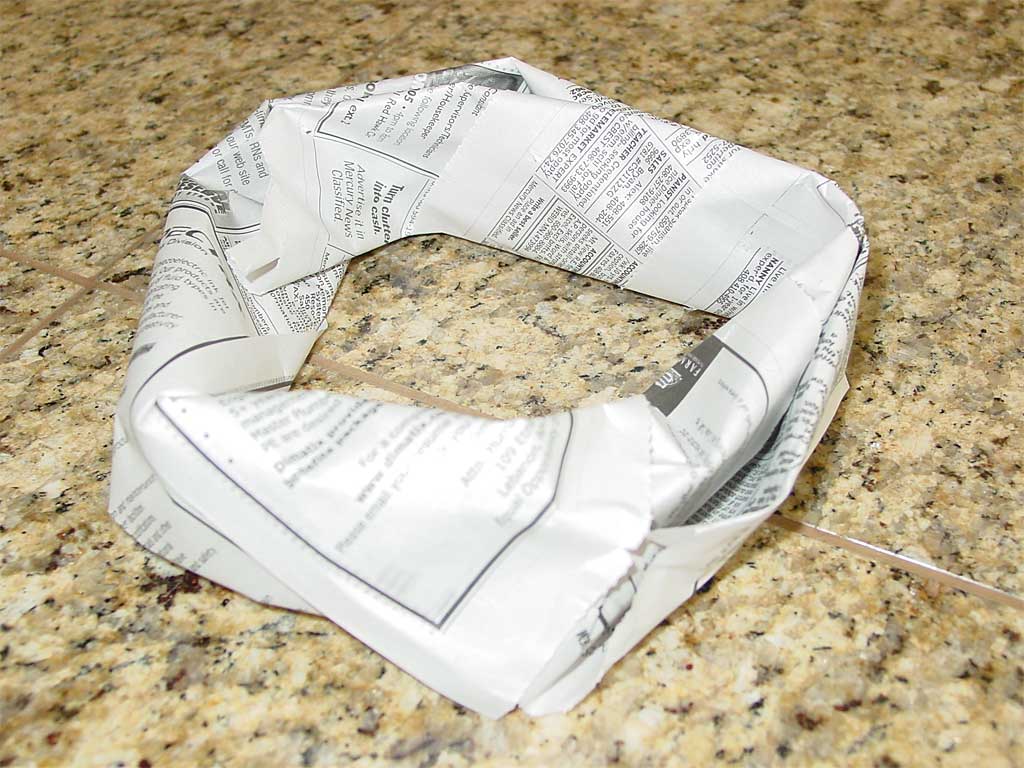
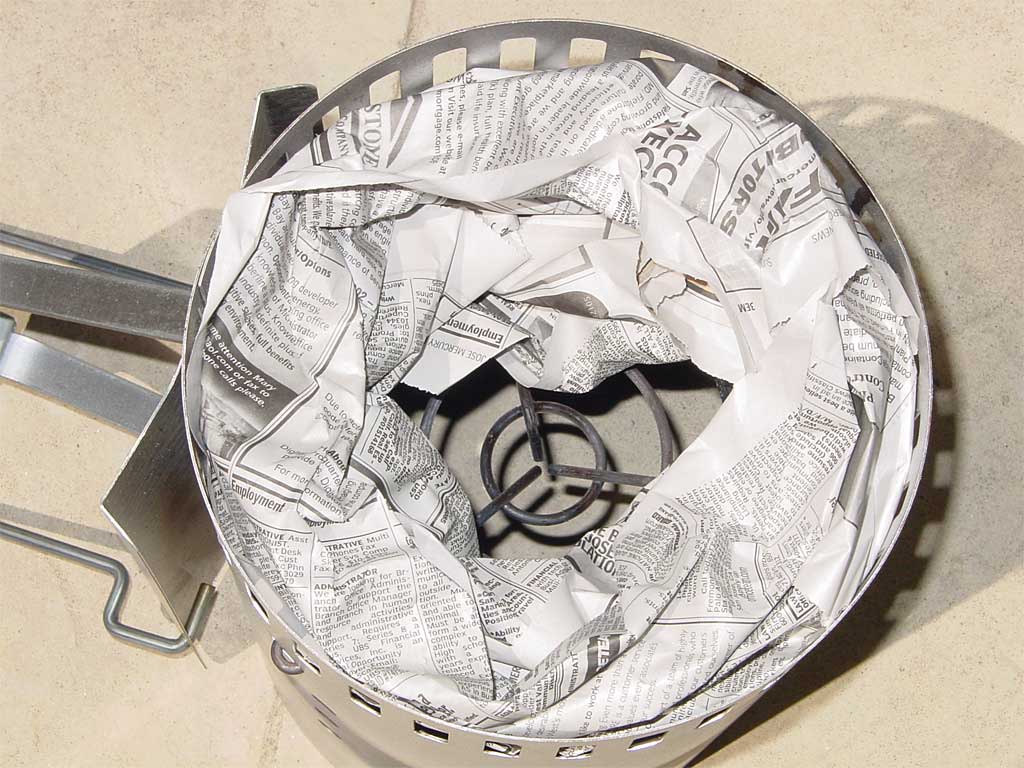
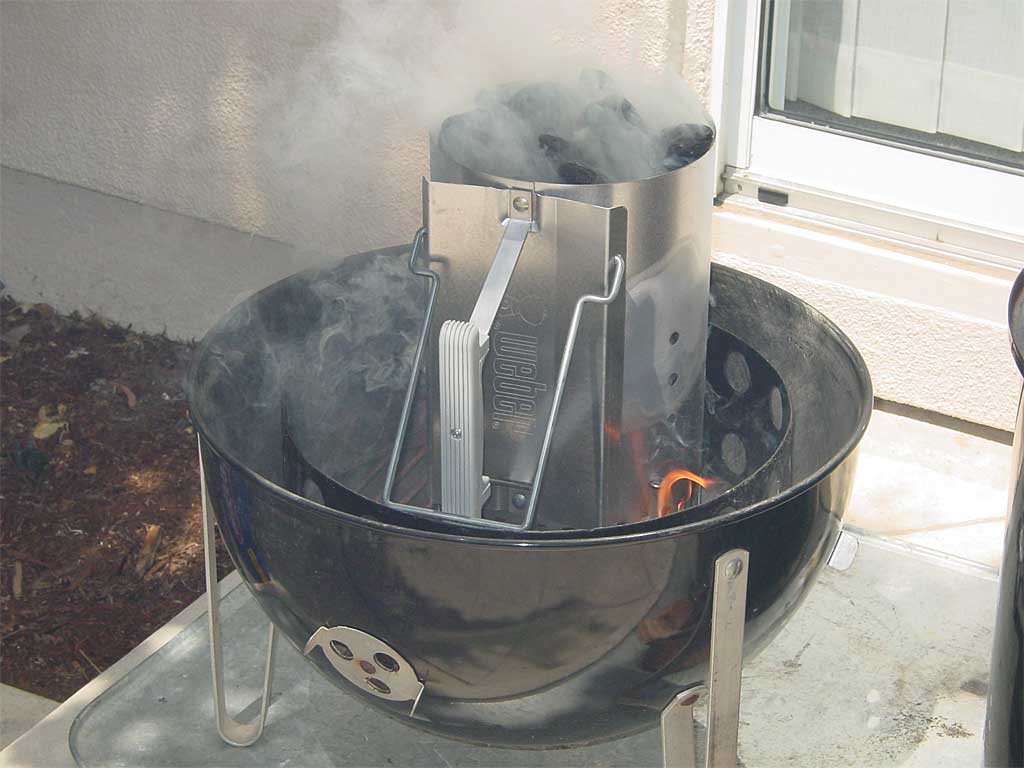
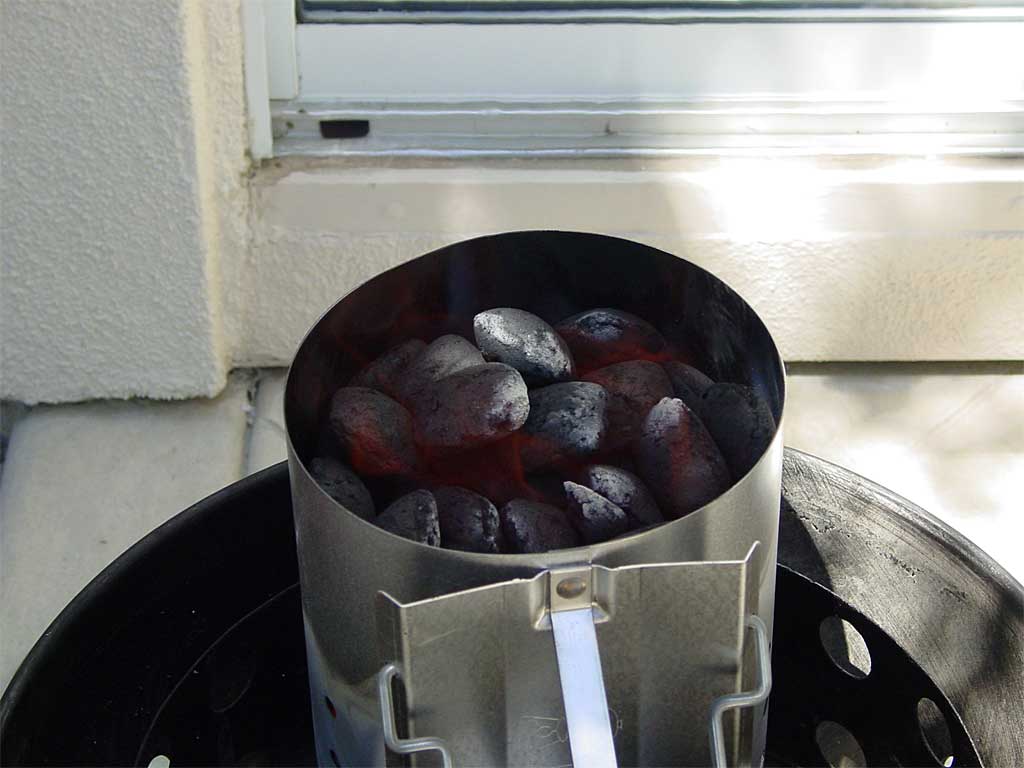
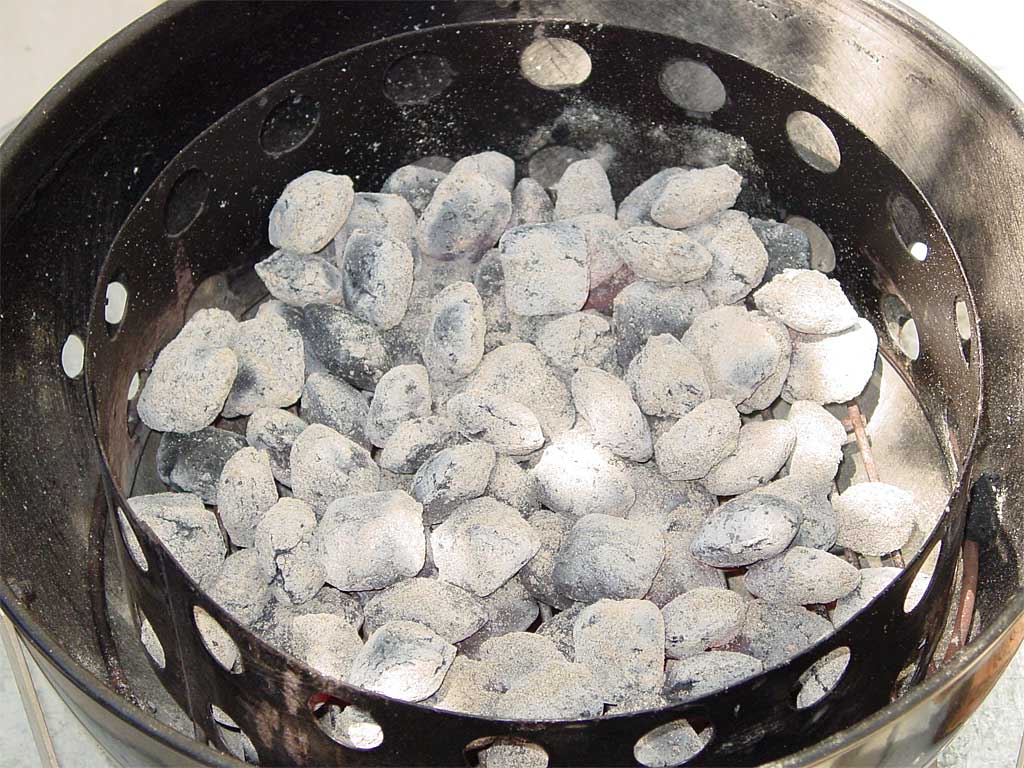
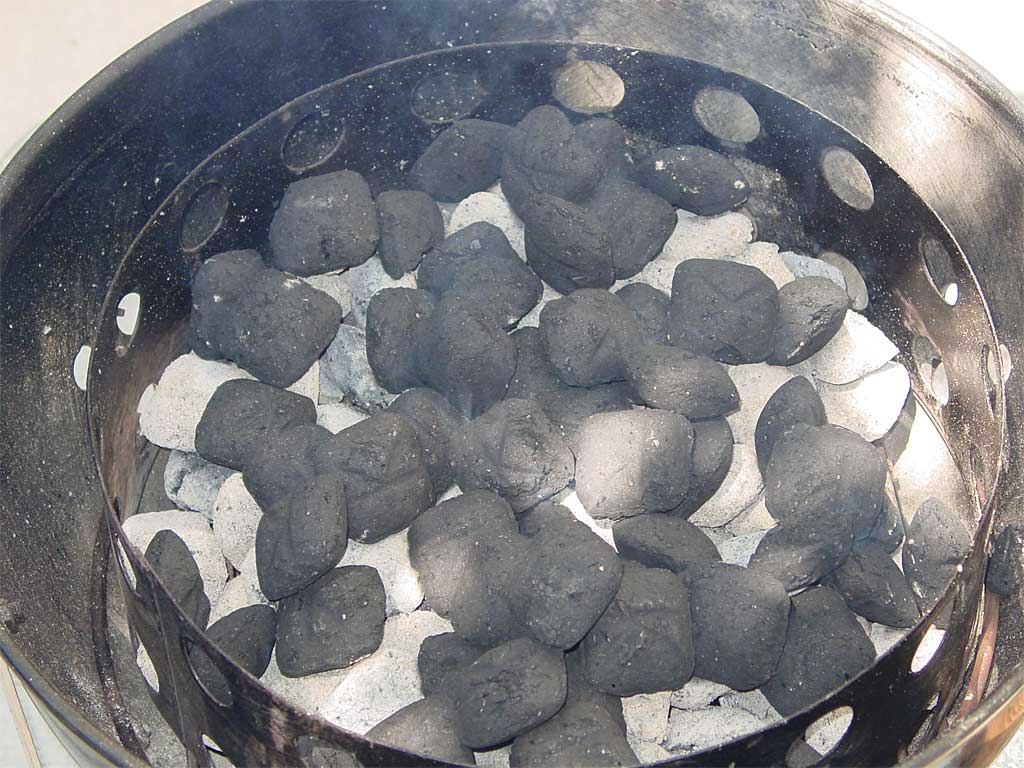
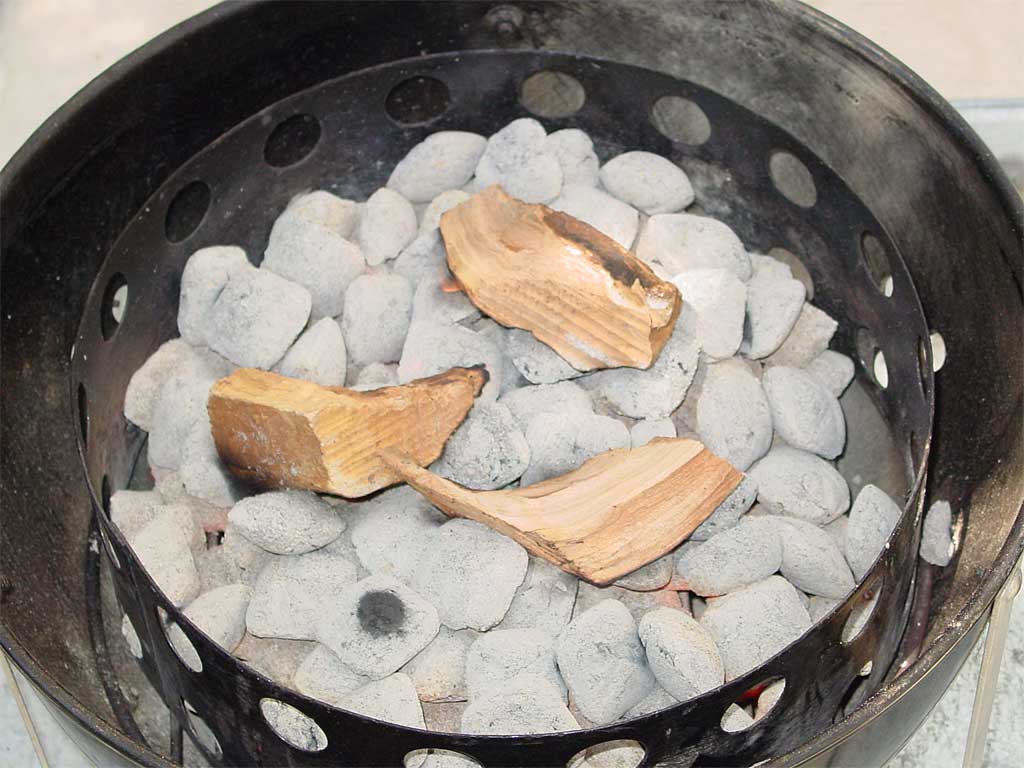
Light a full Weber chimney starter of Kingsford Charcoal Briquets:
- Loosely roll a double-wide sheet of newspaper on the diagonal from the upper left corner to the lower right corner. Bring the ends together to form a circle that fits inside the bottom of the chimney. Repeat with a second sheet of newspaper.
- Put the rolled newspaper in the bottom of the chimney.
- Place the chimney on the charcoal grate and fill to the top with briquettes. Light the newspaper in several locations with a long match or a butane lighter. Two sheets of newspaper is usually sufficient to get things started under normal conditions. If not, repeat the process with additional sheets of newspaper.
- It will take 10-15 minutes for the coals to light. You’ll know they’re ready when flames are licking at the briquettes at the top of the chimney and they’re just starting to turn gray.
Spread the hot coals evenly over the charcoal grate. Measure another 1/2 chimney of unlit briquettes and spread them evenly over the hot coals. When all the briquettes are covered with gray ash, place the smoke wood chunks on top of the coals.
Now assemble the cooker:
- Put the empty water pan in the middle cooking section.
- Insert the middle cooking section into the charcoal bowl.
- Put the top cooking grate in place.
You’re now ready to cook!
Learn More Later: Firing Up Your Weber Bullet, How To Use A Chimney Starter, and Using A Water Pan In Weber Smokers
Cook The Turkey
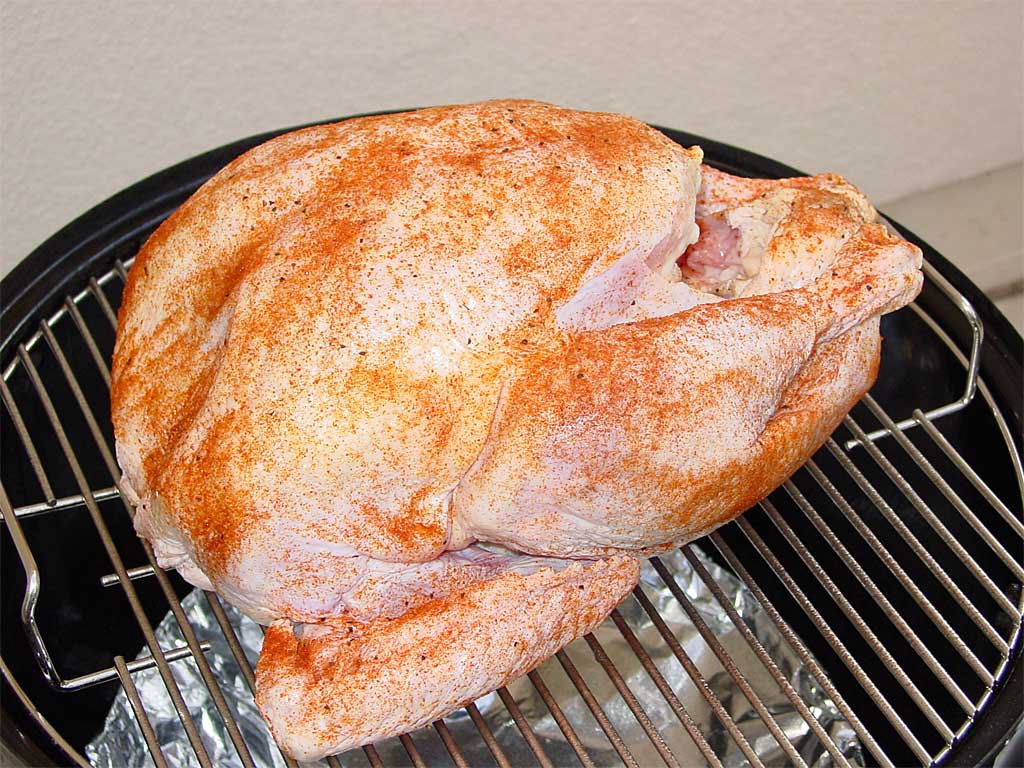
Place the turkey breast-side up on the top grate. Set the lid vent and the three bottom vents 100% open and leave them that way throughout the entire cooking process.
Cook the turkey until it measures 160-165°F in the breast, 170-175°F in the thigh, using an instant-read thermometer. Cooking time is approximately 2-1/2 to 3 hours. Start checking internal temperature at the 2 hour mark.
There’s no need to baste or turn the turkey during the cooking process.
Serve The Turkey
Remove the turkey from the cooker. Let rest uncovered for 20 minutes before carving. Do not cover with foil, as this will cause the skin to go soft.
Learn More Later: See Turkey Selection & Preparation for carving tips and solving common turkey problems like dry meat and undercooked thighs.
-
More Turkey Links On TVWB
- Whole Turkey – Basic Brine
- Whole Turkey – Brined Butterball Self-Basting
- Whole Turkey – Apple Brine
- Whole Turkey – Honey Brine
- Whole Turkey – Salted aka Dry Brined
- Butterflied Turkey – Salted
- Turkey Breast – Bone-In
- Turkey Breast – Boneless & Skinless
- Turkey Breast – Central Texas Style
- Giant Texas Turkey Legs: The Easy Way
- Turkey Selection & Preparation
- All About Brining
- All About Dry Brining (Salting) Meat
- Video: Turkey Carving Demo
- Transcript: Turkey Chat With TVWB & Weber’s Kevin Kolman – November 2013
- Countdown to Thanksgiving: 30 Tips For Your Best Thanksgiving Ever
- Turkey Talk Forum At The Virtual Weber Bulletin Board
- Turkey Recipes At The Virtual Weber Bulletin Board
 Don’t Cook Your First Turkey On Thanksgiving Day
Don’t attempt to cook your first whole turkey on Thanksgiving Day. Who needs the pressure? Instead, cook a practice turkey a week or so before the big day. This way, you’ll be confident in your abilities and in your recipe, and you’ll look like a seasoned pro when you pull the perfect smoked turkey from the WSM and present it to your family and friends.