In This Topic
- What Is Charcoal?
- Common Types Of Charcoals
- Factors To Consider When Selecting Charcoal
- Why I Use Kingsford
- Why I Recommend Kingsford To New WSM Owners
- Which Charcoal Is Right For You?
- Firing-Up Your WSM
If you saw the title of this article and thought I was going to tell you which charcoal is the best one to use in the WSM, then you’re about to be seriously disappointed. The fact is, there is no best charcoal for everyone…but there may be a best charcoal for you and your WSM. The decision is a personal one, based on a variety of factors that I’ve outlined in this article.
What Is Charcoal?
The Merriam-Webster Online Dictionary defines charcoal as “a dark or black porous carbon prepared from vegetable or animal substances (as from wood by charring in a kiln from which air is excluded).”
Simply put: Burn wood in an environment where you can limit the amount of oxygen available to feed the fire, drive away the water and other volatile substances, and you’re left with char, or what we commonly call charcoal. For the most part, charcoal is pure carbon.
According to Peter J. F. Harris, Department of Chemistry at the University of Reading in the U.K., the beginning of charcoal production coincides with the development of metallurgy some 5,000 years ago. A plain wood fire was not hot enough to smelt metals because of the water and volatiles that are released during combustion. However, burning charcoal produced temperatures well over 1,000°F with little smoke, just what was needed for metal work. Charcoal played an important role in the Bronze Age (about 3,000BC) and the Iron Age (about 1,200BC).
Of course, charcoal was used by man as an art material far earlier. Cave paintings using charcoal date back to as early as 30,000BC.
Man’s first encounter with charcoal was probably in the aftermath of a fire caused by a natural event, like a wildfire from a lightning strike. A tree catches fire, falls down, gets partially buried and oxygen deprived, and the smoldering fire transforms the wood into charcoal.
Early methods of charcoal production involved burning wood slowly in pits in the ground covered with soil. Today, we use sophisticated above-ground kilns and retorts in which to manufacture charcoal with great precision and efficiency.
Common Types Of Charcoals
The most common fuels used in the WSM are charcoal briquettes and lump charcoal. Both fuels have advantages and disadvantages, and both can be used to make great barbecue.
Just as an introduction, here are some photos of briquettes and lump charcoal side-by-side.
This photo shows a bag of best-selling Kingsford Charcoal Briquets and a bag of Duraflame Lump Charcoal. Both bags appear to be about the same size.
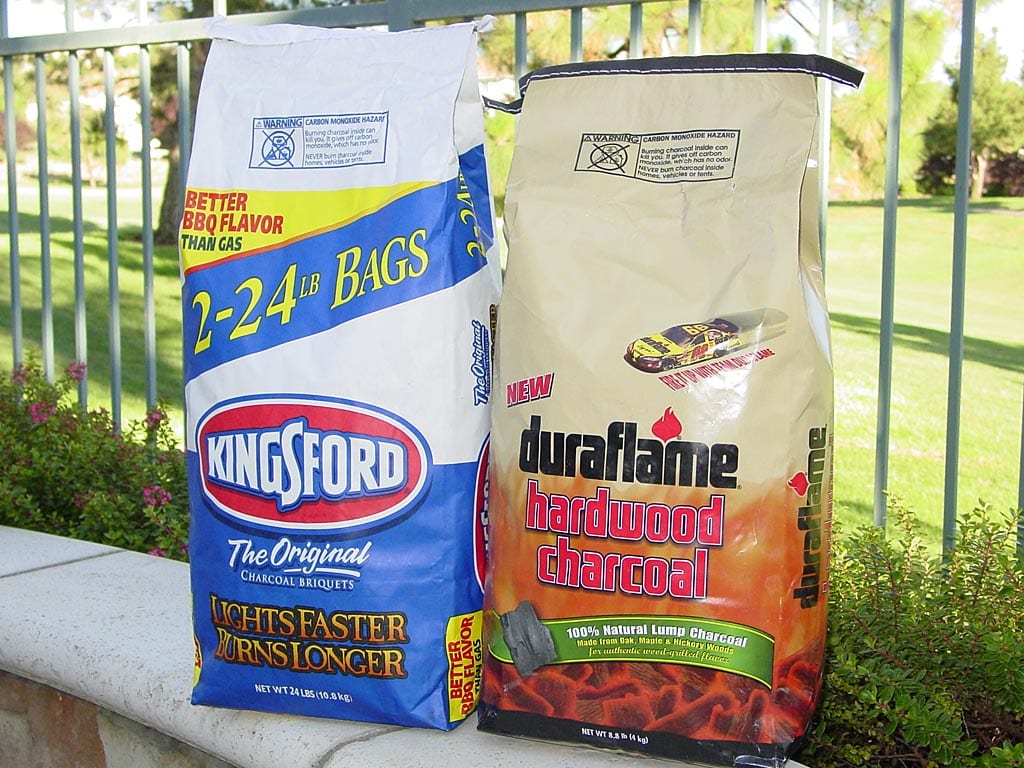
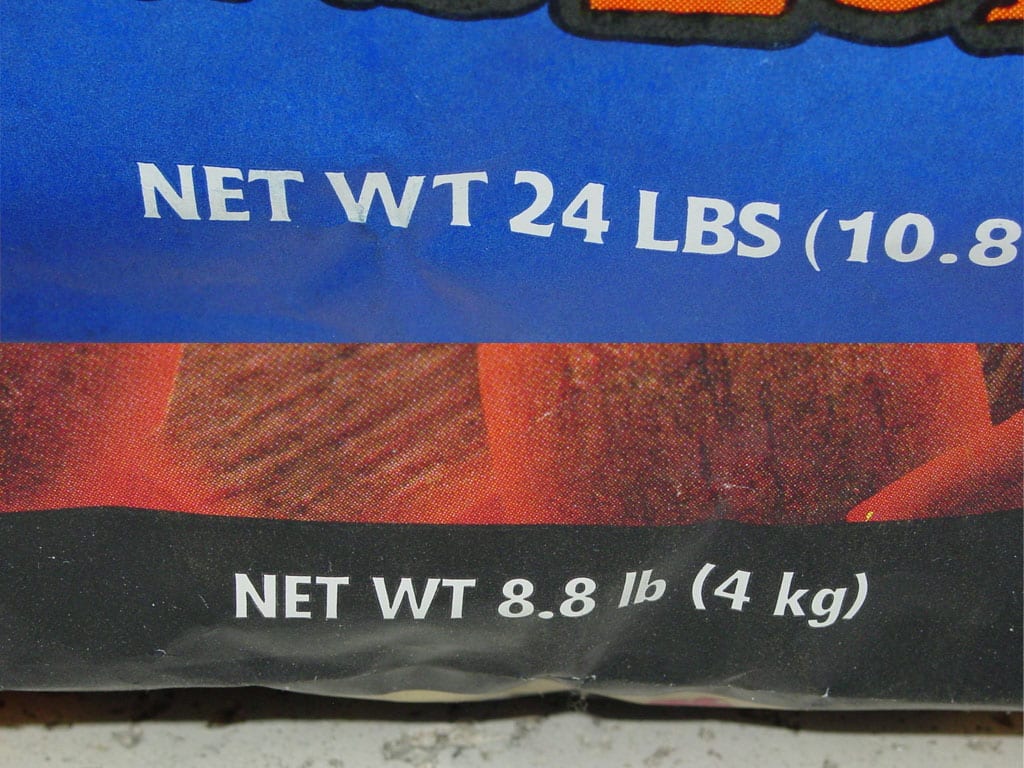
But this photo shows that the bag of Kingsford weighs almost three times as much as the Duraflame.
This photo shows one pound of each product. That’s 18 briquettes on the left. As you can see, briquettes are a heavier, denser product than lump.
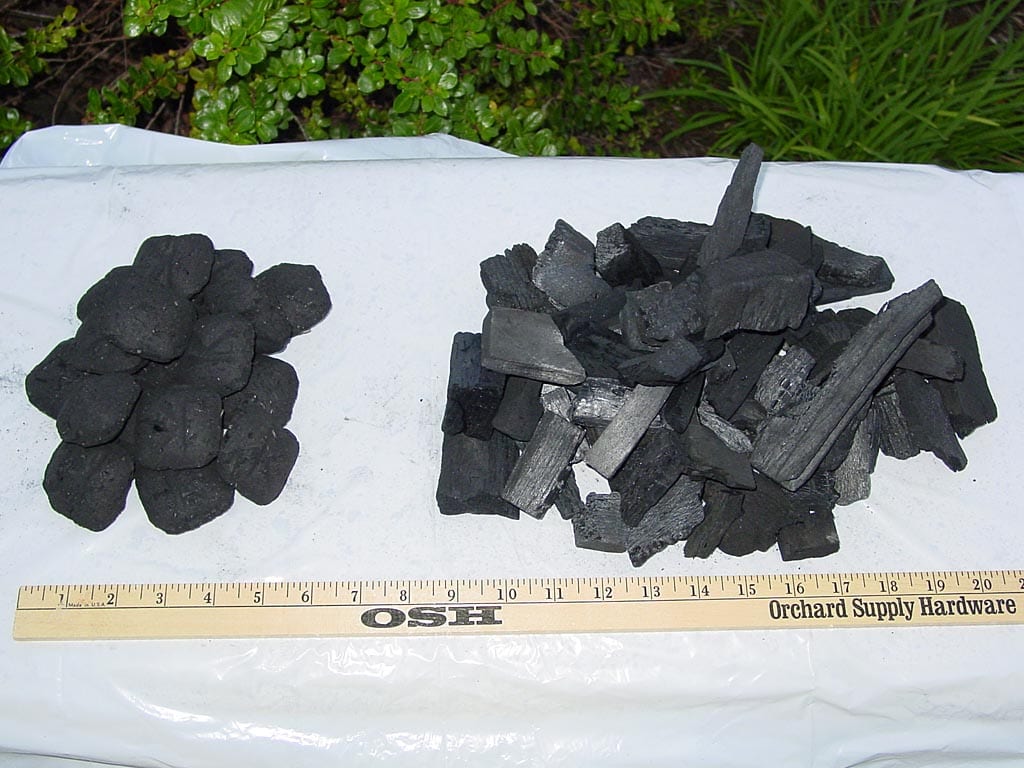
Briquettes
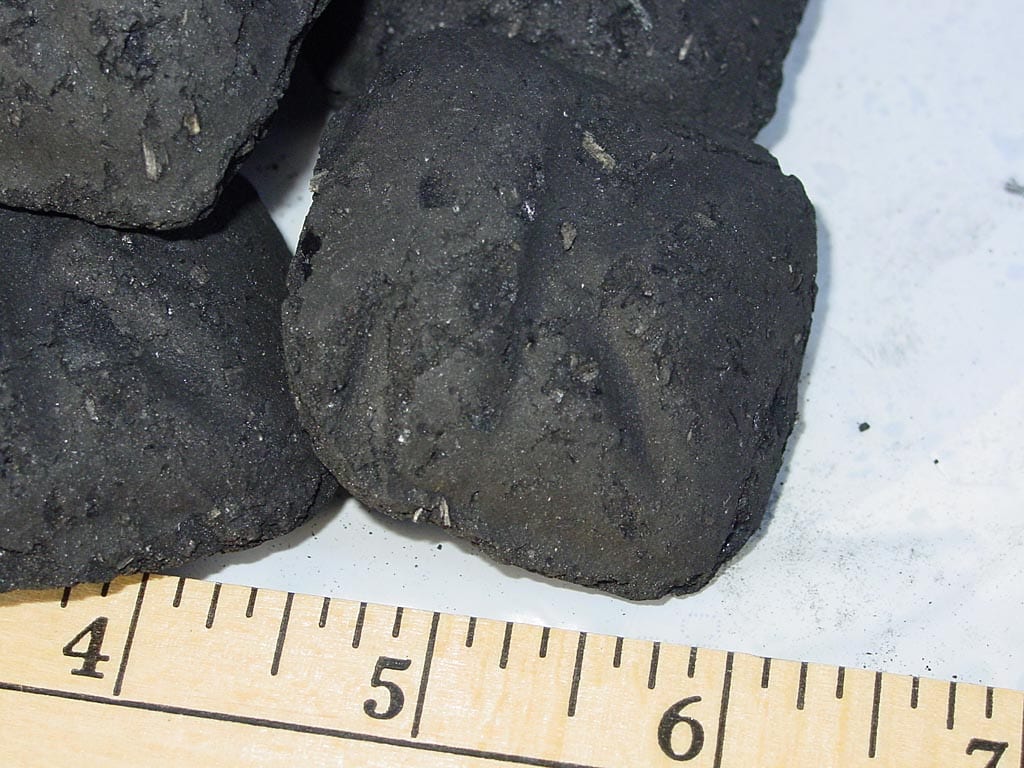
Briquettes are a manufactured charcoal product. The best-selling brand of briquettes in the United States is Kingsford Charcoal Briquets, the original charcoal briquette.
Leftovers from wood and paper processing (branches, bark, and sawdust) are screened and then chopped to a uniform size before being “roasted” in oxygen-controlled retorts—sort of like ovens—at 600-1,800°F. The resulting char is mixed with other ingredients before being molded into the familiar briquette shape, dried, and bagged.
Briquettes are a convenient, inexpensive source of fuel for the WSM. The general consensus is that briquettes tend to burn longer and more consistently than lump charcoal, but not quite as hot. The consistency of briquettes is due to the fact that they are an engineered product, essentially made using a “recipe” that can be duplicated over and over again.
Briquettes frequently contain other ingredients in addition to charcoal to improve the performance characteristics of the product. As a result, they leave behind a considerable amount of ash, which is of concern in cookers that can’t accommodate ash build-up. (Fortunately, the WSM is not one of these.)
It’s the “other ingredients” part of briquettes that get some folks worked up. “Petroleum by-products”, “toxic waste”, or “fillers”, they say. Well, let’s take a closer—and more rational—look at the facts.
The only required “other ingredient” in a briquette is a binder, usually a starch of some sort that holds the crushed charcoal together when it’s compressed into those little pillow shapes. The problem is that this basic briquette may not light very easily or burn very hot or burn very long. So, manufacturers add “other ingredients” to improve the performance characteristics of their products.
Here is the official ingredient list for Kingsford Charcoal Briquets from a company press release, including the purpose of each ingredient in parentheses. The explanation after each ingredient is my own.
Wood char (Heat source)
This is simply the wood by-products I mentioned above, burned down into charcoal—almost pure carbon. In the case of Kingsford, they use woods like fir, cedar, and alder that are local to the regions in which they operate—Burnside and Summer Shade, Kentucky; Glen, Mississippi; Belle, Missouri; Springfield, Oregon; and Beryl and Parsons, West Virginia.
Mineral char (Heat source)
This is a geologically young form of coal with a soft, brown texture. It helps Kingsford burn hotter and longer than a plain charcoal briquette. As with the wood, Kingsford heats this material in an oxygen-controlled environment, eliminating water, nitrogen, and other elements, leaving behind—almost pure carbon.
Mineral carbon (Heat source)
This is anthracite coal, the old, hard, black stuff once commonly used for home heating. It helps Kingsford burn hotter and longer than a plain charcoal briquette. It’s already 86-98% pure carbon, but once again, Kingsford processes it in an oxygen-controlled environment, leaving behind—almost pure carbon.
What exactly is coal, you ask? “Nasty stuff,” some folks say. Well, coal is a fossil fuel, most of which was formed more than 300 million years ago. To make a really, really long story short: Plants and trees died, sank to the bottom of swampy areas, accumulated into many layers, then geologic processes covered the stuff with sand, clay, and rock, and the combination of heat and pressure converted it into what we call coal.
So, coal is really old plant material that can be processed into almost pure carbon. Charcoal is wood that is burned down into almost pure carbon. Not much difference, in my book. End of coal lesson.
Limestone (Uniform visual ashing)
Limestone creates the pretty, white coating of ash you see after lighting the briquettes. Limestone is a sedimentary rock consisting of calcium carbonate—also found in egg shells, antacids, and calcium dietary supplements.
Starch (Binder)
As mentioned above, starch is used to hold briquettes together, and is found in corn, wheat, potatoes, and rice.
Borax (Press release)
Borax, also known as sodium borate, is a naturally occuring mineral used in very small amounts to help briquettes release from the press molds. But isn’t Borax a detergent? Well, yes, it can be used that way, but it’s non-toxic in the quantities we’re talking about in briquettes. Borax is commonly used in cosmetics and medicines.
Sawdust (Ignition aid)
Sawdust burns quickly, helping the briquettes to light faster.
Note: Kingsford confirms that the ingredient sodium nitrate was discontinued as an ignition aid in briquets in 2005-2006.
Did you notice there was no mention of “petroleum by-products” or “toxic waste”? What about “fillers”? Looks like every ingredient is there for a purpose—to improve the performance of the product.
My message to you is this: Don’t let people scare you away from briquettes, Kingsford or any other brand. They’re a perfectly good product to use for making great barbecue!
Lump Or Charwood
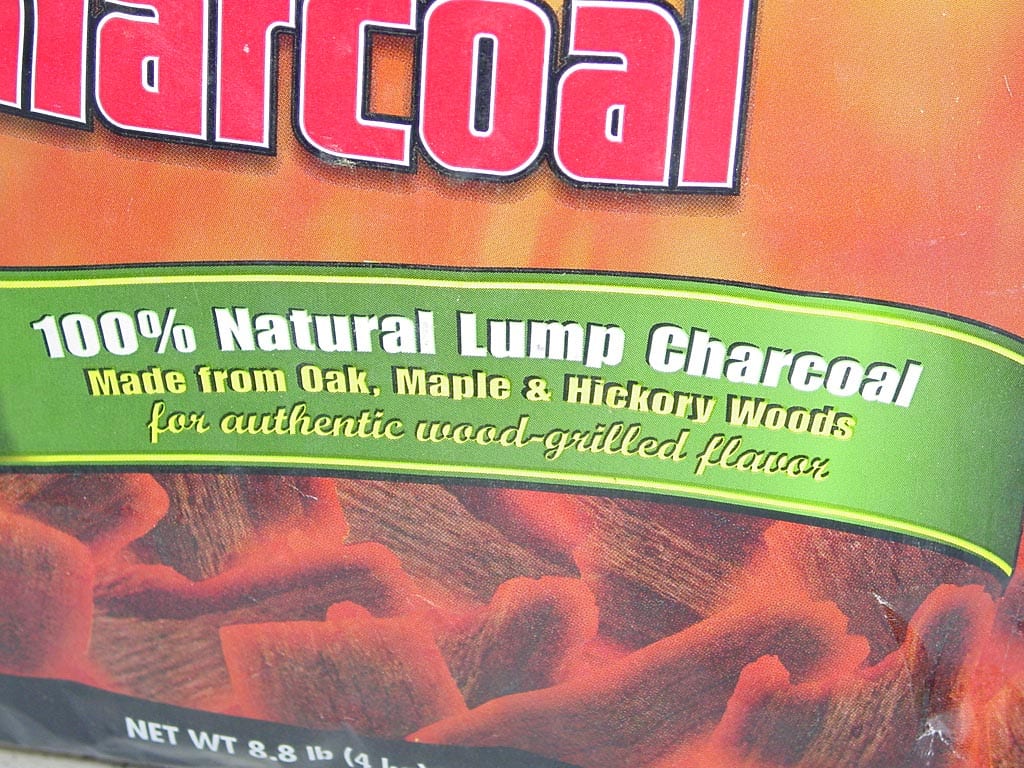
Lump charcoal, sometimes called charwood or natural charcoal, is made from pieces of wood that have been burned down into charcoal using the same oxygen-controlled environments described above for briquettes. However, at the end of the process, the charcoal chunks are bagged and sold as-is. There are no “other ingredients” in lump charcoal.
According to The Naked Whiz’s Lump Charcoal Database, three types of wood are used to make lump charcoal: sawmill scraps (e.g. chunks of wood leftover from processing trees into lumber), kiln-dried lumber scraps (e.g. leftover end cuts, defective pieces, or wood flooring scraps), and tree limbs.
This photo shows some detail of what lump charcoal looks like up close.
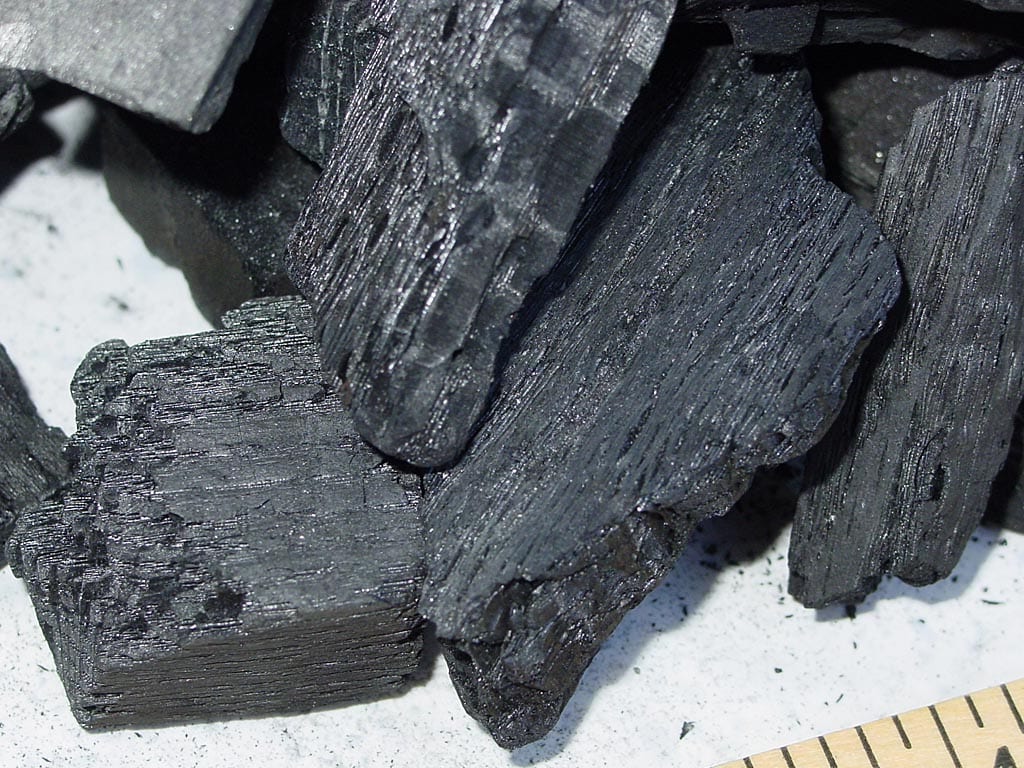
This photo shows a piece of tongue & groove wood flooring scrap at an angle on the right.
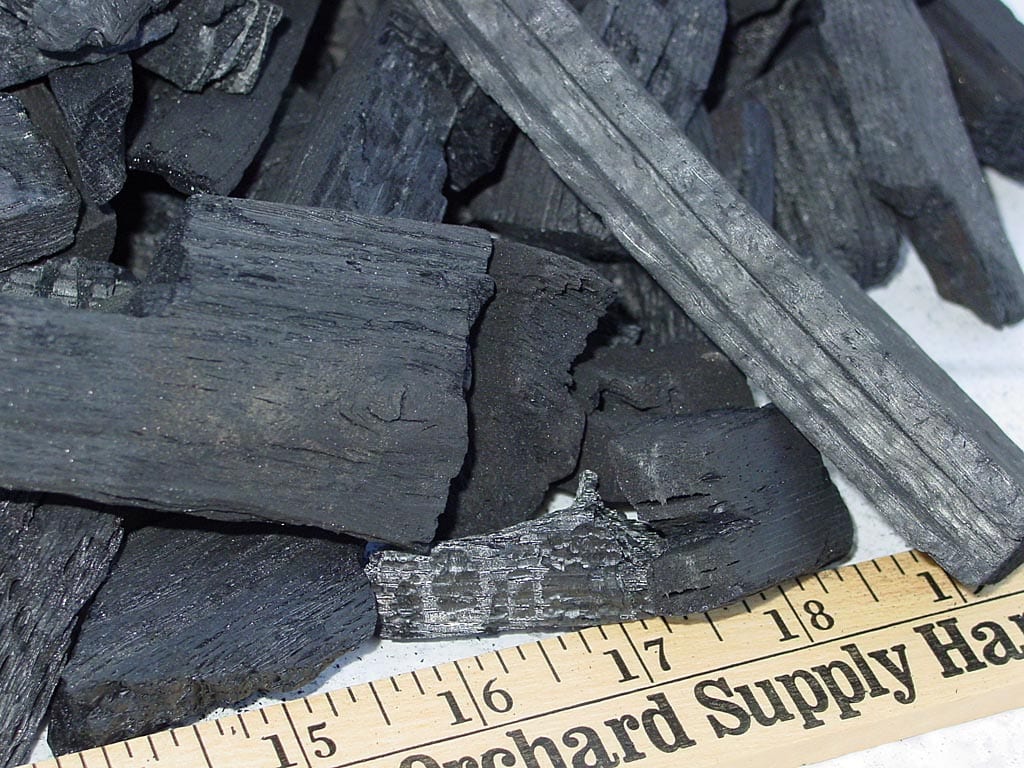
The general consensus is that lump tends to burn hotter than briquettes, but not as long or as consistently. Some lack of consistency is to be expected, given that the content and piece size varies within an individual bag and between bags.
Some people report that they find odd items mixed in with lump charcoal, like rocks, soda cans, etc. These are few and far between and are no reason to avoid using lump.
The price of lump charcoal compared to briquettes varies depending on your region. In some parts of the country, lump can be purchased as cheaply as briquettes; in lump-deprived regions, lump can be harder to find and, as a result, more expensive than briquettes.
Extruded
According to The Naked Whiz’s Lump Charcoal Database, extruded charcoal is made from compressed sawdust logs that are carbonized in kilns. The most common brand is Kamado Extruded Coconut Charcoal. Members of The Virtual Weber Bulletin Board report good results using this product, but it has very limited distribution and is usually special ordered in pallet quantities.
Burning Wood Chunks Or Logs
The WSM is designed to use charcoal as its fuel source. Occasionally, someone notices that other cookers are fired using split logs and attempts this in the WSM. Wood chunks or logs can be used, but with considerable effort, inconvenience, and expense. Wood must be burned down to hot coals before cooking can begin and then more wood added throughout the cooking process, causing wide fluctuations in cooker temperature. Also, wood is expensive, charcoal is cheap. Most people only try this once.
Avoid Instant Light Charcoal
Instant light charcoal containing lighter fluid, such as Kingsford Match Light, should not be used in the WSM for low and slow barbecuing.
When using the Minion Method, the continual lighting of fresh Match Light briquettes “will cause lighter fluid to permeate the meat,” according to Kingsford’s website. It also states that “adding (Match Light) to an existing fire may also cause a flare-up.”
Factors To Consider When Selecting Charcoal
Some of the factors that you should consider when choosing a charcoal product include:
- Which types and brands of charcoal are available in your region?
- How “natural” is it?
- How fast does it light?
- How does it smell during lighting?
- How hot does it burn?
- How long does it burn? How many times will you need to replenish the charcoal during a long cooking session? Twice? Once? Not at all?
- How consistently does it burn during a cooking session?
- How consistently does it perform from bag to bag over time?
- How much ash does it leave behind?
- How much does it cost (including shipping, if applicable)?
You’ll have to decide how much weight, if any, to give to each of these factors. There may be other factors that are important to you that I’ve not listed here.
Why I Use Kingsford
After careful consideration of the factors listed above, I have concluded that Kingsford Charcoal Briquets is the right fuel for me and my WSM. And no, I don’t receive any compensation from Kingsford for saying that!
Here’s how I reasoned through each factor. Remember, you may arrive at a completely different decision based on what products are available where you live and your personal preferences.
Which types and brands of charcoal are available in your region?
Kingsford is readily available where I live. The most common variety of lump charcoal where I live is mesquite, which I don’t care to use. Other varieties of lump are harder to find locally, and the better brands would have to be mail-ordered at considerable expense, which makes no sense to me financially. I admit it…I’m a cheapskate when it comes to charcoal, as you’ll read below.
How “natural” is it?
I don’t place a high value on a fuel being “natural”. I’m more interested in performance characteristics and price.
How fast does it light?
Kingsford lights faster and easier than most other brands of briquettes I’ve tried.
How does it smell during lighting?
Kingsford smells funny when lighting compared to some other briquettes or lump charcoal, but I’ve never been able to discern an off-taste in the foods I cook, nor can the vast majority of people who cook with it. Besides, Kingsford is used by some of the most successful teams on the competition barbecue circuit to create award-winning barbecue, so I don’t think the way it smells during lighting has anything to do with how the finished product turns out.
How hot does it burn?
Kingsford burns hotter than most other brands of briquettes I’ve tried, but not as hot as lump. Not too hot, not too cold, just right!
How long does it burn? How many times will you need to replenish the charcoal during a long cooking session? Twice? Once? Not at all?
Kingsford burns longer than most other brands of briquettes I’ve tried. When the WSM charcoal chamber is fully loaded with Kingsford and lit using the Minion Method, I can cook at least 12 hours without having to add charcoal, which is great for overnight cooks.
How consistently does it burn during a cooking session?
Kingsford burns consistently throughout the majority of a cooking session.
How consistently does it perform from bag to bag over time?
Kingsford seems to burn the same for me, bag after bag, year after year.
How much ash does it leave behind?
Unlike some ceramic cookers where ash build-up can smother the fire, the WSM has plenty of space for ashes to collect under the charcoal grate without affecting the fire. Also, it takes no more effort for me to dispose of the ashes from Kingsford than from any other type or brand of charcoal. When cool, it gets dumped into a trash bag and goes out with the garbage. Easy!
How much does it cost (including shipping, if applicable)?
During the 2015 Memorial Day and Fourth of July holidays, Kingsford was available for 26-27¢ per pound at The Home Depot and Lowe’s throughout the United States. This is far less expensive than other brands of briquettes or lump charcoal and people have been known to buy truckloads of Kingsford during these sales.
Why I Recommend Kingsford To New WSM Owners
I recommend Kingsford Charcoal Briquets to new WSM owners because it’s a very consistent product that is available nationwide, at an affordable price, and it provides a long, consistent burn. Using Kingsford takes one variable out of the barbecue equation, making it easier for folks to duplicate the recipes I publish here on the website.
However, once a person has some experience with Kingsford under their belt, I would suggest that they experiment with other fuels. Some will stick with Kingsford, while others will switch to other brands of briquettes or lump charcoal.
Which Charcoal Is Right For You?
Don’t be bullied by hard-liners who tell you, in no uncertain terms, that the only path to barbecue nirvana is by using only charcoal briquettes or lump charcoal.
I hereby give you permission to create your own great barbecue using whatever charcoal makes the most sense to you—briquettes or lump!
I’ve explained my rationale for using Kingsford and why I recommend it to WSM beginners. After you evaluate what’s most important to you in a charcoal and you make a decision, move forward confidently and learn to master that fuel in your WSM.
Remember, you can always change your mind and switch from briquettes to lump or vice versa…or mix both together…or use either one on different occasions.
Firing-Up Your WSM
Once you’ve picked a fuel, it’s time to heat things up! See Firing Up Your Weber Bullet for a variety of methods to start your cooker (including the long-burning Minion Method) and How To Use A Chimney Starter.
 Henry Ford and Charcoal Briquettes?
Did you know there’s a connection between Henry Ford, founder of The Ford Motor Company, and charcoal briquettes?
As early as 1912, Henry Ford was coveting iron reserves and timber in the Upper Peninsula of Michigan for automobile manufacturing. Ford got in touch with Edward G. Kingsford, the husband of Ford’s cousin, Minnie Flaherty, who owned a Ford dealership and also happened to be a real estate agent. In 1920, Kingsford facilitated the purchase of over 313,000 acres of land in the U.P. upon which a sawmill and wooden auto parts plant were built.
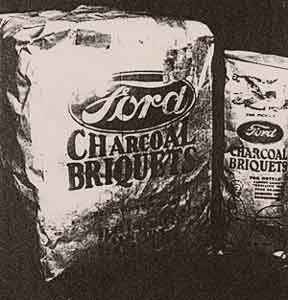 The company town that formed around the site was chartered as the Village of Kingsford on December 29, 1923. In 1924, a chemical plant was built to convert the tons of waste wood generated by the Ford sawmill into useful products. It is said that 610 pounds of charcoal was reclaimed per ton of scrap wood and manufactured into charcoal briquettes. For many years, Ford Charcoal Briquets could be purchased only at Ford automobile showrooms around the country.
The Ford Motor Company closed the sawmill and parts plant in 1951. The chemical plant was sold to a group of local investors who renamed the enterprise the Kingsford Chemical Company. They continued to operate the charcoal briquette plant and renamed the product “Kingsford Charcoal Briquets”.
The briquette plant operated in Kingsford, Michigan until 1961, when it relocated to Louisville, Kentucky. The Clorox Company acquired the Kingsford Charcoal brand in 1972 and operates production plants in Burnside and Summer Shade, Kentucky; Glen, Mississippi; Belle, Missouri; Springfield, Oregon; and Beryl and Parsons, West Virginia.
Photo of Ford Charcoal Briquets: Upper Peninsula Antique Car Club.