In this topic:
- 2014 – Present 14.5″ Packaging
- 2009 – Present 18.5″ Packaging
- 2009 – Present 22.5″ Packaging
- 2008 & Earlier Packaging
- Packaging Improvements In 2009
- Recycling The Packing Materials
Here’s a look at how the Weber Smokey Mountain Cooker is packaged for shipping and the “out of box” experience you’ll have when unpacking it.
2014 – Present 14.5″ Packaging
Out Of Box Video
Here’s a short video that shows the out of box experience for the 14.5″ Weber Smokey Mountain Cooker.
The Shipping Box
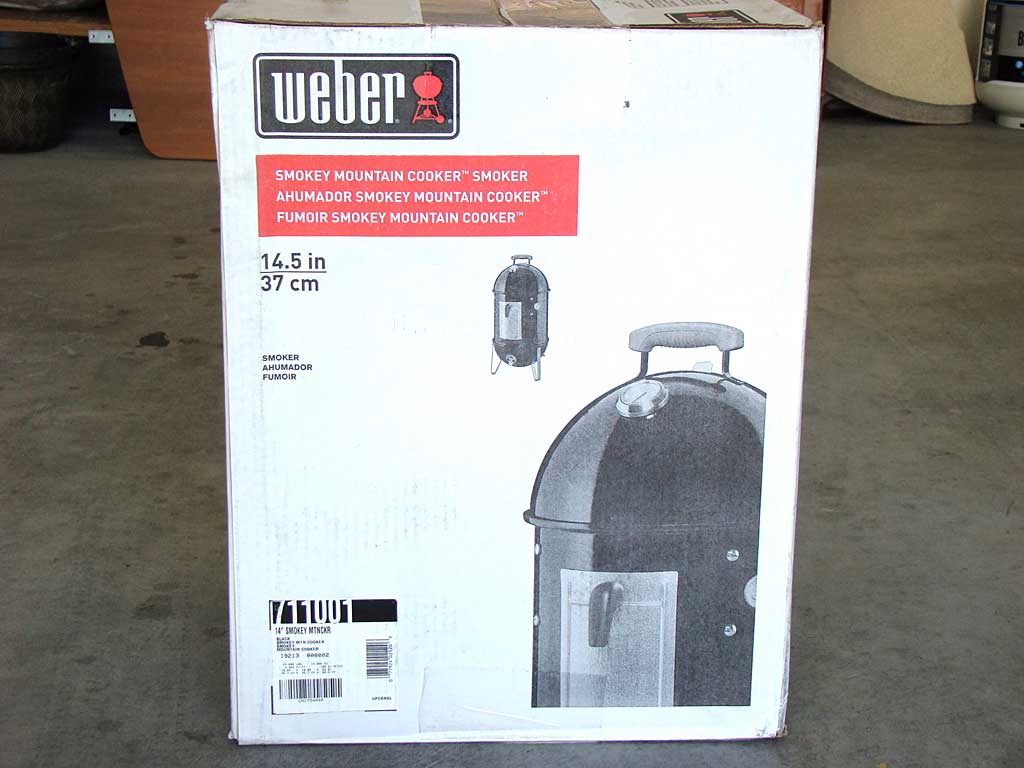
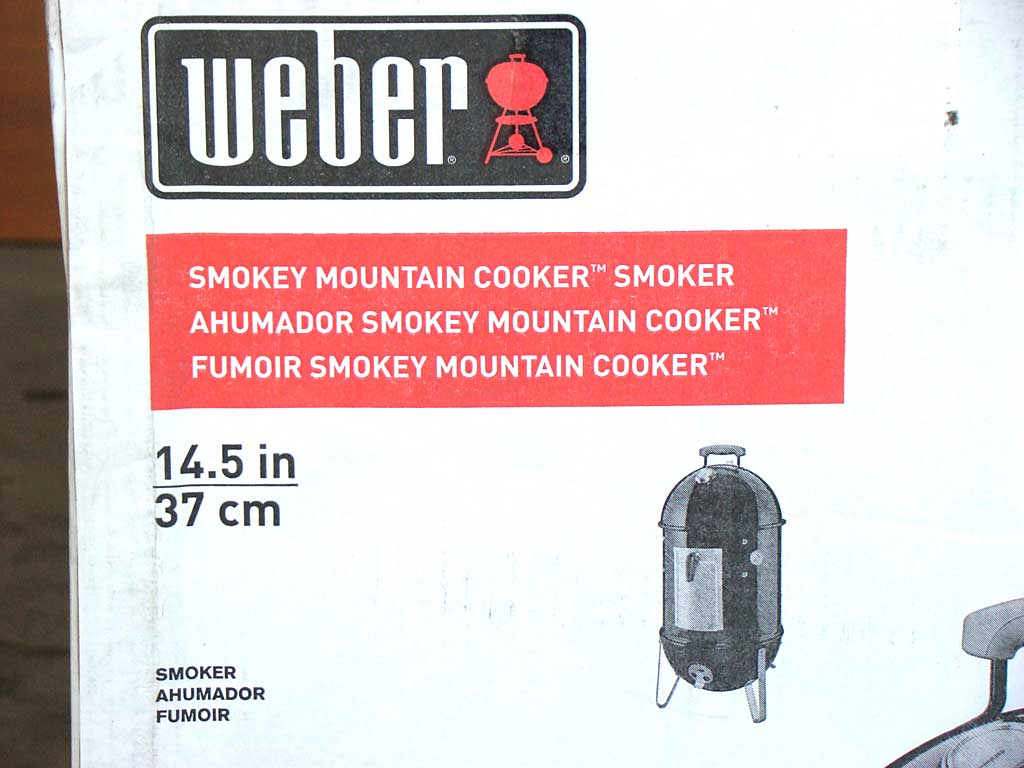
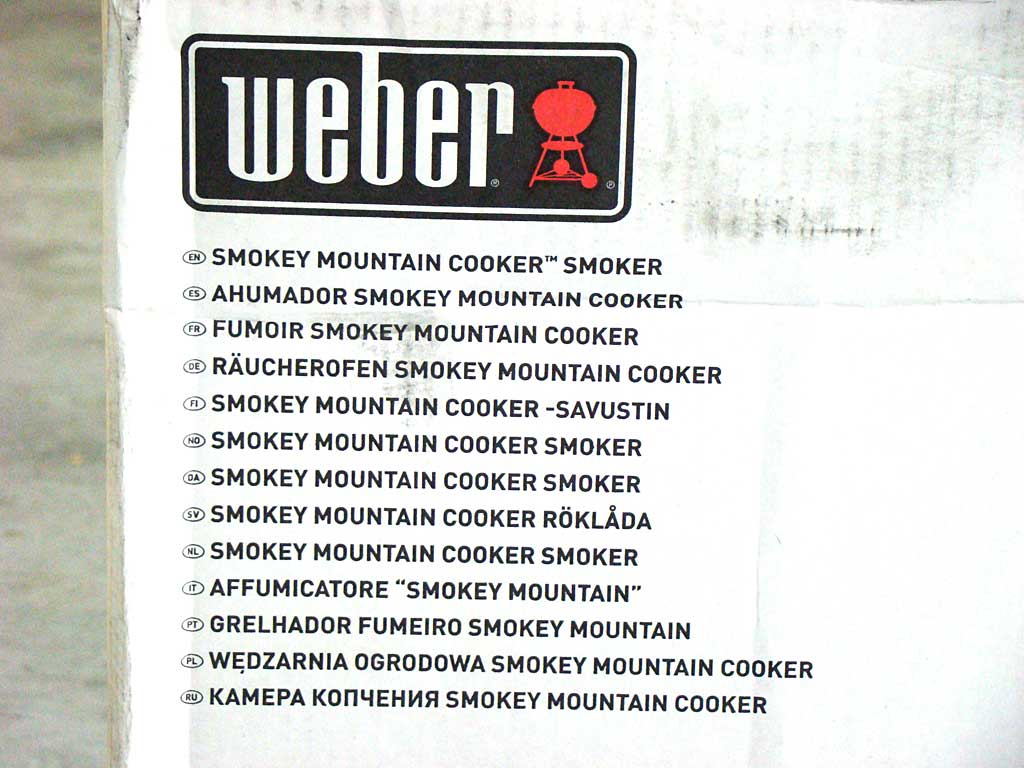
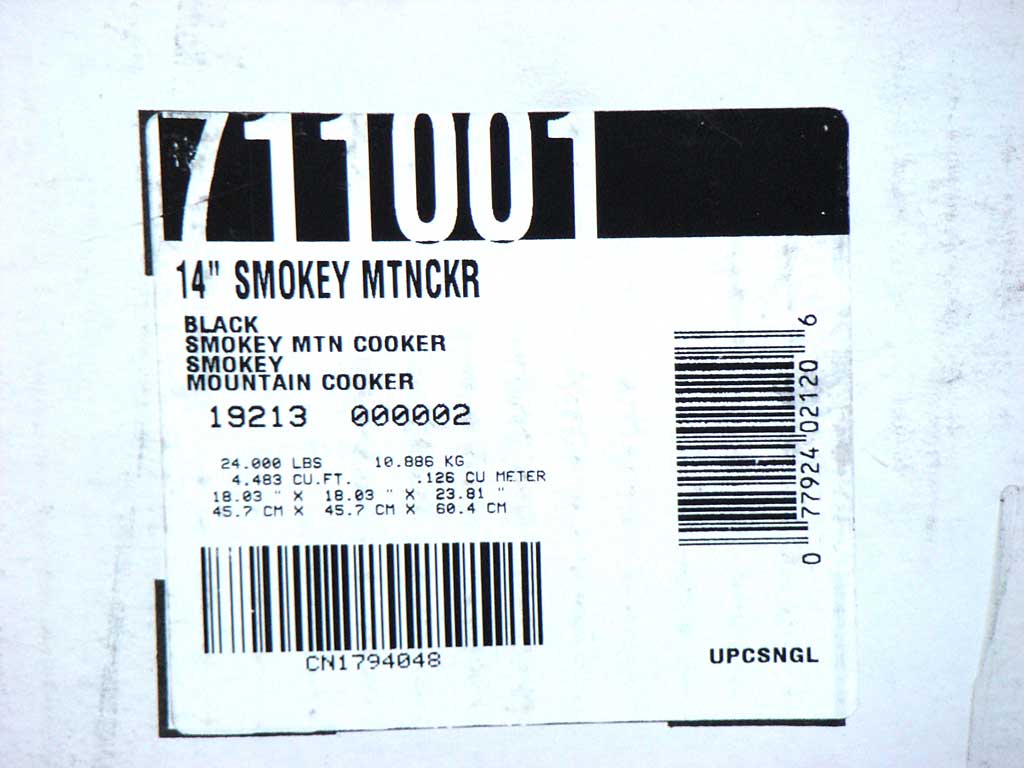
These photos show the exterior of the 14.5″ Weber Smokey Mountain Cooker box. To see photos of past versions of the WSM box, visit WSM Box Art.
Photos 1-2 show the front of the box featuring small and large photos of the cooker. Photo 3 shows the side of the box. It says “Smokey Mountain Cooker Smoker” in 13 languages.
In Photo 4, the number “711001” is the cooker’s model number. The fine print at the bottom of the label indicates that the box measures 18.03″ x 18.03″ x 23.81″ and has a shipping weight of 24 pounds.
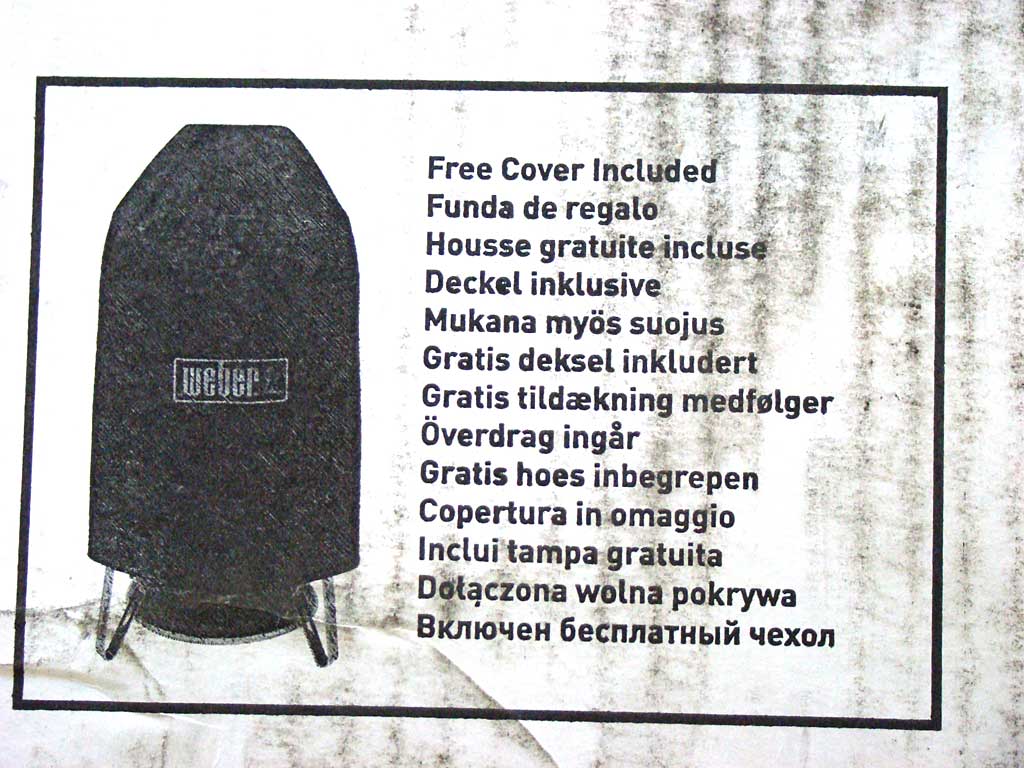
Photo 5 shows that a free vinyl cover is included with the cooker.
The box is made of corrugated fiberboard with single wall construction. The top and bottom flaps are sealed with 6″ wide plastic packing tape; no staples or adhesives are used.
Upon opening the box, you discover that the Weber Smokey Mountain Cooker is broken down into pieces that are packed vertically in four layers.
Here’s an interesting bit of trivia about how WSM boxes are packed at the factory. The top of the box is sealed and placed upside down, then parts are loaded in from the bottom end of the box. The box is sealed and turned right-side up, so what was on the bottom at the factory is now on the top when you unpack your new WSM at home.
Layer 1: Grates
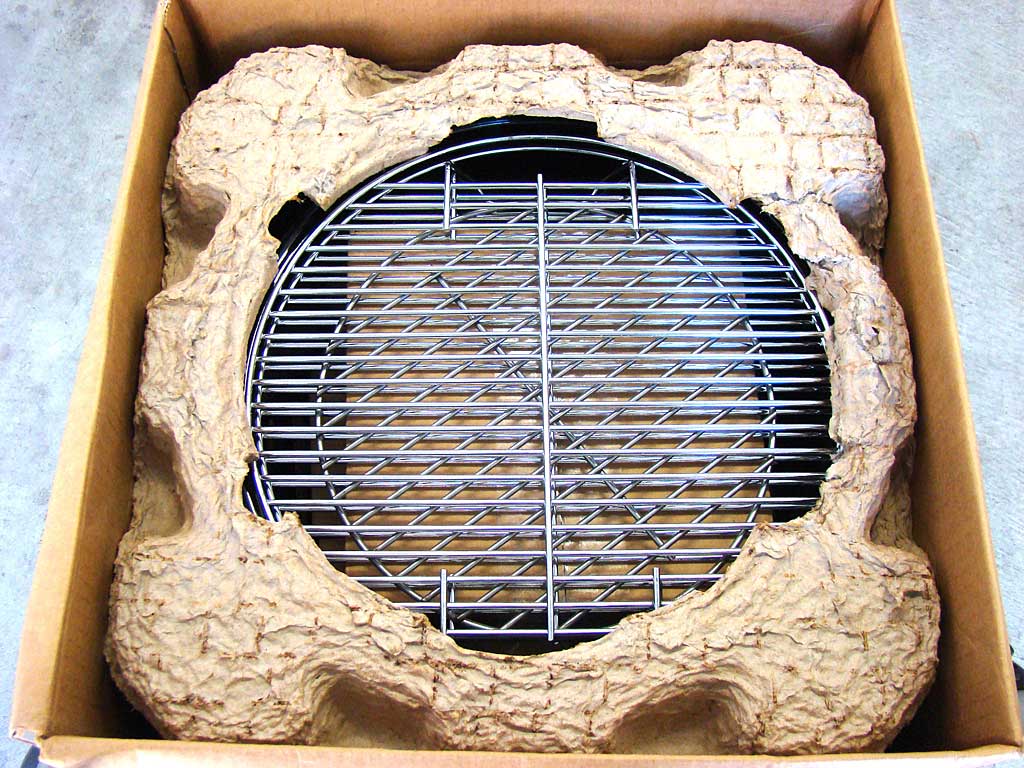
This photo shows the contents of the first layer—the grates layer. The charcoal grate is sandwiched between the top and bottom cooking grates. Beneath the grates is the first of 4 molded paper pulp separators and two cardboard boxes that support the weight of the grates.
Layer 2: Middle Cooking Section
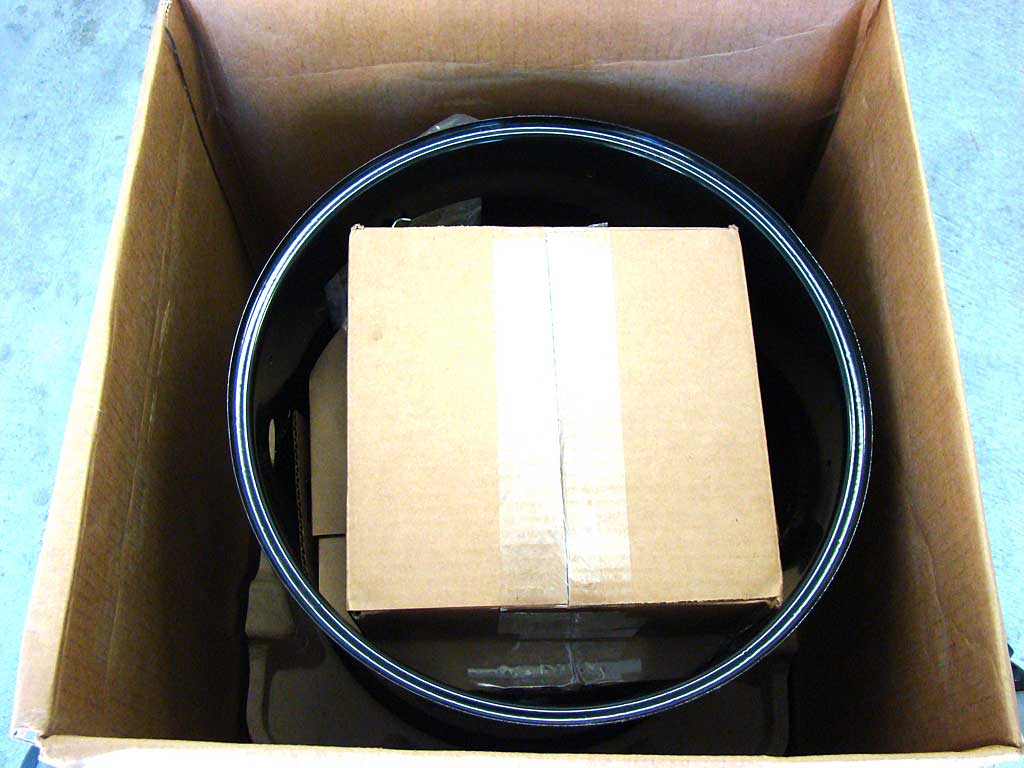
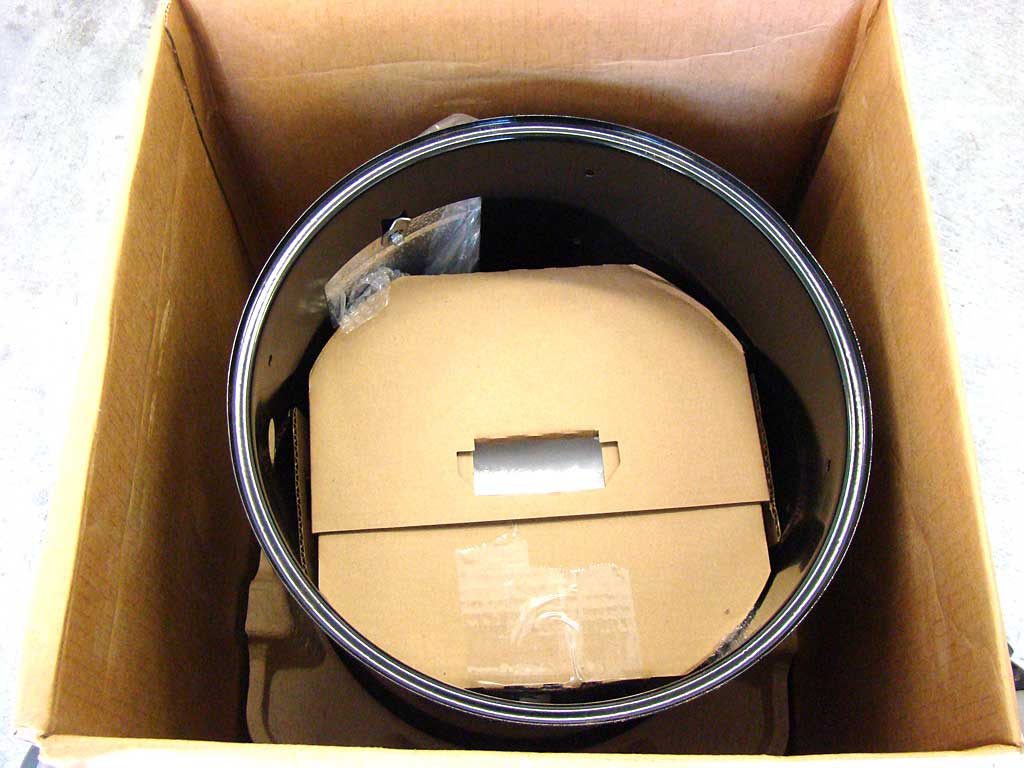
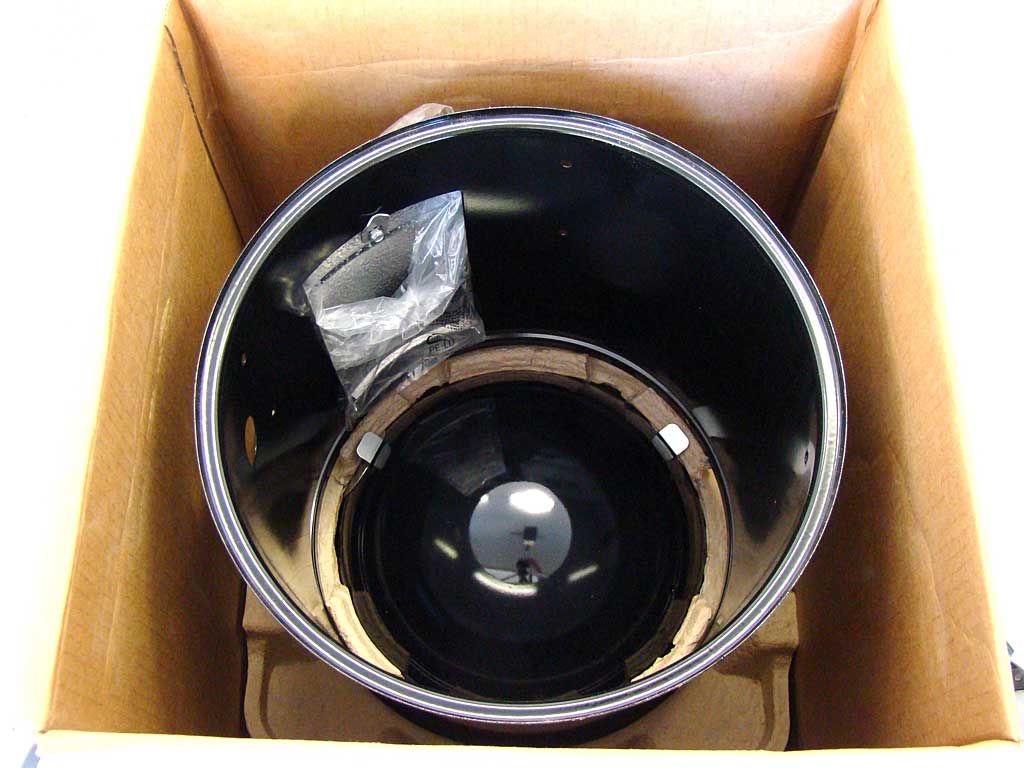
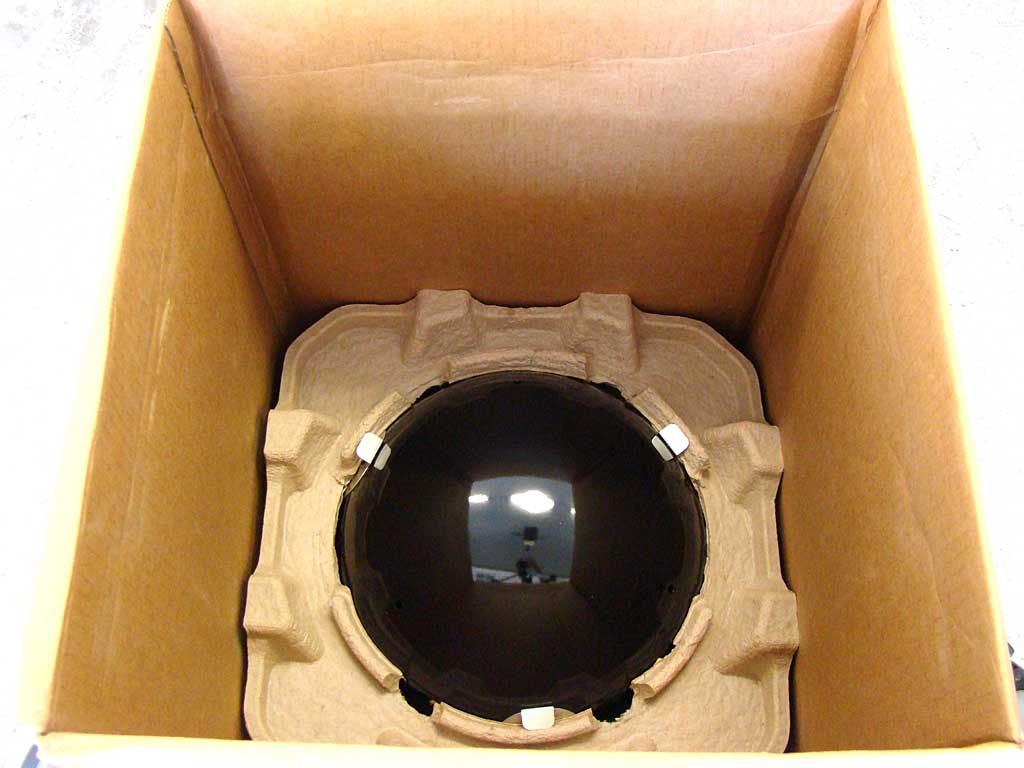
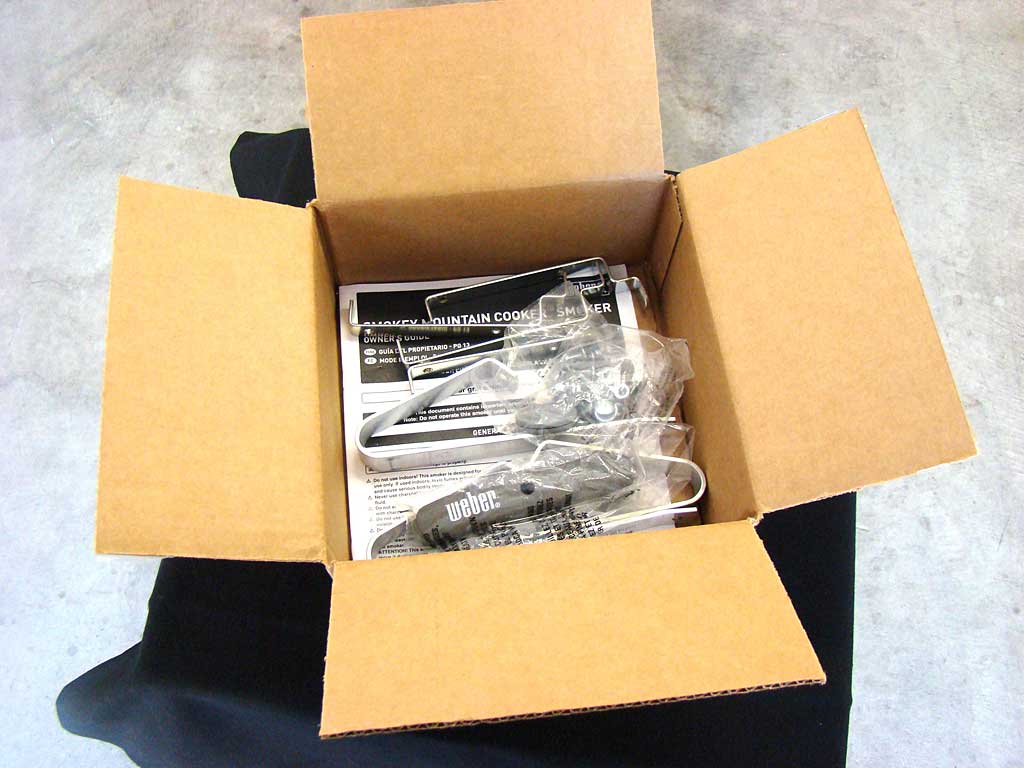
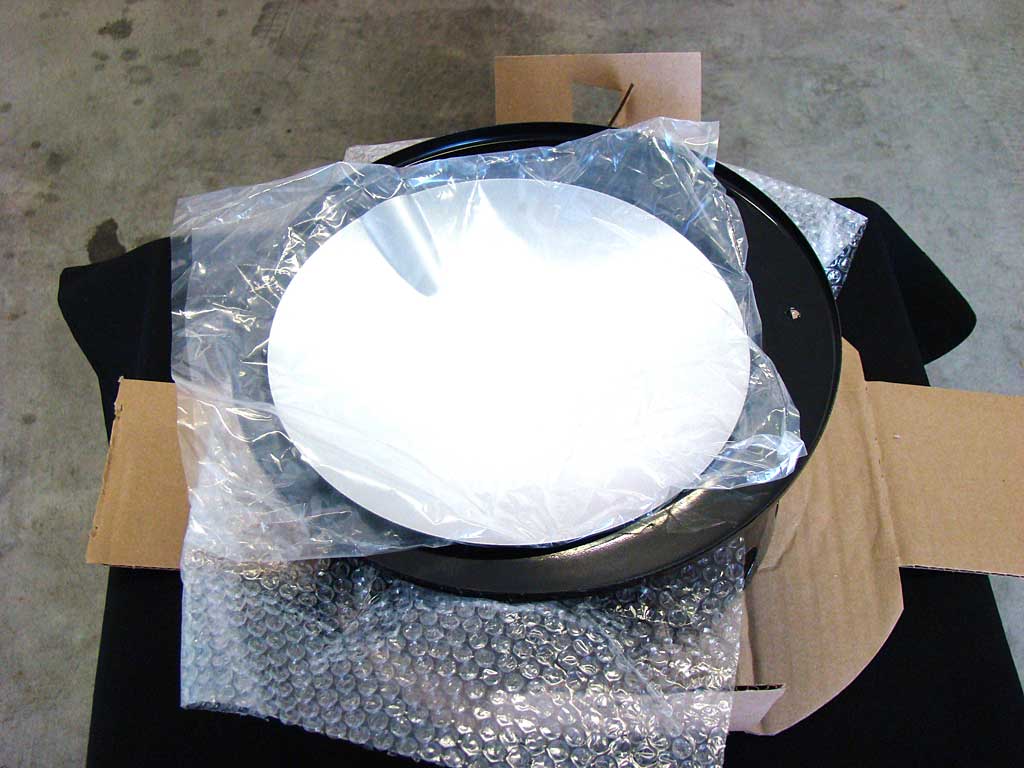
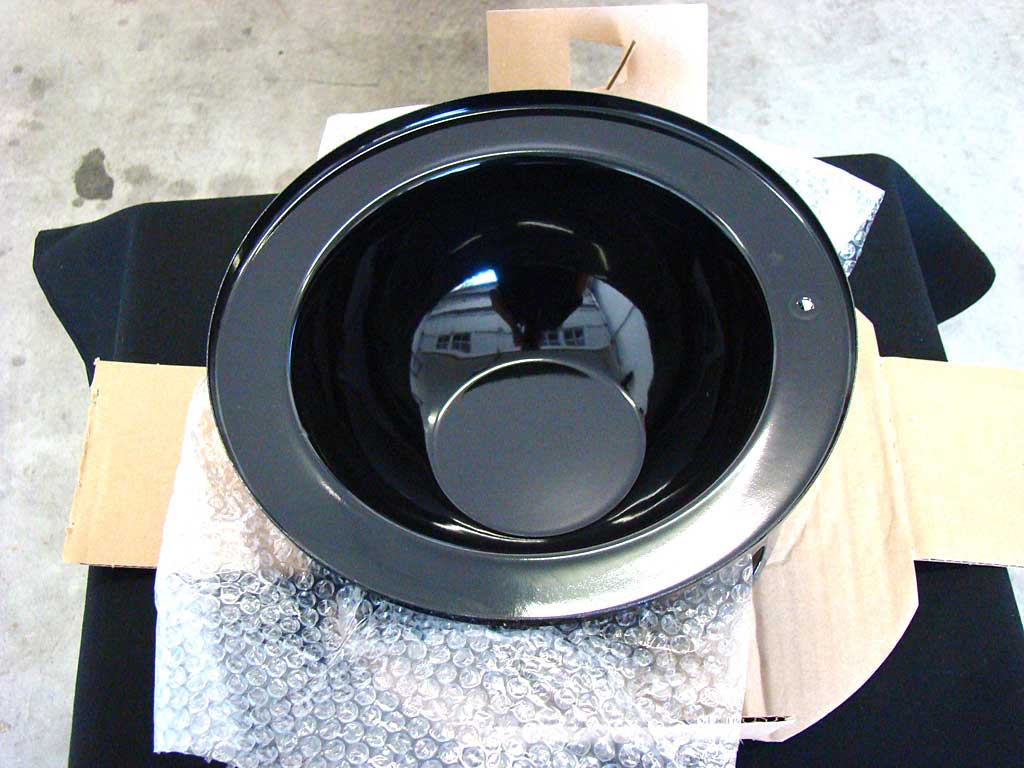
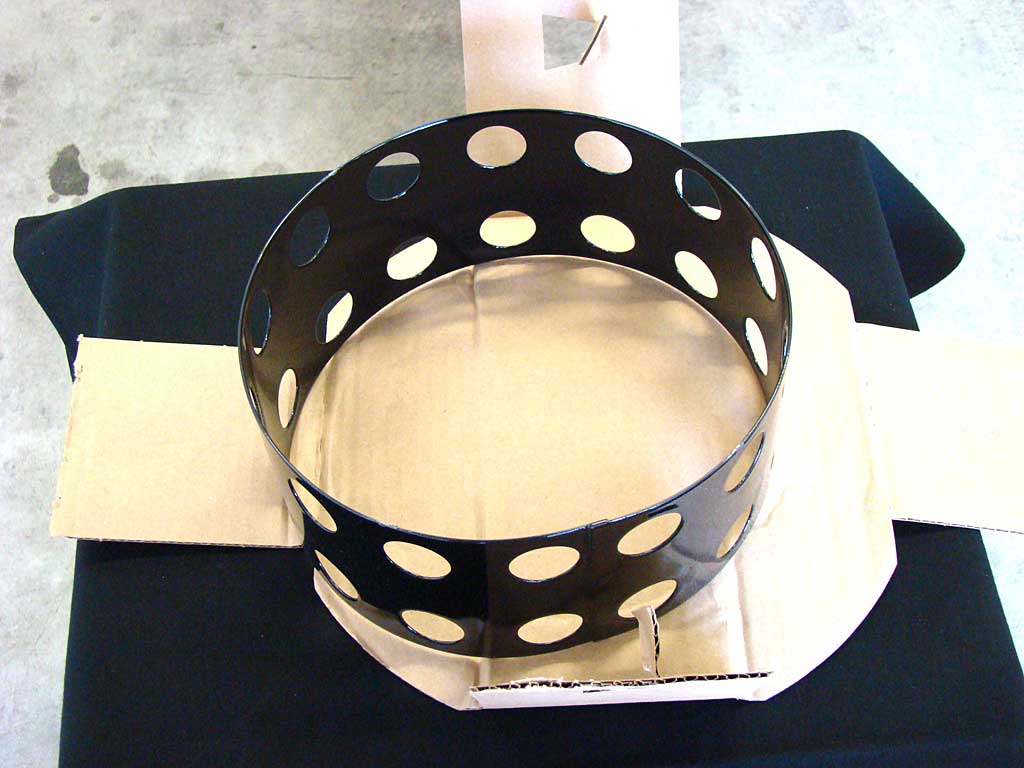
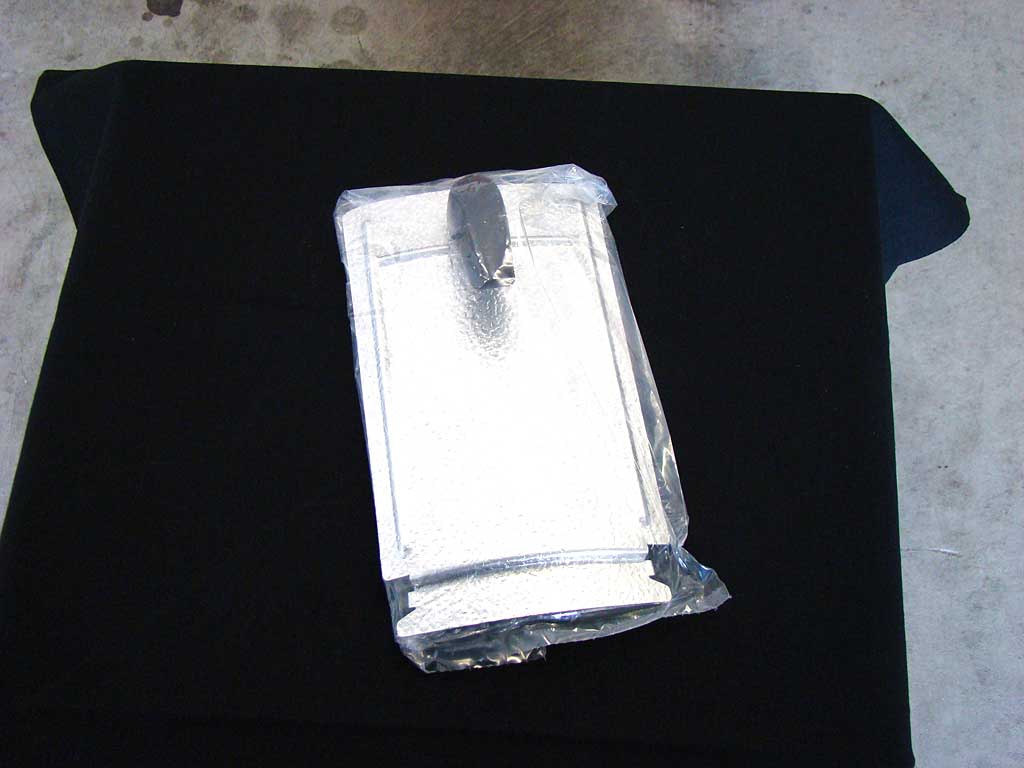
Removing the first molded pulp separator brings us to the second layer—the middle cooking section layer. Inside the middle cooking section is a small cardboard box and an eight-sided box (Photos 1-2). Removing these boxes reveals the top of the charcoal bowl at the bottom of the box (Photo 3). Removing the middle cooking section reveals another molded pulp separator positioned over the charcoal bowl (Photo 4).
The small cardboard box contains the legs, grill straps, nuts, bolts, washers, lid handle, silicone grommet and owner’s manual (Photo 5).
The eight-sided box contains the heat shield wrapped in plastic (Photo 6), the water pan (Photo 7), and the charcoal chamber (Photo 8). The water pan sits on a piece of bubble wrap inside the charcoal chamber.
The access door is wrapped in a plastic bag (Photo 9) and shipped in place, fastened to the side of the middle cooking section.
Layer 3: Charcoal Bowl
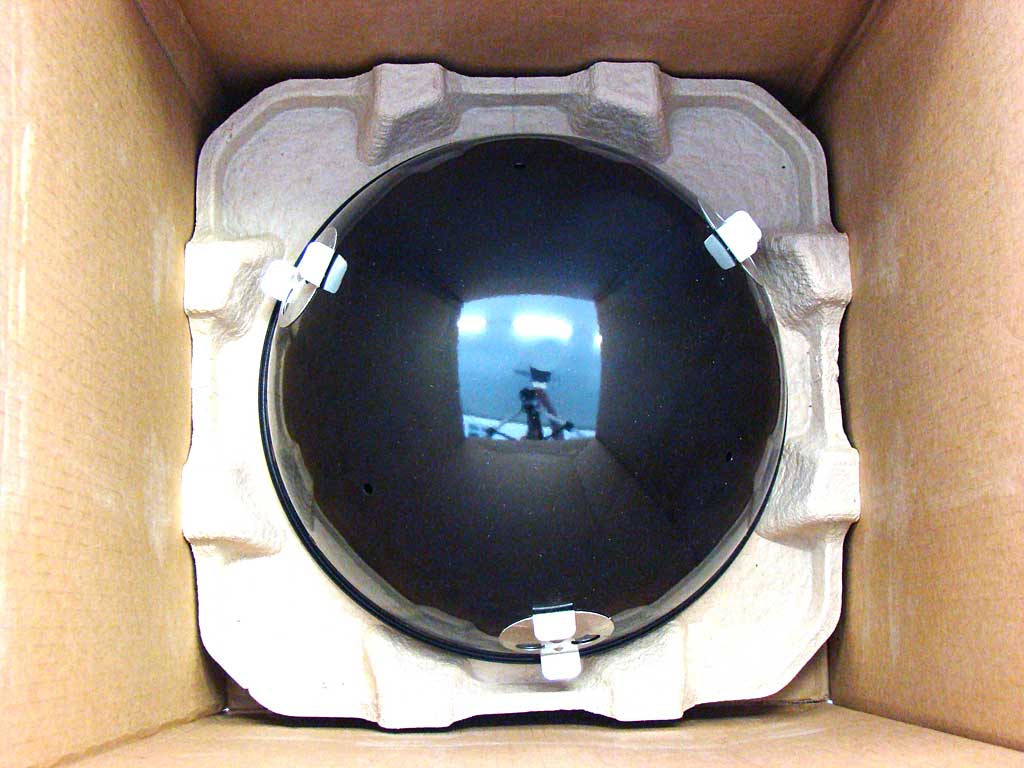
Removing the second molded pulp separator fully reveals the third layer—the charcoal bowl layer. It consists of the charcoal bowl and a third molded pulp separator that help support the weight of the middle cooking section and all the component parts above.
Layer 4: Lid
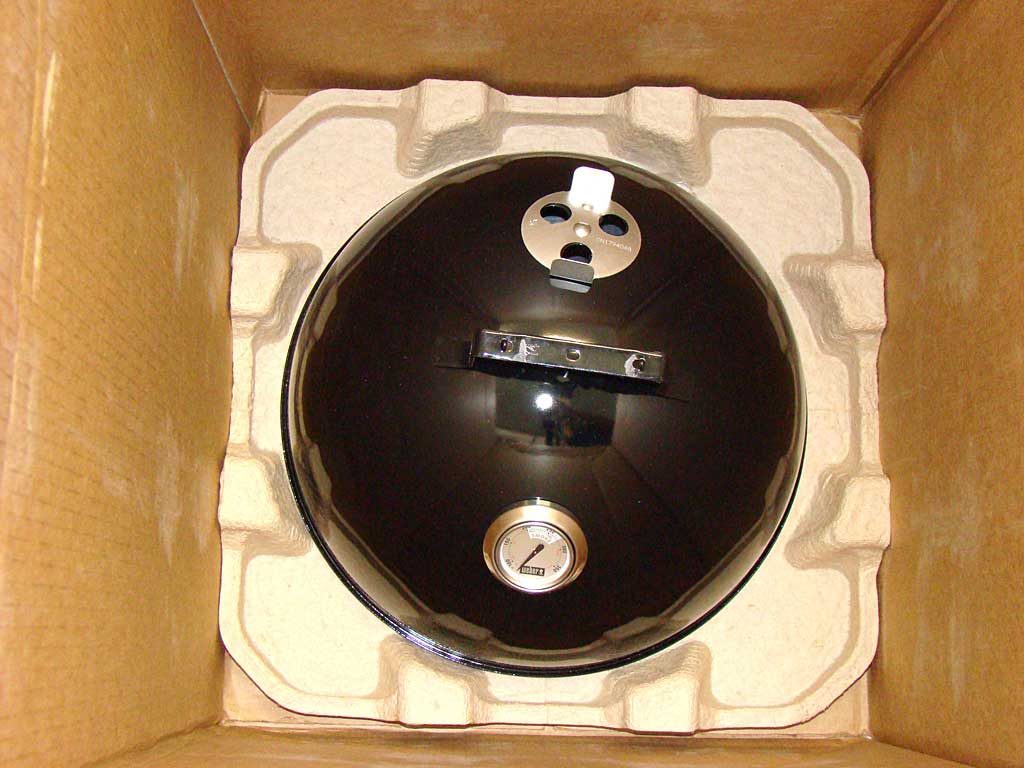
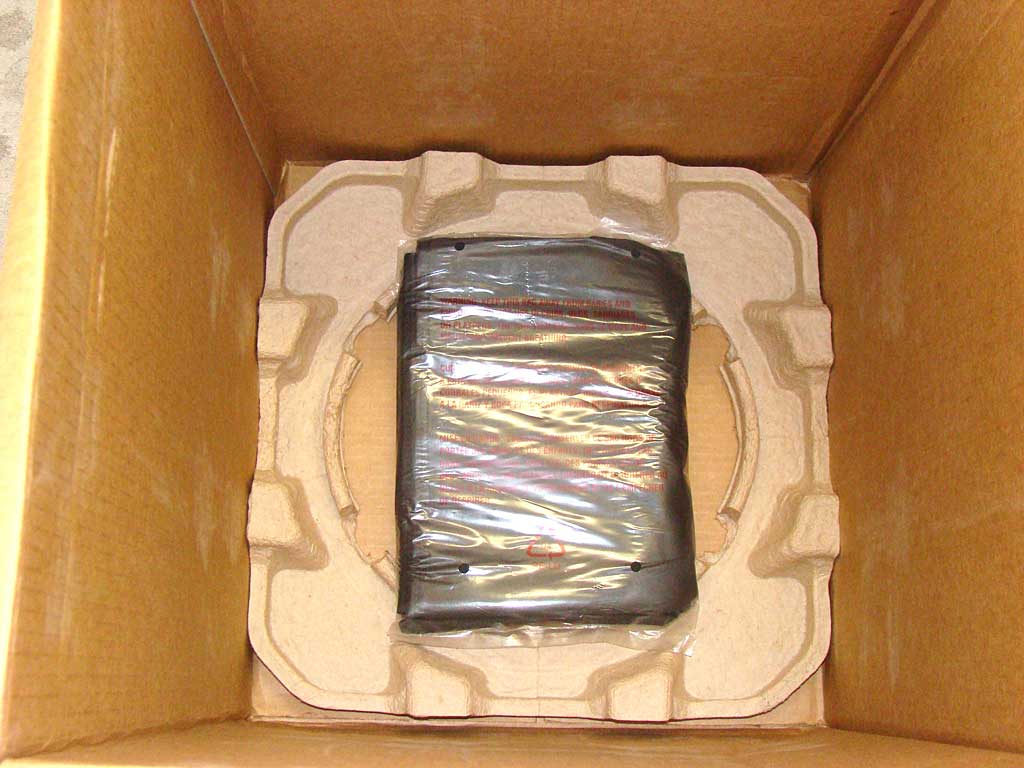
Removing the charcoal bowl and the third molded pulp separator reveals the fourth and final layer—the lid layer. It consists of the lid, a fourth and final pulp separator, and the vinyl cover hiding under the lid.
Due to the lack of clearance between the charcoal bowl and lid, the lid is shipped without the lid handle in place. You’ll find the handle in the small cardboard box with the other parts and fasteners.
2009 – Present 18.5″ Packaging
Out Of Box Video
Here’s a short video that shows the out of box experience for the 18.5″ Weber Smokey Mountain Cooker.
The Shipping Box
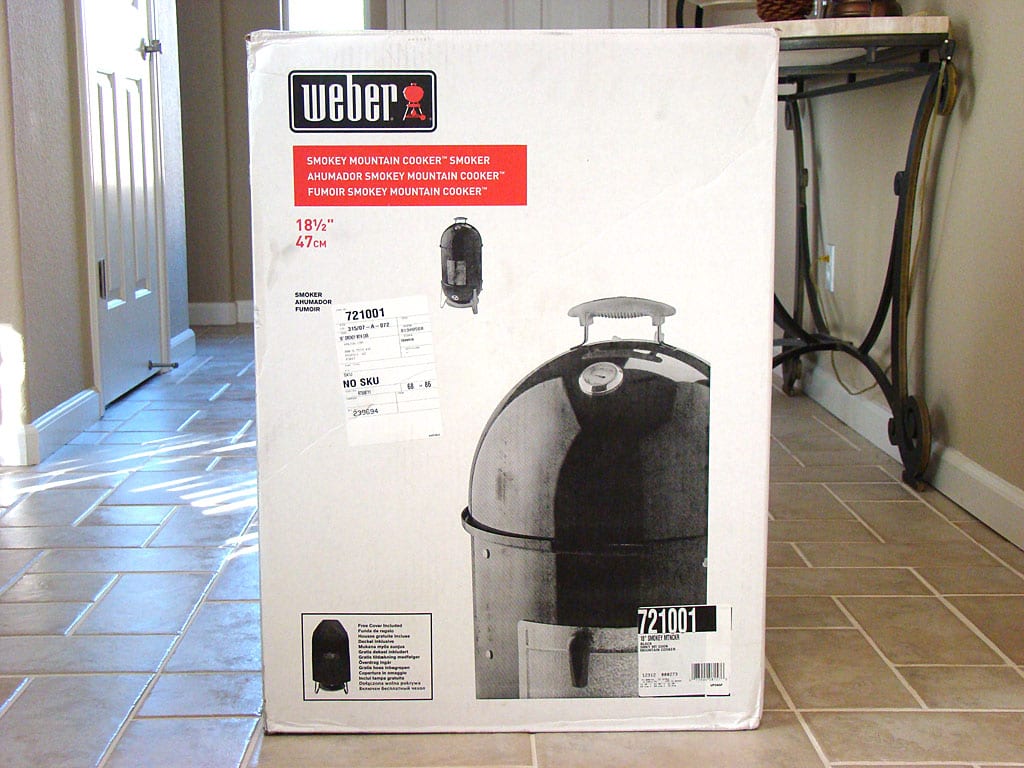
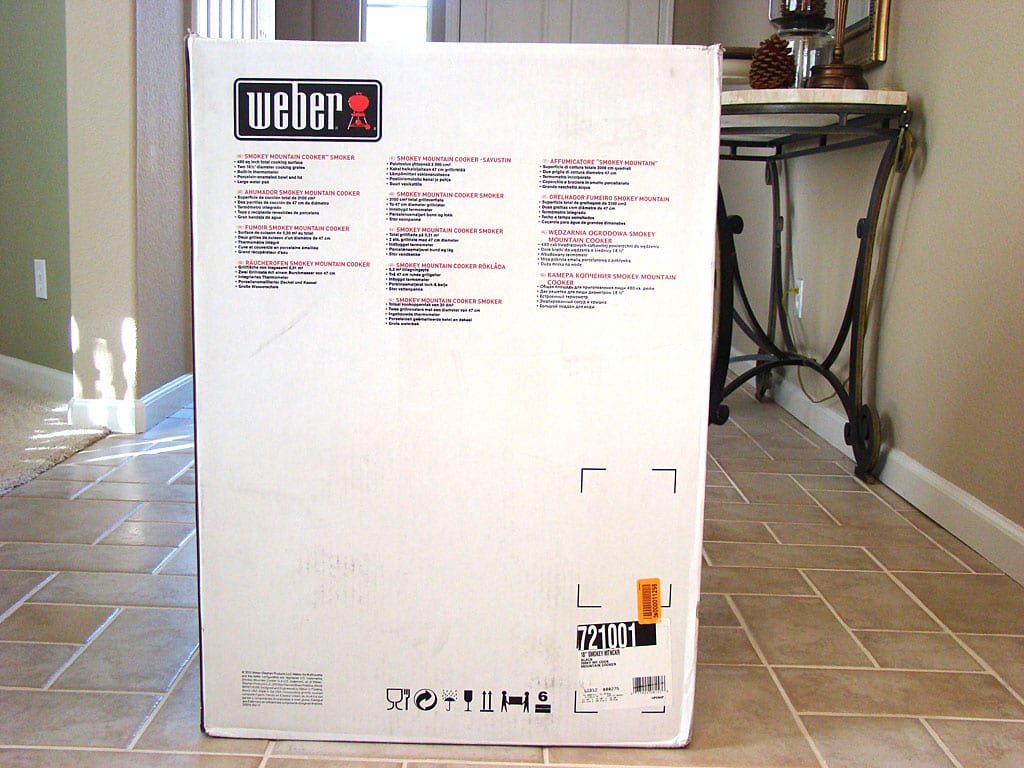
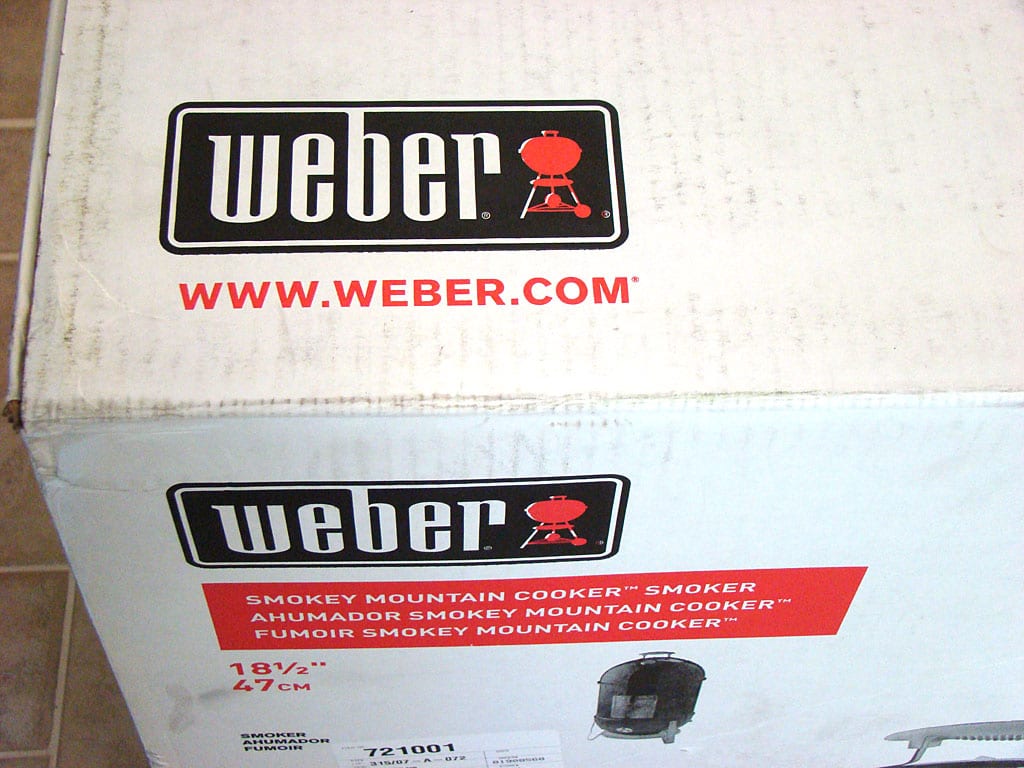
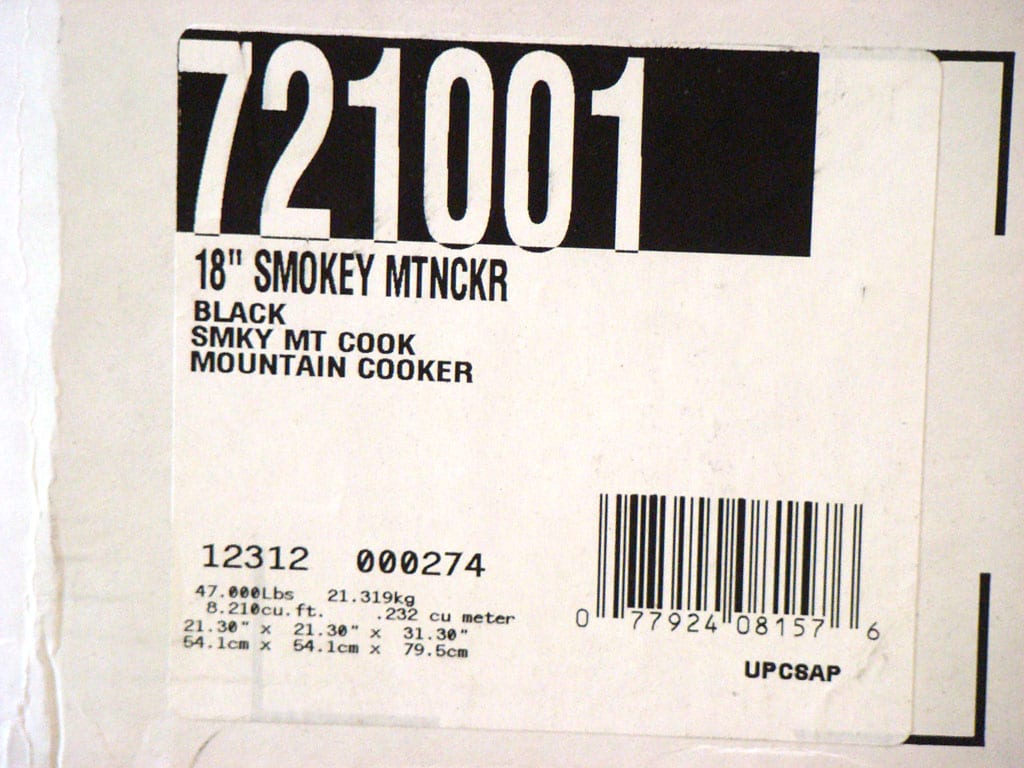
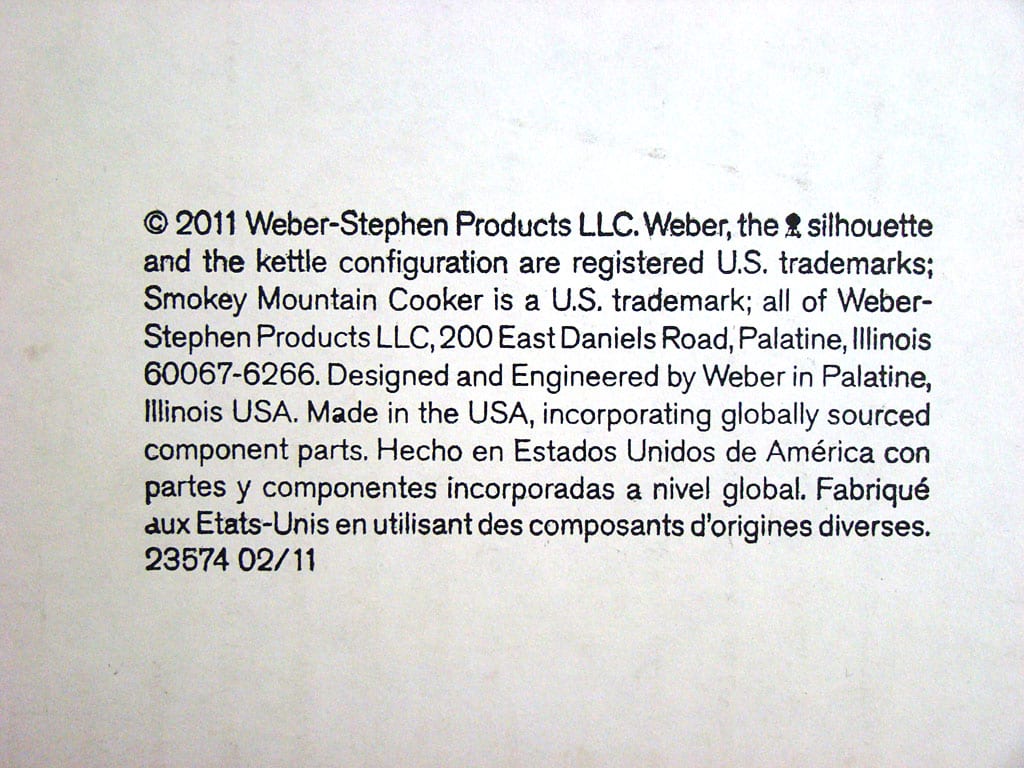
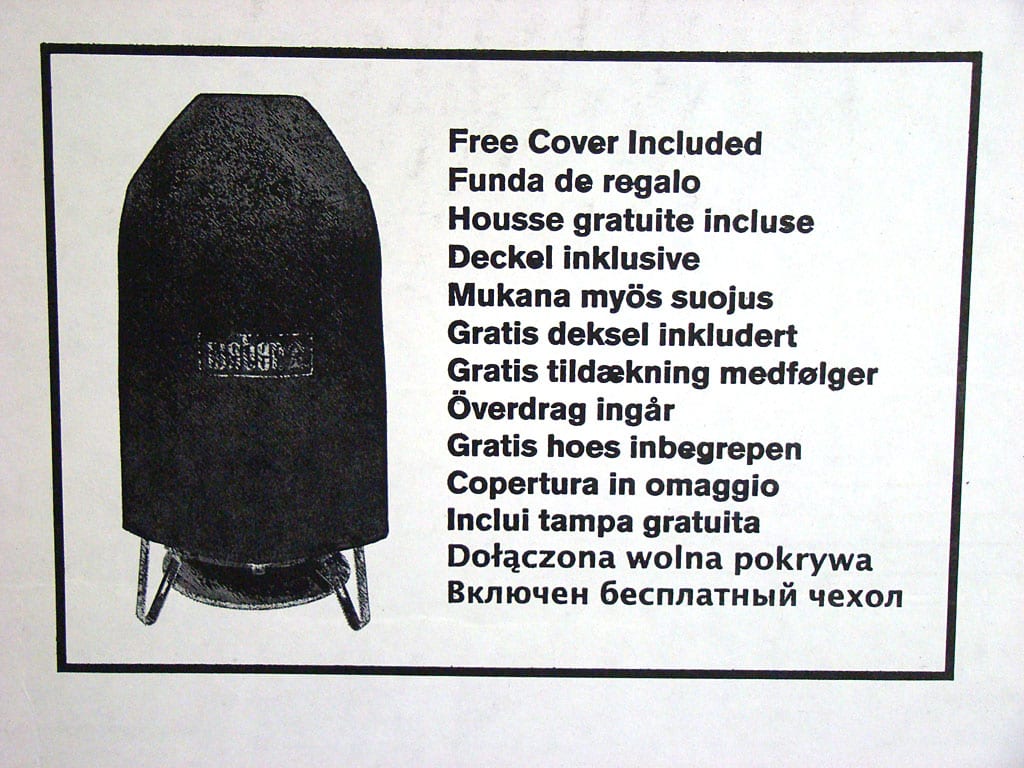
These photos show the exterior of the 18.5″ Weber Smokey Mountain Cooker box. To see photos of past versions of the WSM box, visit WSM Box Art.
Photo 1 shows the front of the box featuring small and large photos of the cooker. Photo 2 shows the side of the box. In 13 languages it says:
- 480 sq inch total cooking surface
- Two 18-1/2″ diameter cooking grates
- Built-in thermometer
- Porcelain-enameled bowl and lid
- Large water pan
Photo 3 shows the Weber website URL on the top of the box. In Photo 4, the number “721001” is the cooker’s model number. The fine print at the bottom of the label indicates that the box measures 21.3″ x 21.3″ x 31.3″ and has a shipping weight of 47 pounds.
Photo 5 shows that the WSM is “Made in USA, incorporating globally sourced component parts”. Photo 6 shows that a free vinyl cover is included with the cooker.
The box is made of corrugated fiberboard with single wall construction. The top and bottom flaps are sealed with 6″ wide plastic packing tape; no staples or adhesives are used.
Upon opening the box, you discover that the Weber Smokey Mountain Cooker is broken down into pieces that are packed vertically in four layers.
Here’s an interesting bit of trivia about how WSM boxes are packed at the factory. The top of the box is sealed and placed upside down, then parts are loaded in from the bottom end of the box. The box is sealed and turned right-side up, so what was on the bottom at the factory is now on the top when you unpack your new WSM at home.
Layer 1: Grates
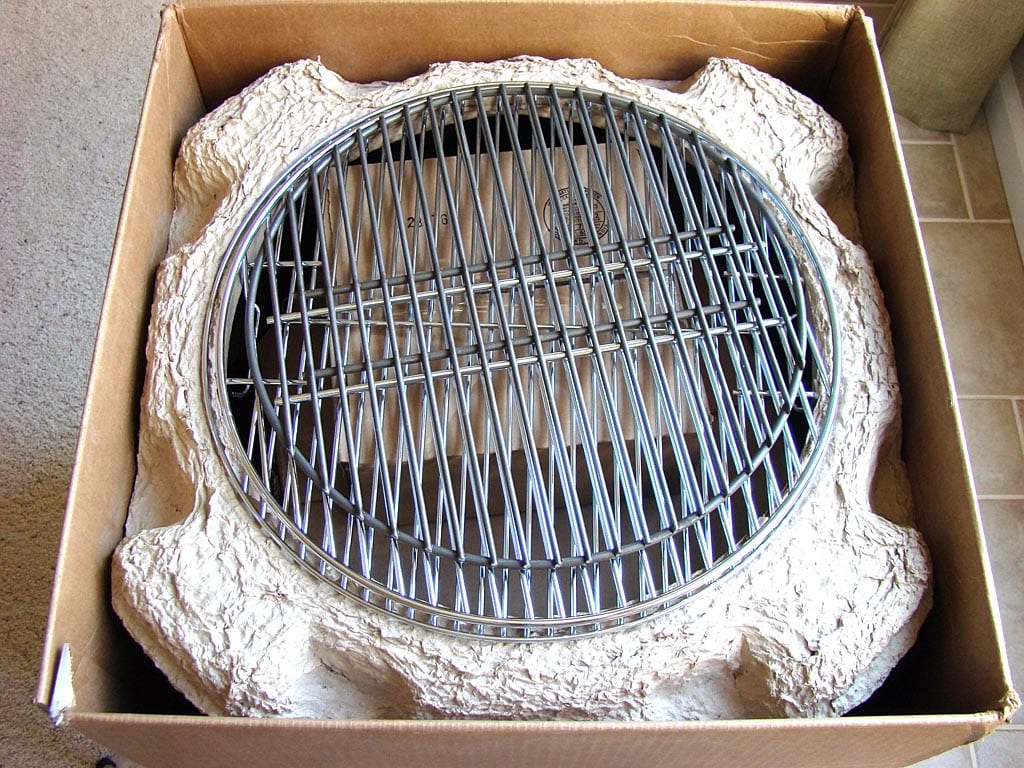
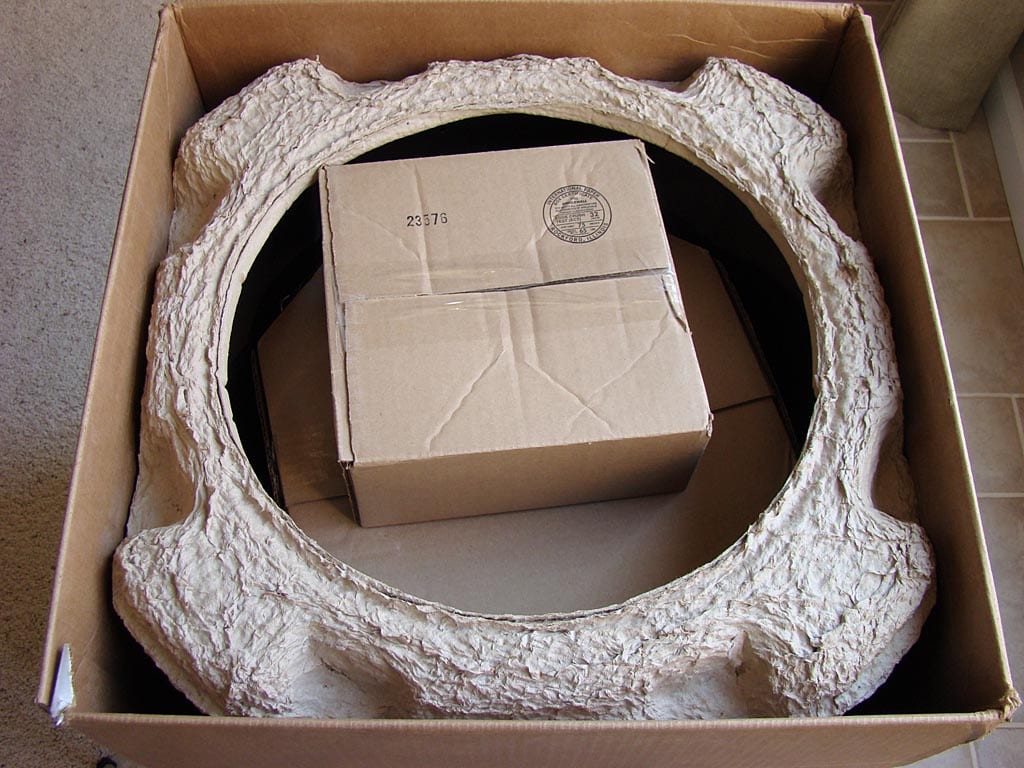
These photos show the contents of the first layer—the grates layer. The charcoal grate is on top, followed by the bottom cooking grate, and finally the top cooking grate. Beneath the grates is the first of 4 molded paper pulp separators and two cardboard boxes that support the weight of the grates.
Layer 2: Middle Cooking Section
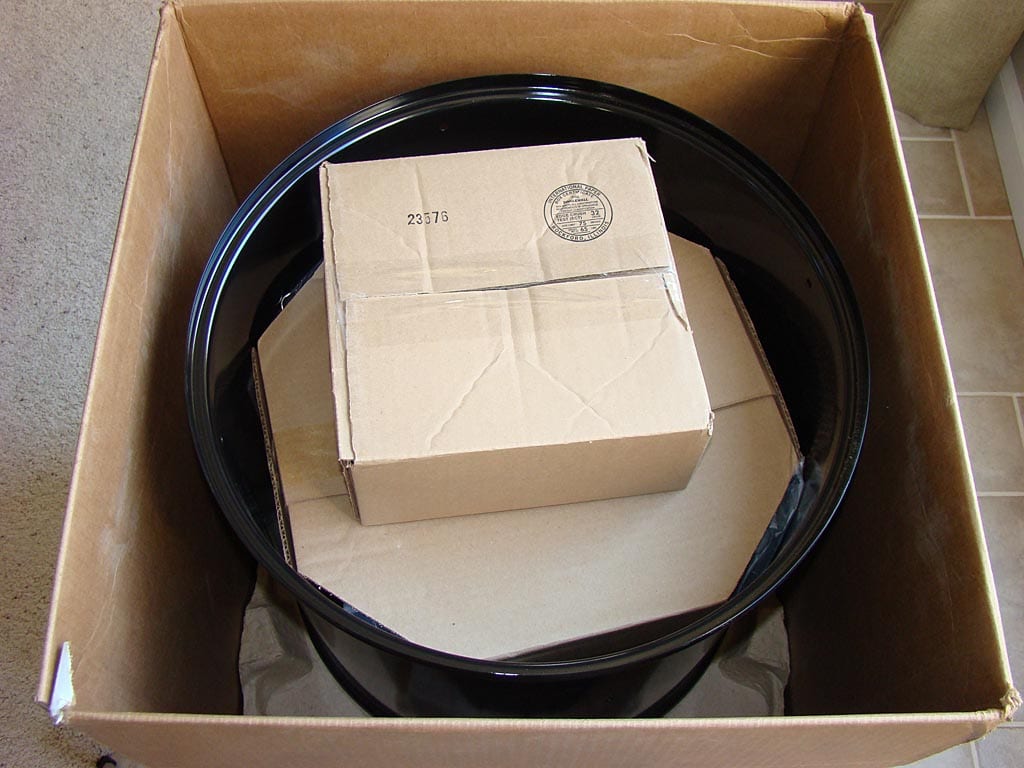
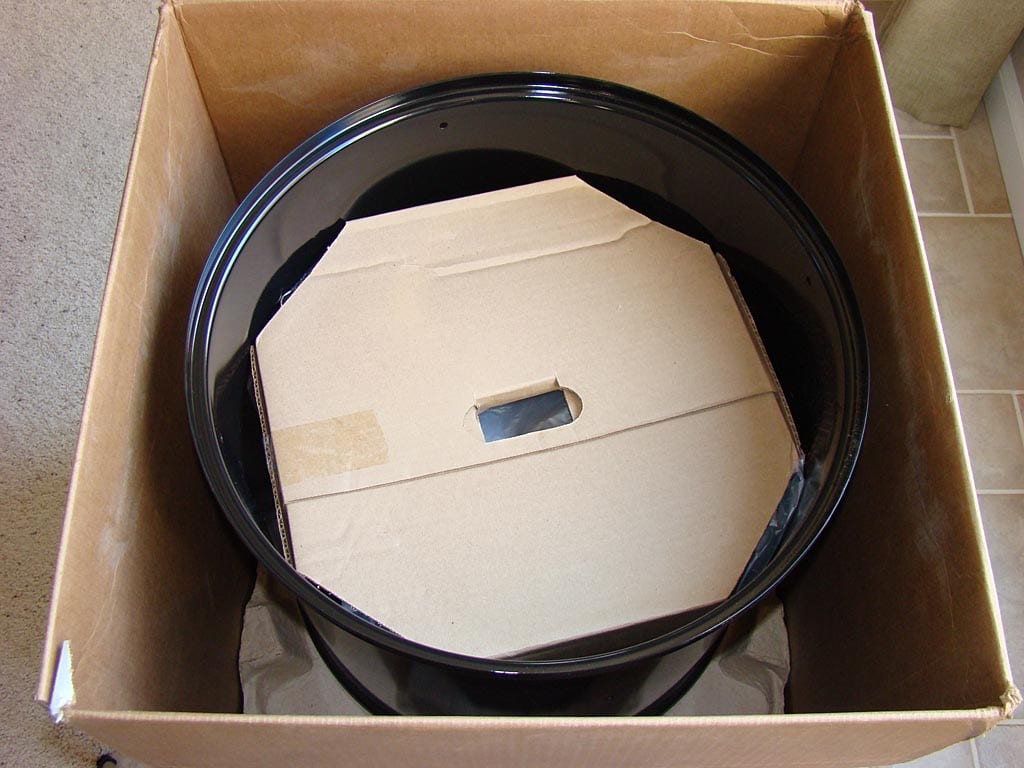
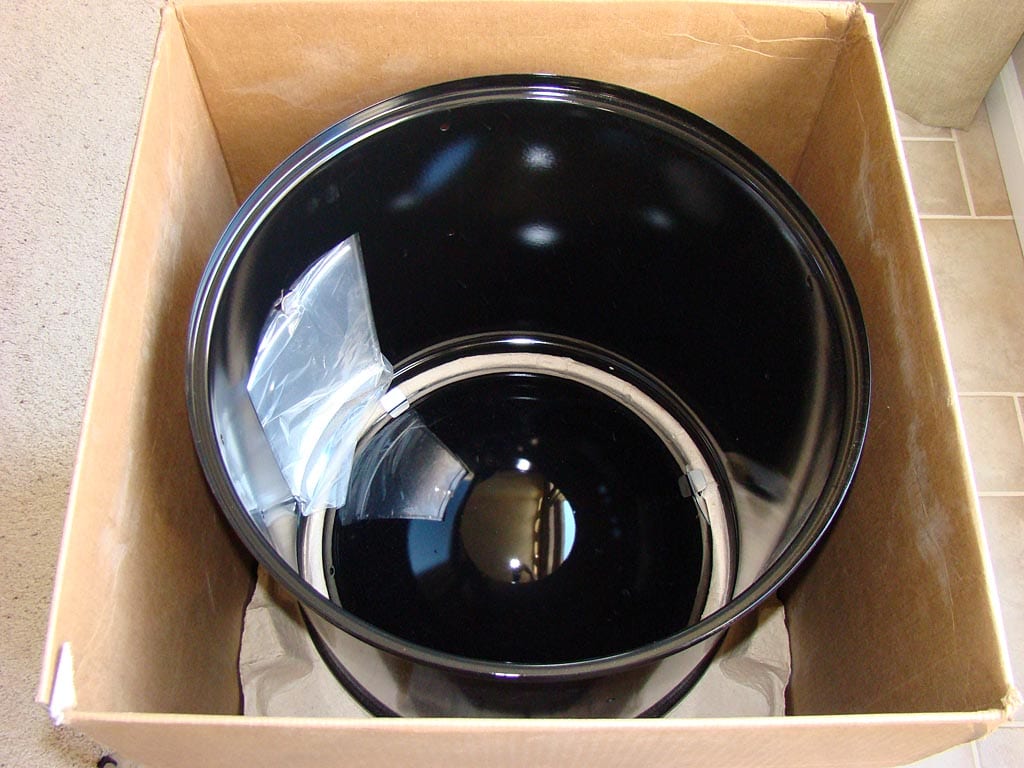
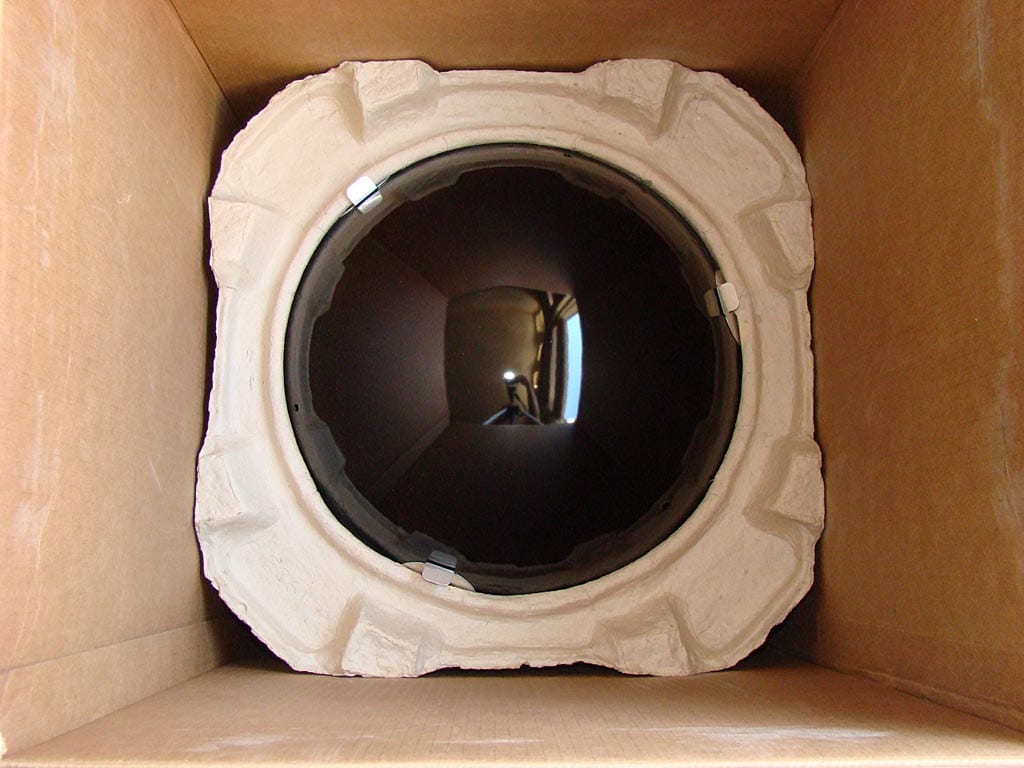
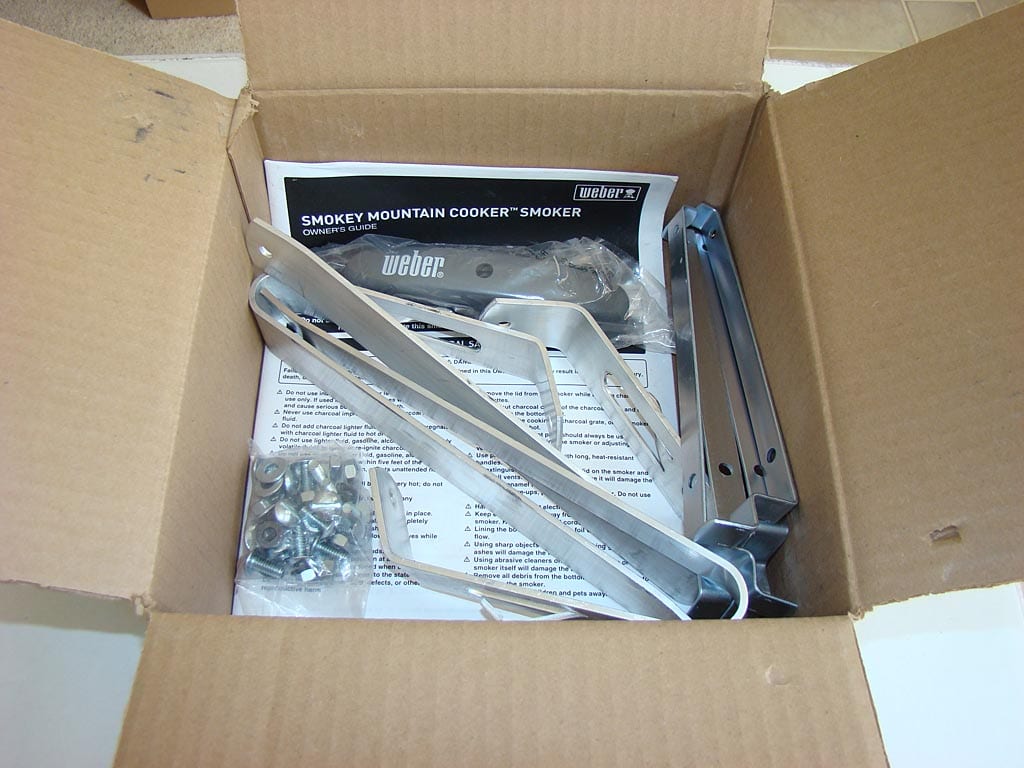
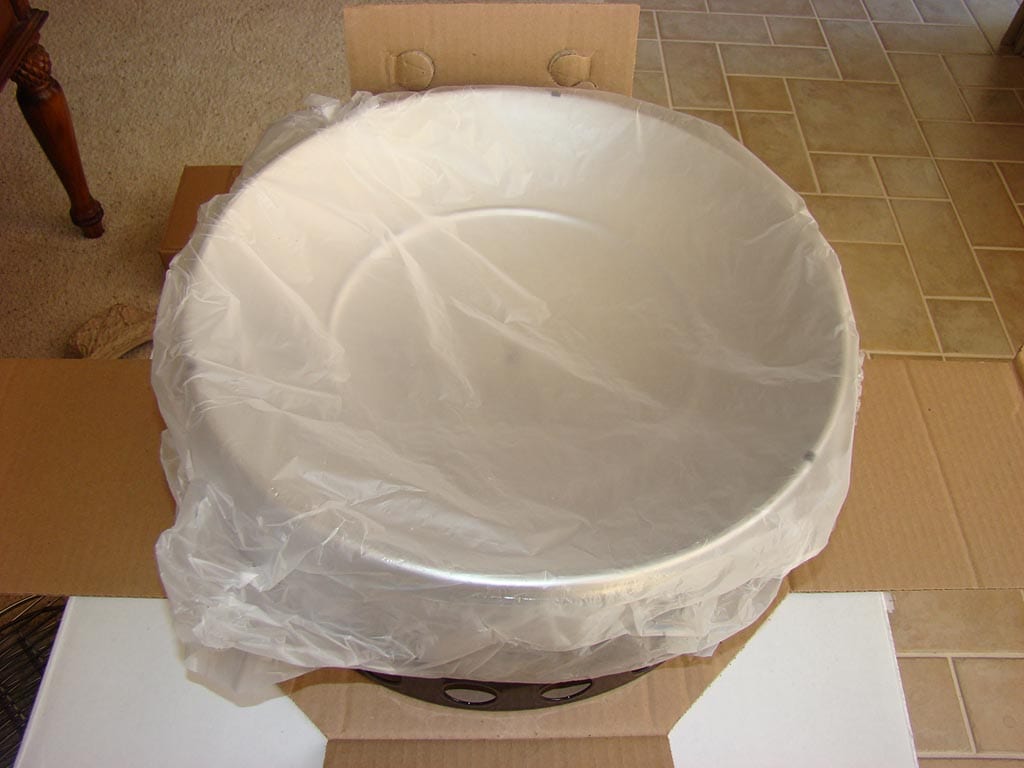
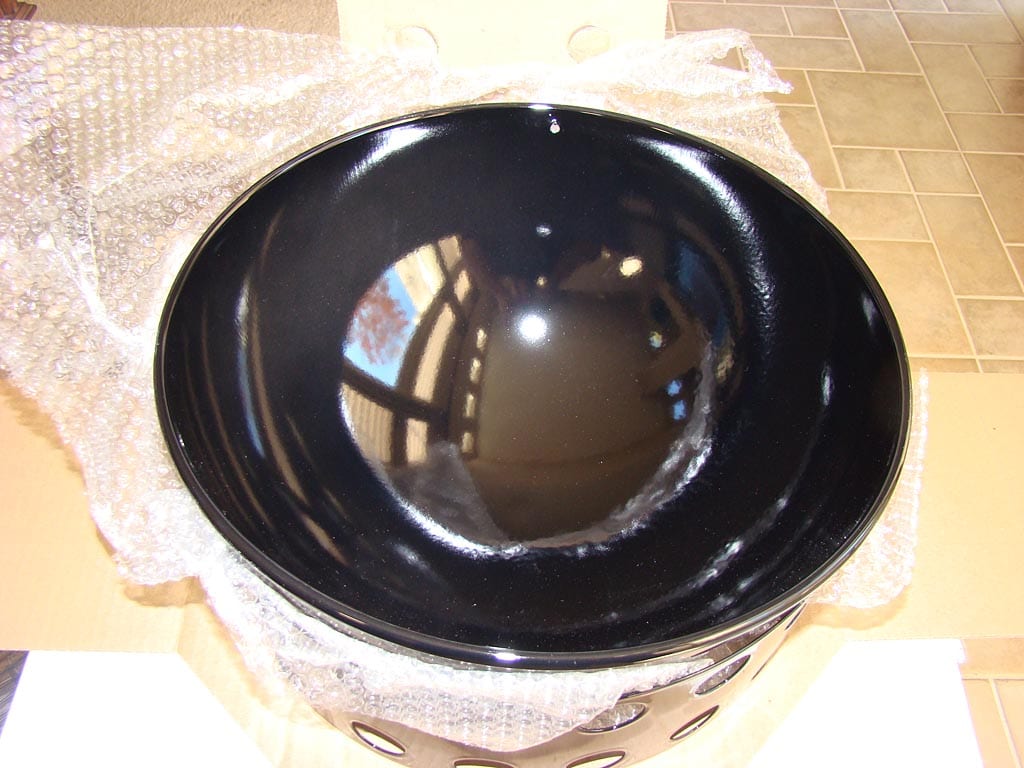
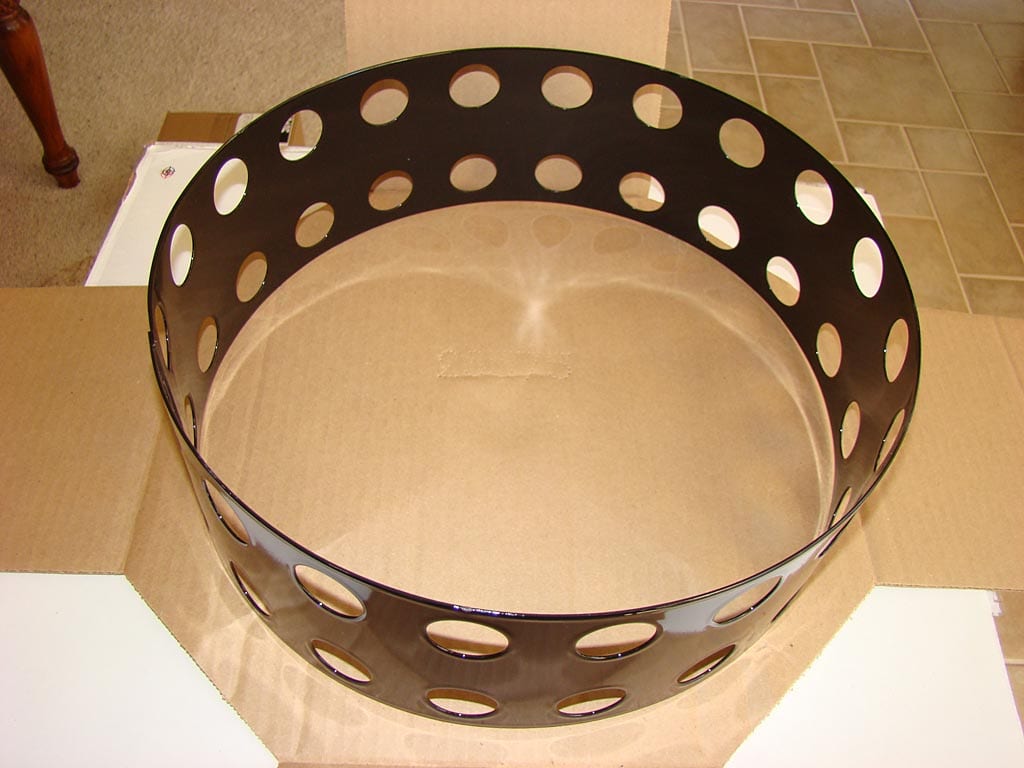
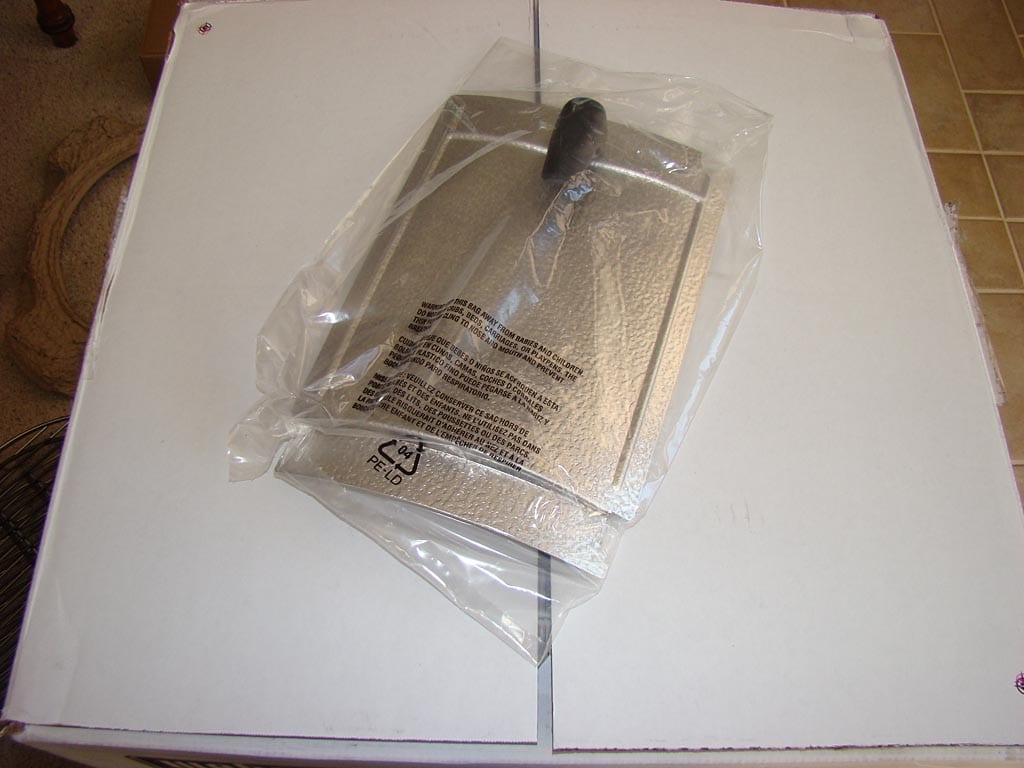
Removing the first molded pulp separator brings us to the second layer—the middle cooking section layer. Inside the middle cooking section is a small cardboard box and an eight-sided box (Photos 1-2). Removing these boxes reveals the top of the charcoal bowl at the bottom of the box (Photo 3). Removing the middle cooking section reveals another molded pulp separator positioned over the charcoal bowl (Photo 4).
The small cardboard box contains the legs, grill straps, nuts, bolts, washers, lid handle, and owner’s manual (Photo 5).
The eight-sided box contains the heat shield wrapped in plastic (Photo 6), the water pan (Photo 7), and the charcoal chamber (Photo 8). The water pan sits on a piece of bubble wrap inside the charcoal chamber.
The access door is wrapped in a plastic bag (Photo 9) and shipped in place, fastened to the side of the middle cooking section.
Layer 3: Charcoal Bowl
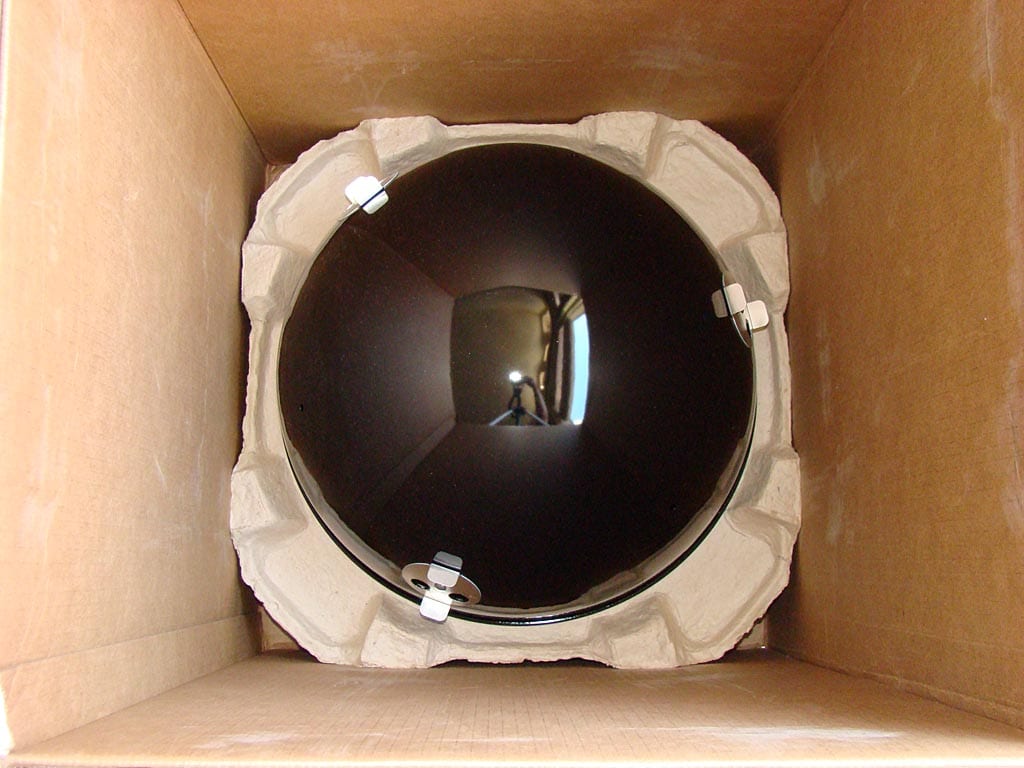
Removing the second molded pulp separator fully reveals the third layer—the charcoal bowl layer. It consists of the charcoal bowl and a third molded pulp separator that help support the weight of the middle cooking section and all the component parts above.
Layer 4: Lid
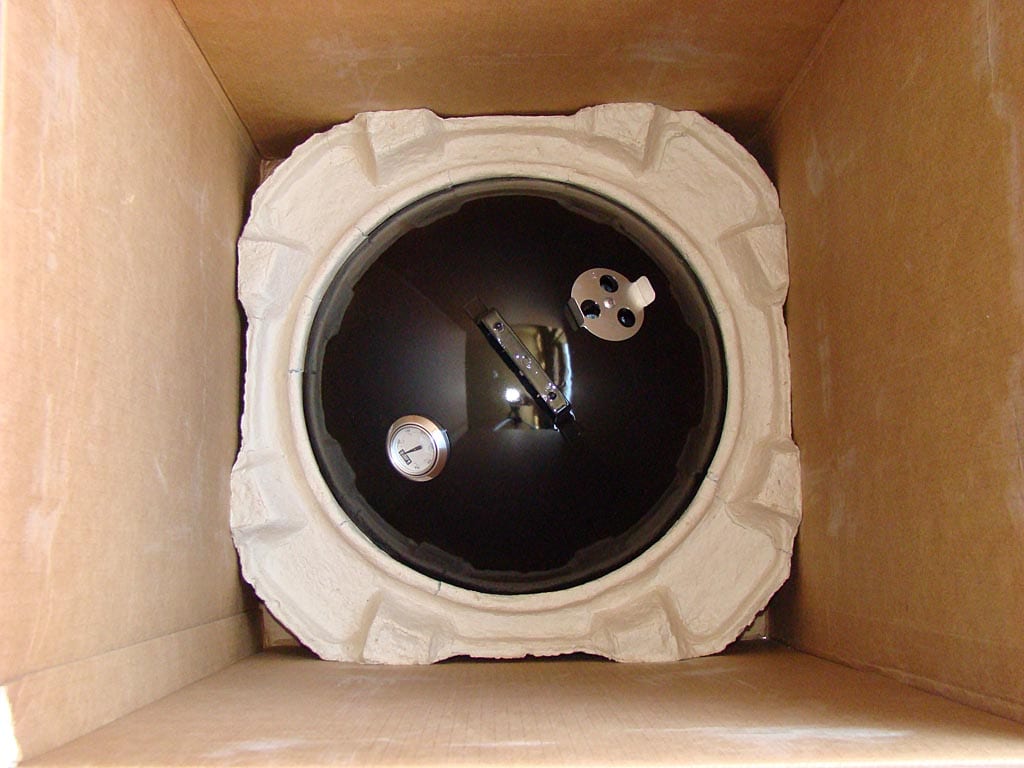
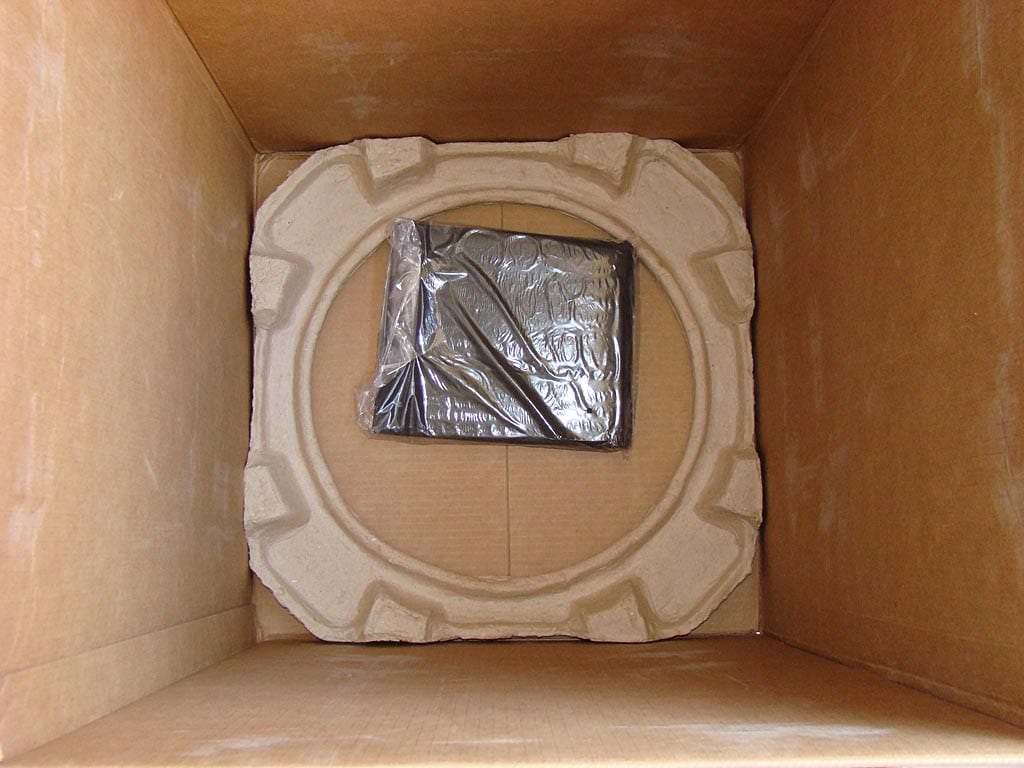
Removing the charcoal bowl and the third molded pulp separator reveals the fourth and final layer—the lid layer. It consists of the lid, a fourth and final pulp separator, and the vinyl cover hiding under the lid.
Due to the lack of clearance between the charcoal bowl and lid, the lid is shipped without the lid handle in place. You’ll find the handle in the small cardboard box with the other parts and fasteners.
2009 – Present 22.5″ Packaging
Out Of Box Video
Here’s a short video that shows the out of box experience for the 22.5″ Weber Smokey Mountain Cooker.
The Shipping Box
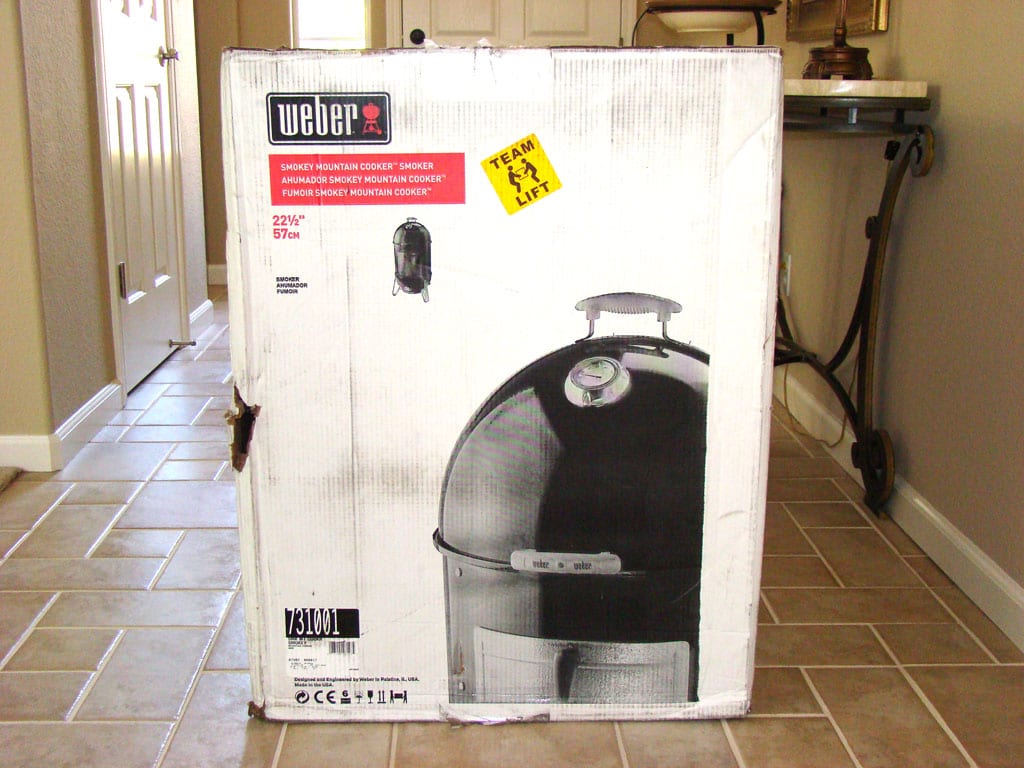
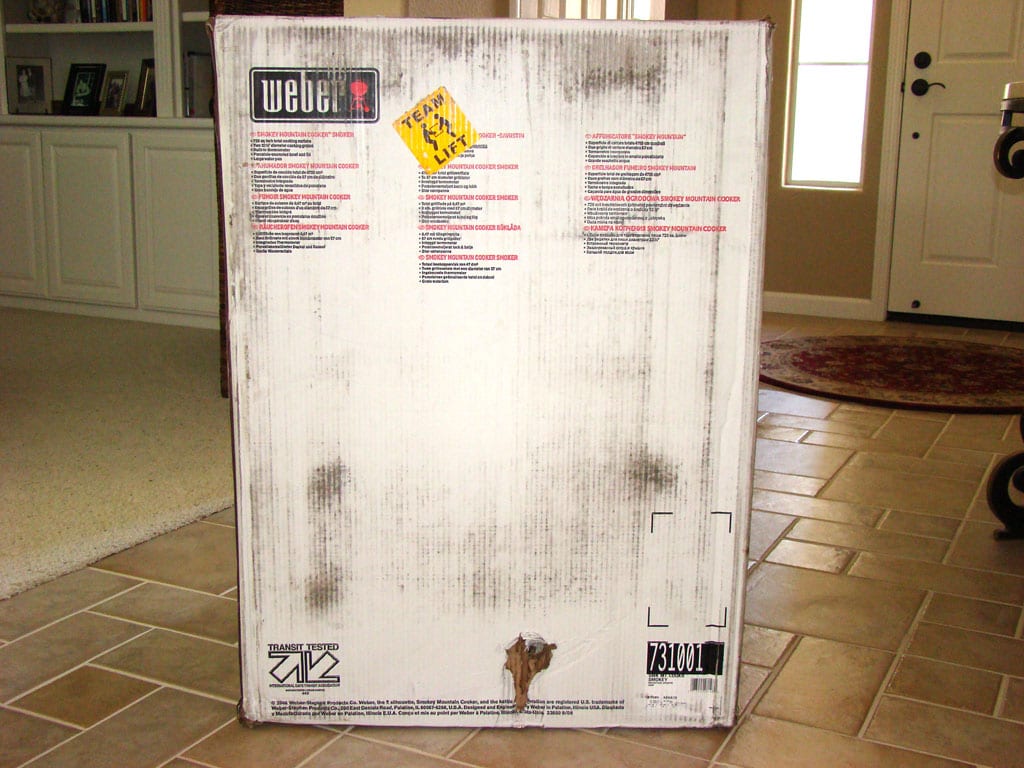
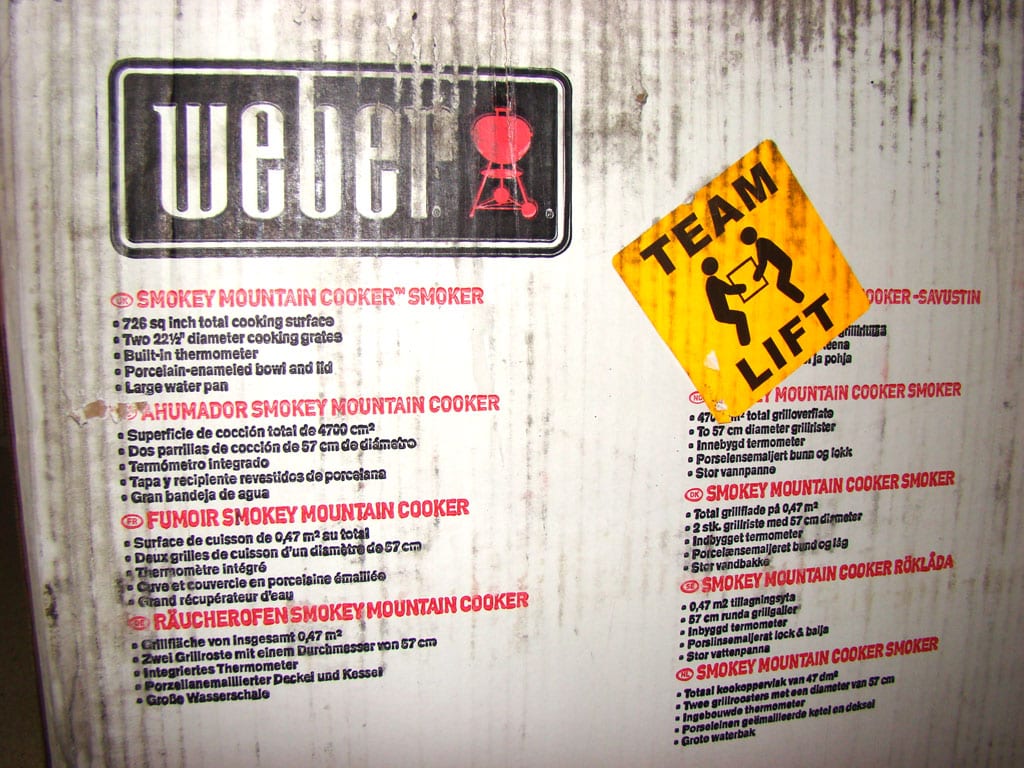
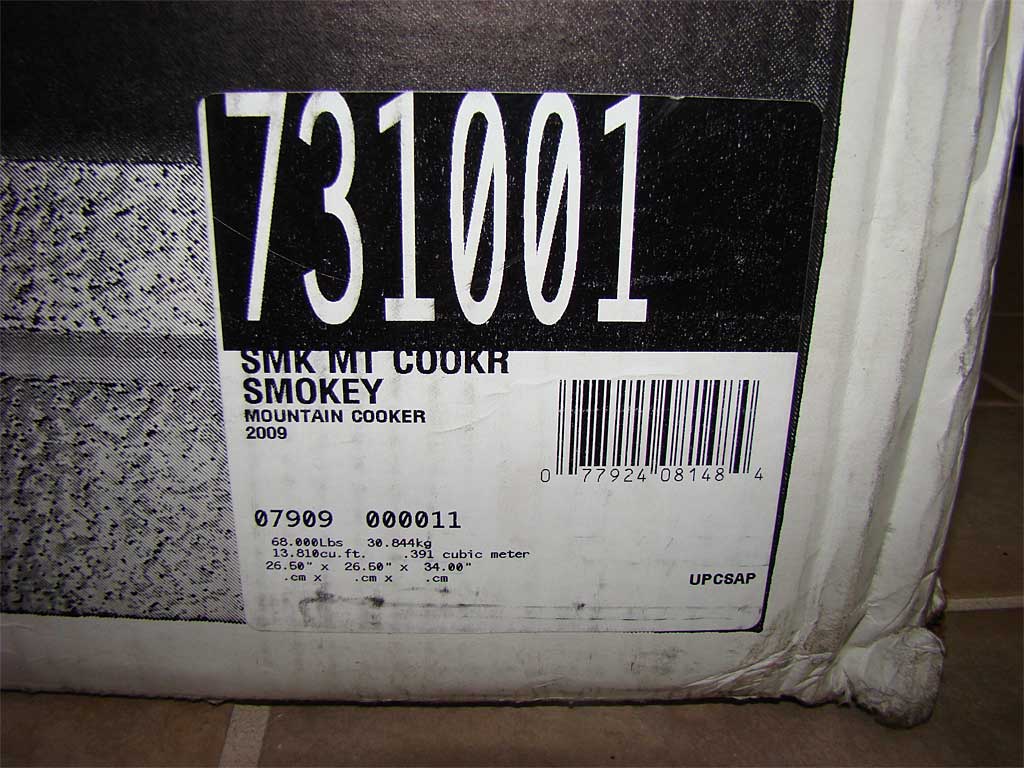
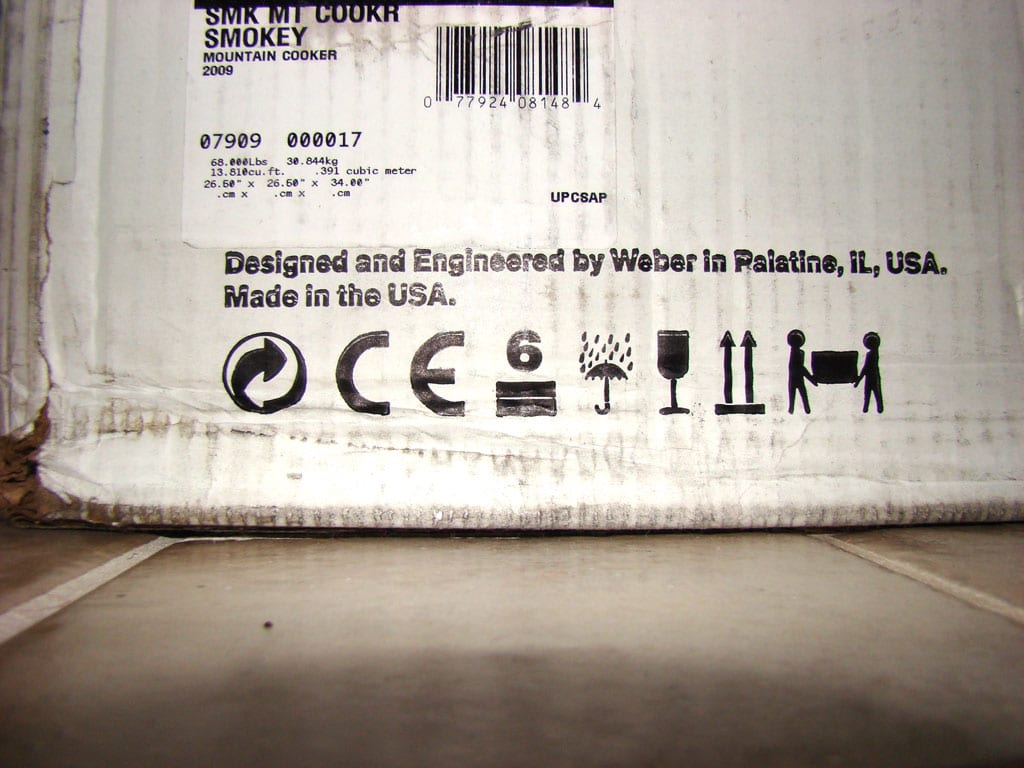
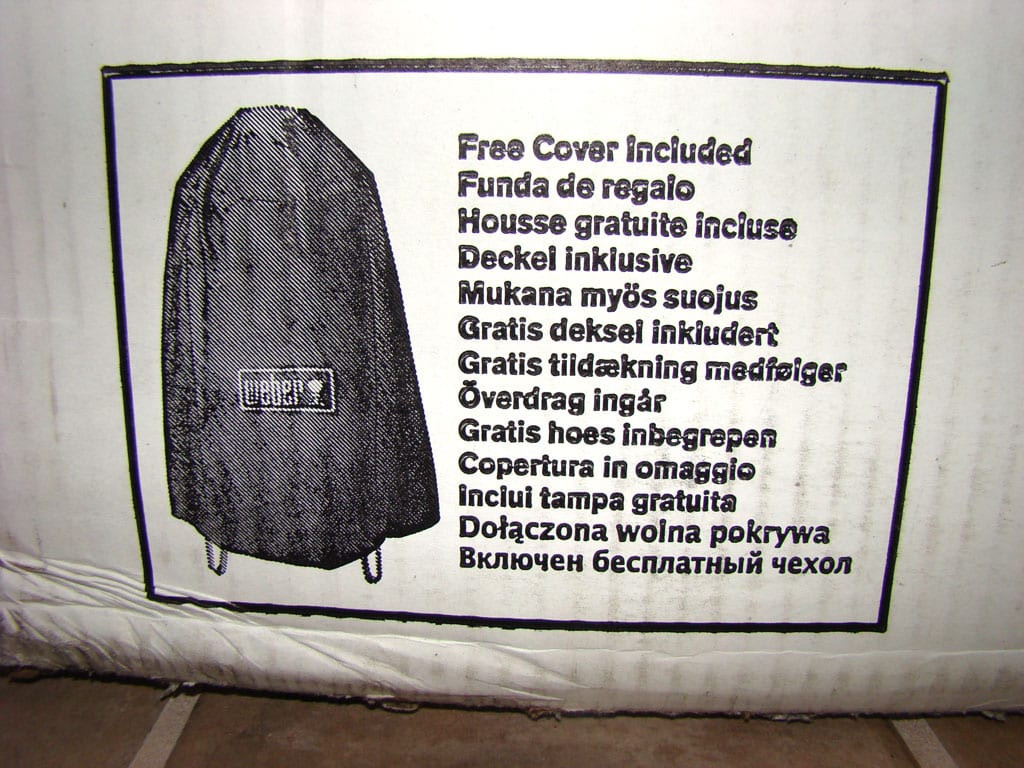
These photos show the exterior of the 22.5″ Weber Smokey Mountain Cooker box. To see photos of past versions of the WSM box, visit WSM Box Art.
Photo 1 shows the front of the box featuring small and large photos of the cooker. Photos 2-3 shows the side of the box. In 13 languages it says:
- 726 sq inch total cooking surface
- Two 22-1/2″ diameter cooking grates
- Built-in thermometer
- Porcelain-enameled bowl and lid
- Large water pan
In Photo 4, the number “731001” is the cooker’s model number. The fine print at the bottom of the label indicates that the box measures 26.5″ x 26.5″ x 34″ and has a shipping weight of 68 pounds.
Photo 5 shows that the WSM is “Made in USA”. Photo 6 shows that a free vinyl cover is included with the cooker.
The box is made of corrugated fiberboard with single wall construction. The top and bottom flaps are sealed with 6″ wide plastic packing tape; no staples or adhesives are used.
Upon opening the box, you discover that the Weber Smokey Mountain Cooker is broken down into pieces that are packed vertically in four layers.
Here’s an interesting bit of trivia about how WSM boxes are packed at the factory. The top of the box is sealed and placed upside down, then parts are loaded in from the bottom end of the box. The box is sealed and turned right-side up, so what was on the bottom at the factory is now on the top when you unpack your new WSM at home.
Layer 1: Grates
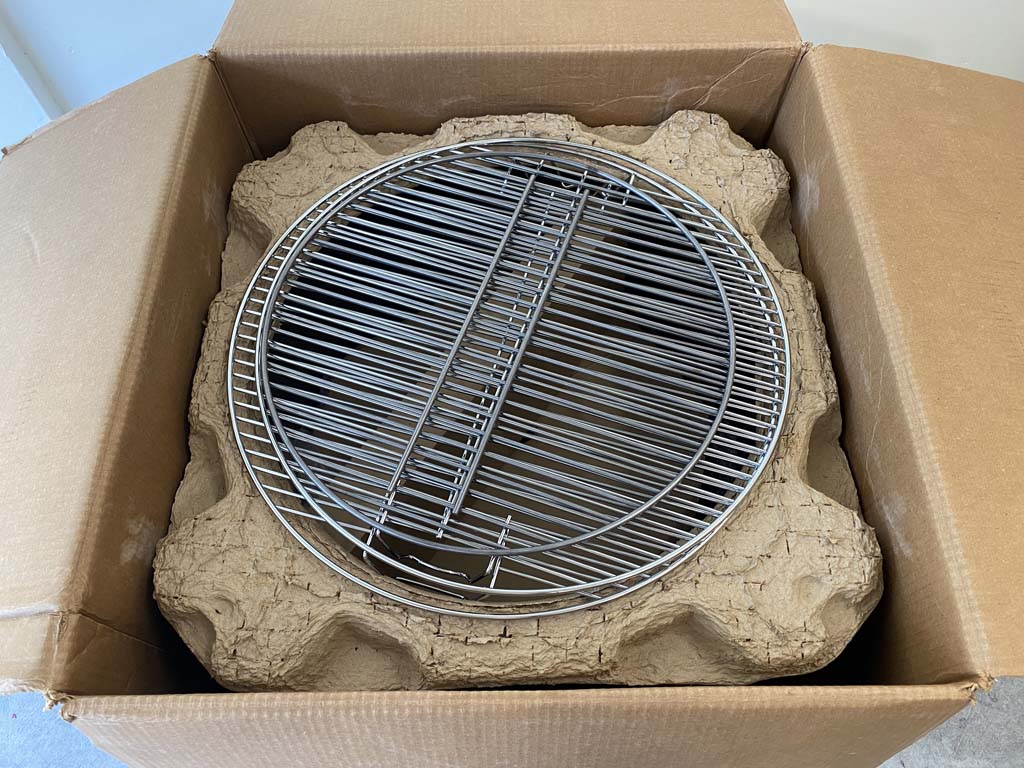
These photos show the contents of the first layer—the grates layer. The charcoal grate is on top, followed by the bottom cooking grate, and finally the top cooking grate. Beneath the grates is the first of 4 molded paper pulp separators and two cardboard boxes that support the weight of the grates.
Layer 2: Middle Cooking Section
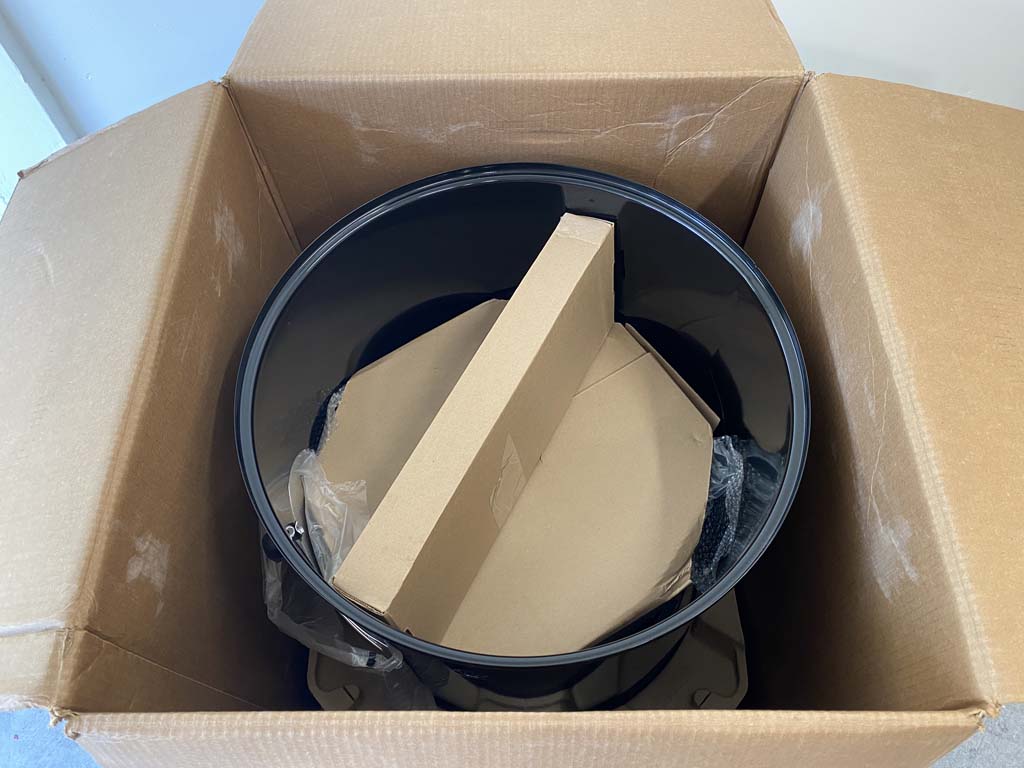
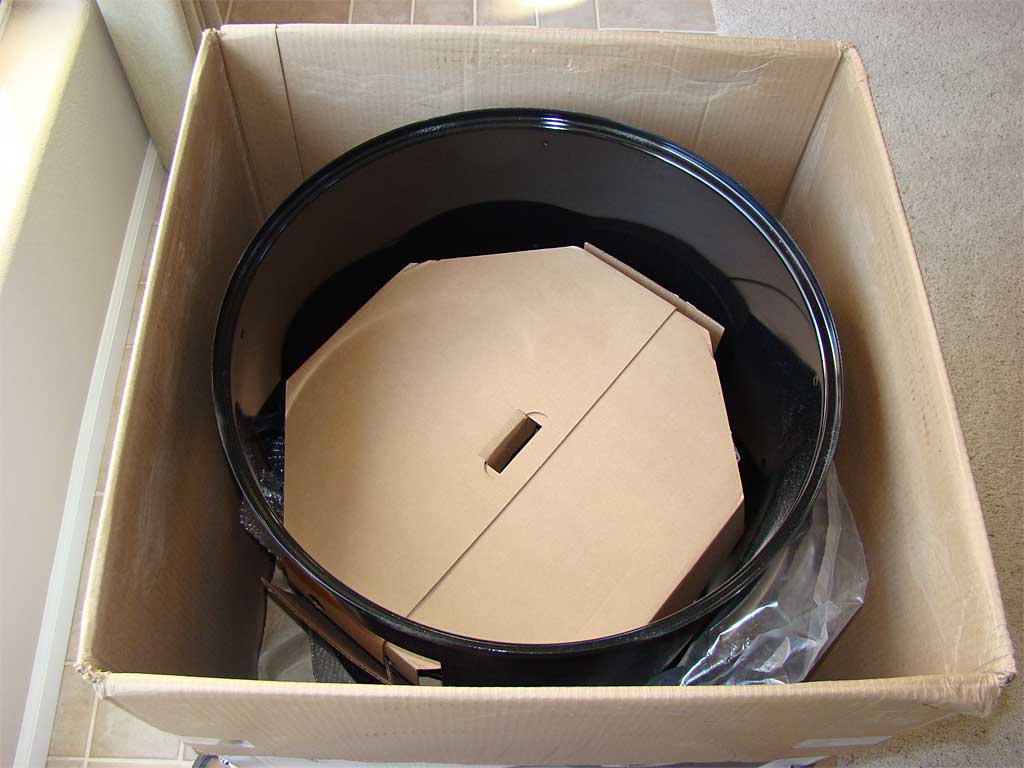
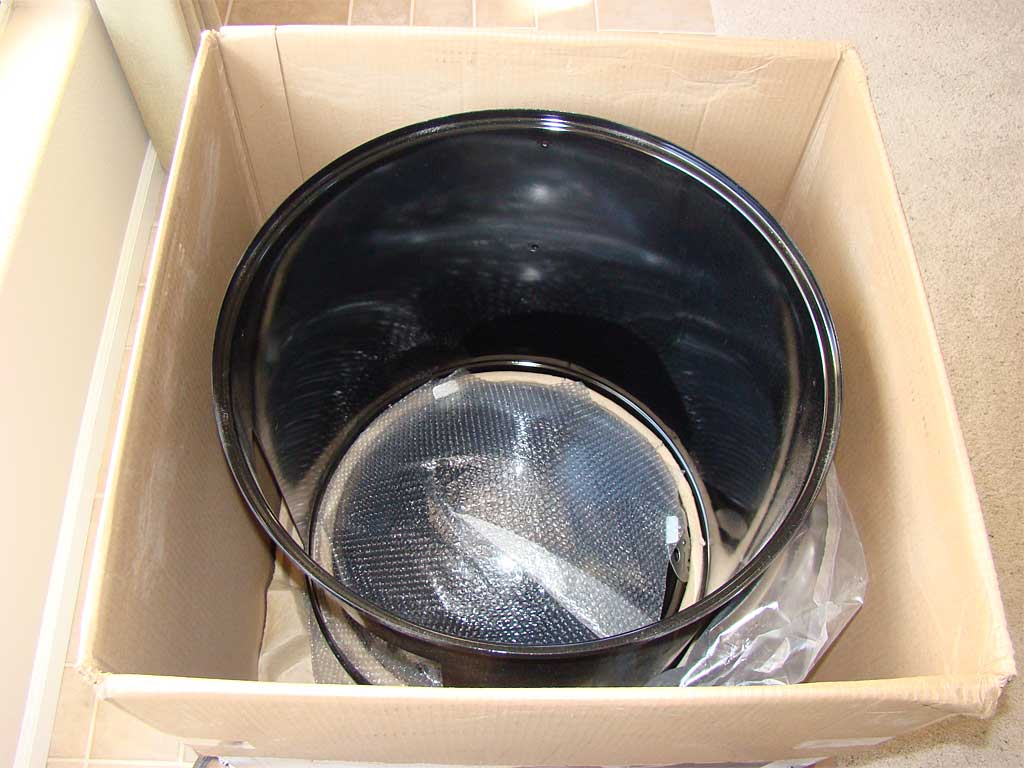
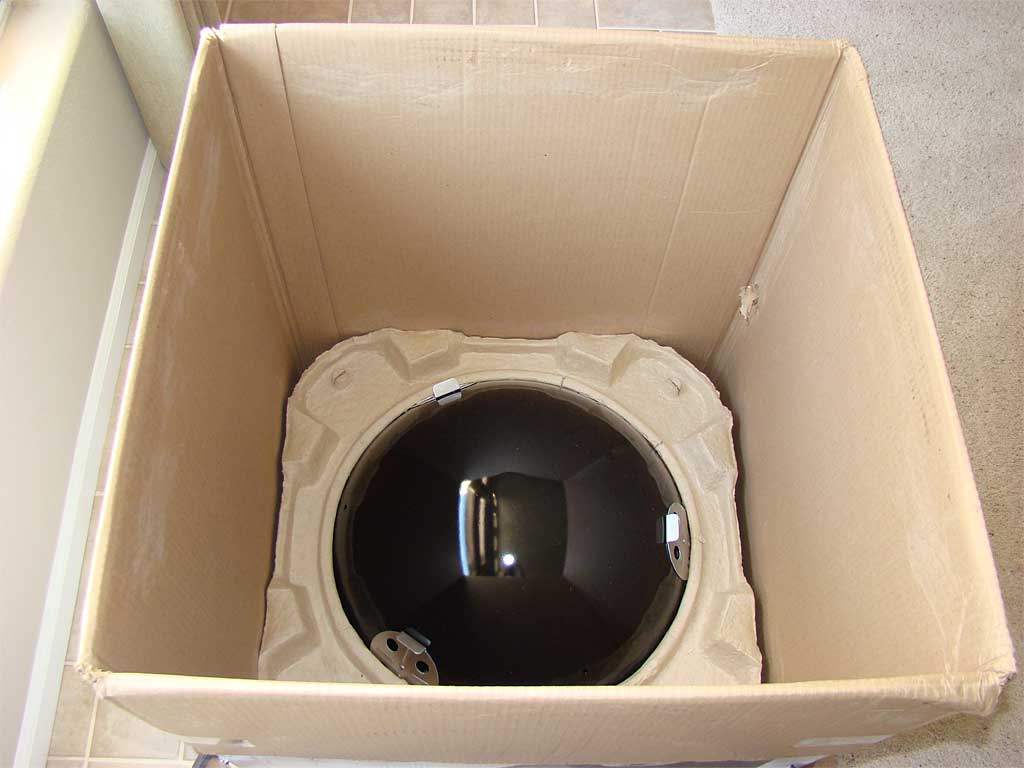
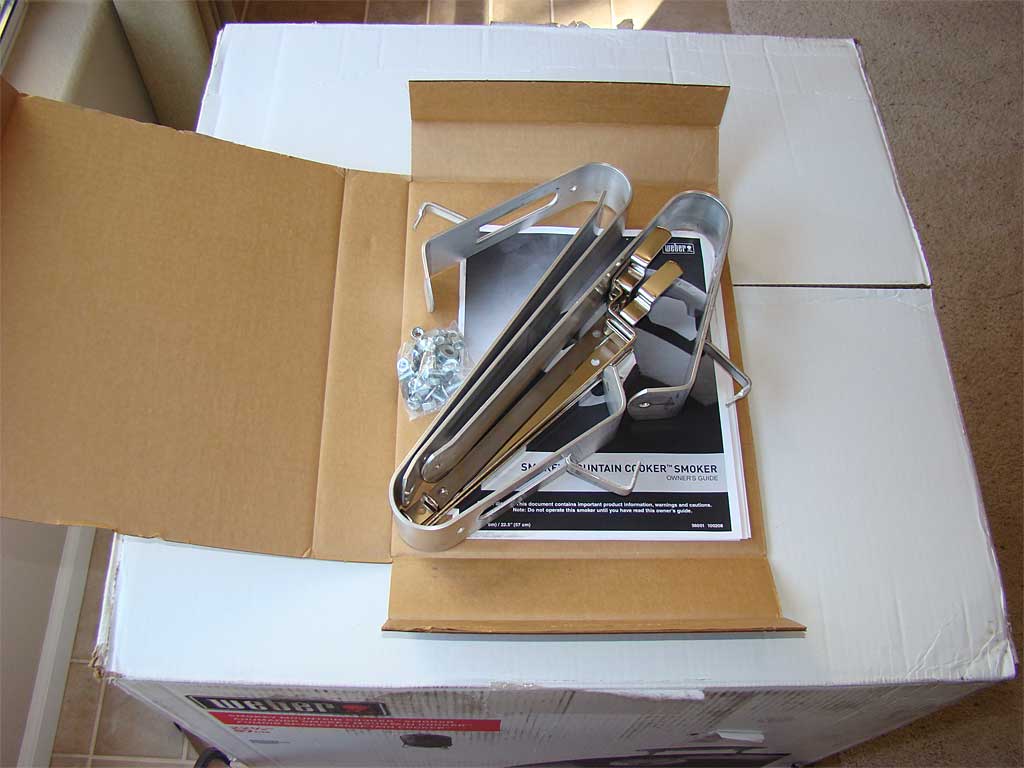
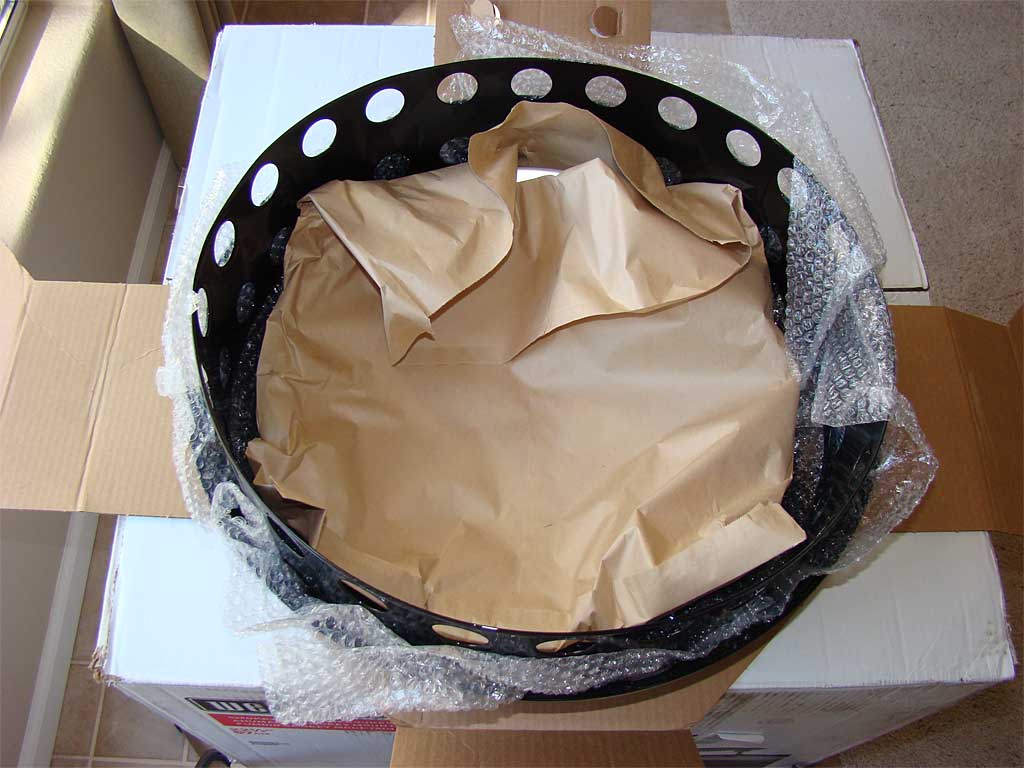
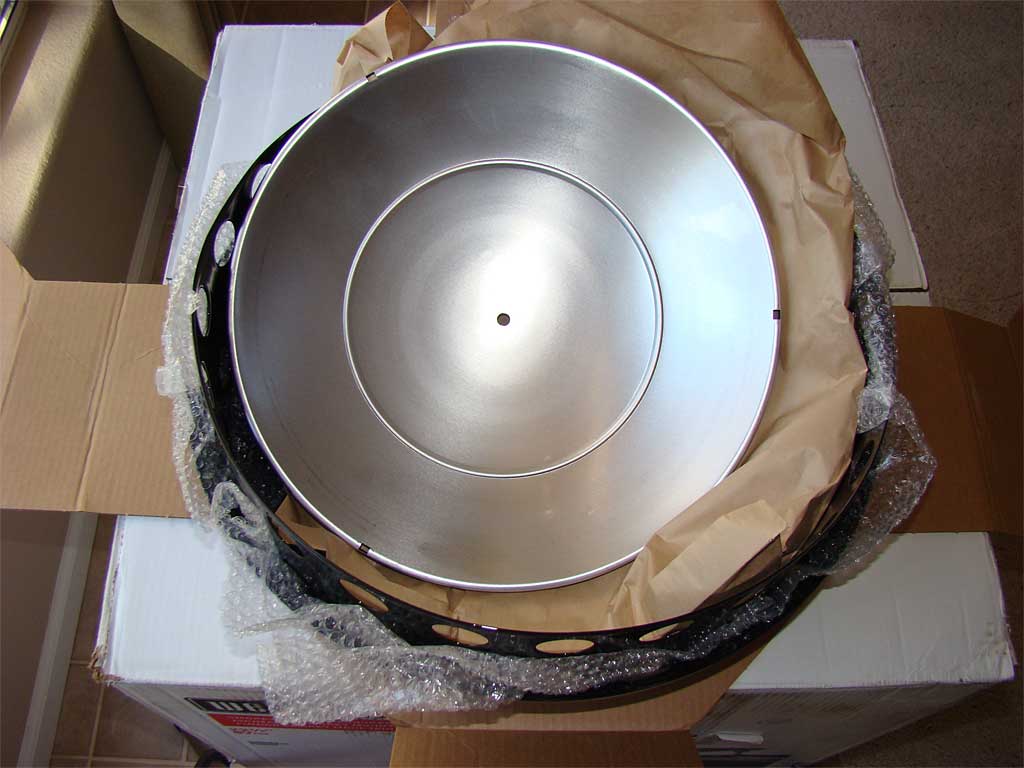
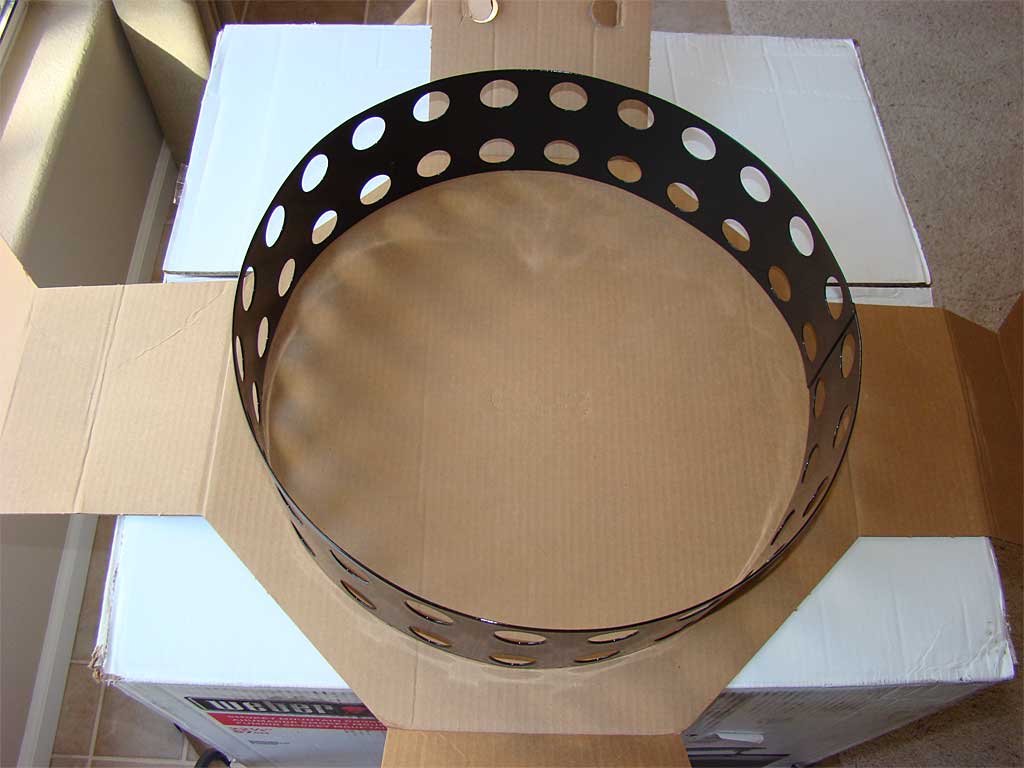
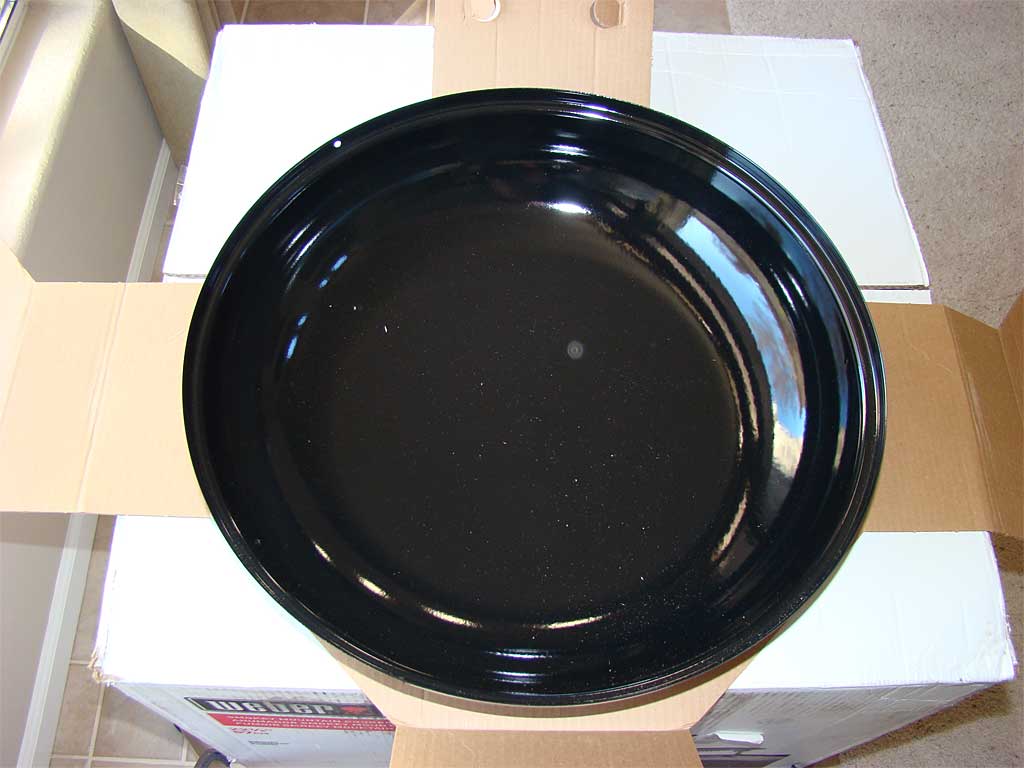
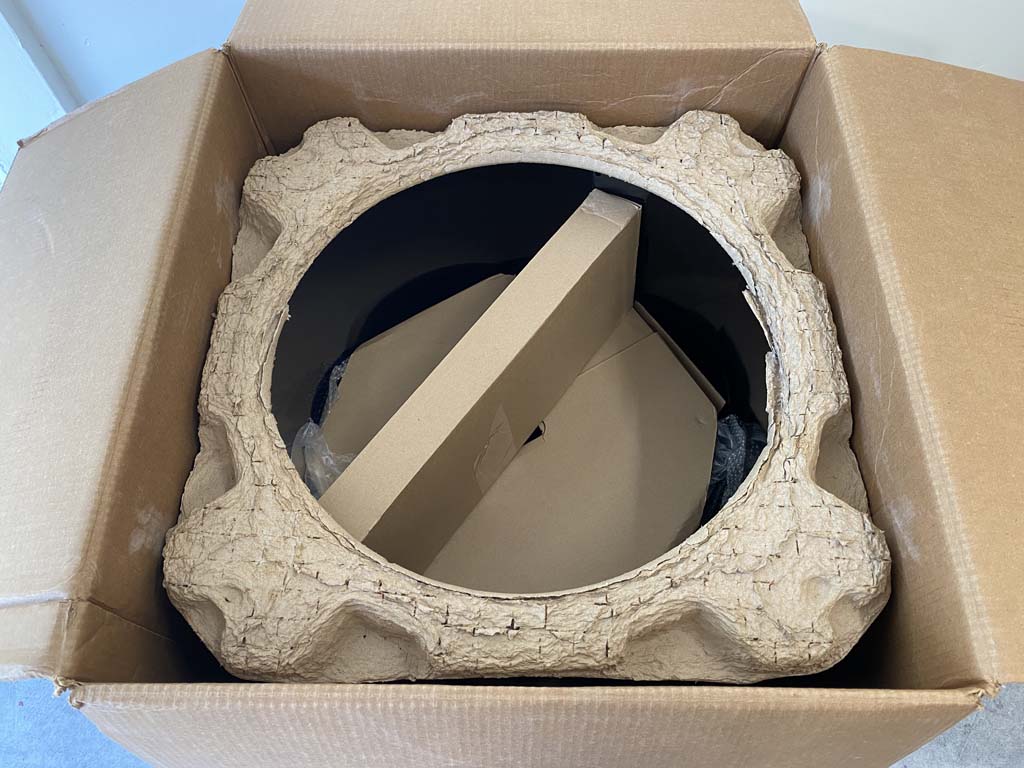
Removing the first molded pulp separator brings us to the second layer—the middle cooking section layer. Inside the middle cooking section is a small cardboard box and an eight-sided box (Photos 1-2). Removing these boxes reveals the top of the charcoal bowl at the bottom of the box covered with bubble wrap (Photo 3). Removing the middle cooking section and bubble wrap reveals another molded pulp separator positioned over the charcoal bowl (Photo 4).
The small cardboard box contains the legs, grate support brackets, nuts, bolts, washers, and owner’s manual (Photo 5).
The eight-sided box contains the heat shield wrapped in paper (Photos 6-7), the charcoal chamber (Photo 8), and the water pan (Photo 9). The charcoal chamber sits on a piece of bubble wrap inside of the water pan.
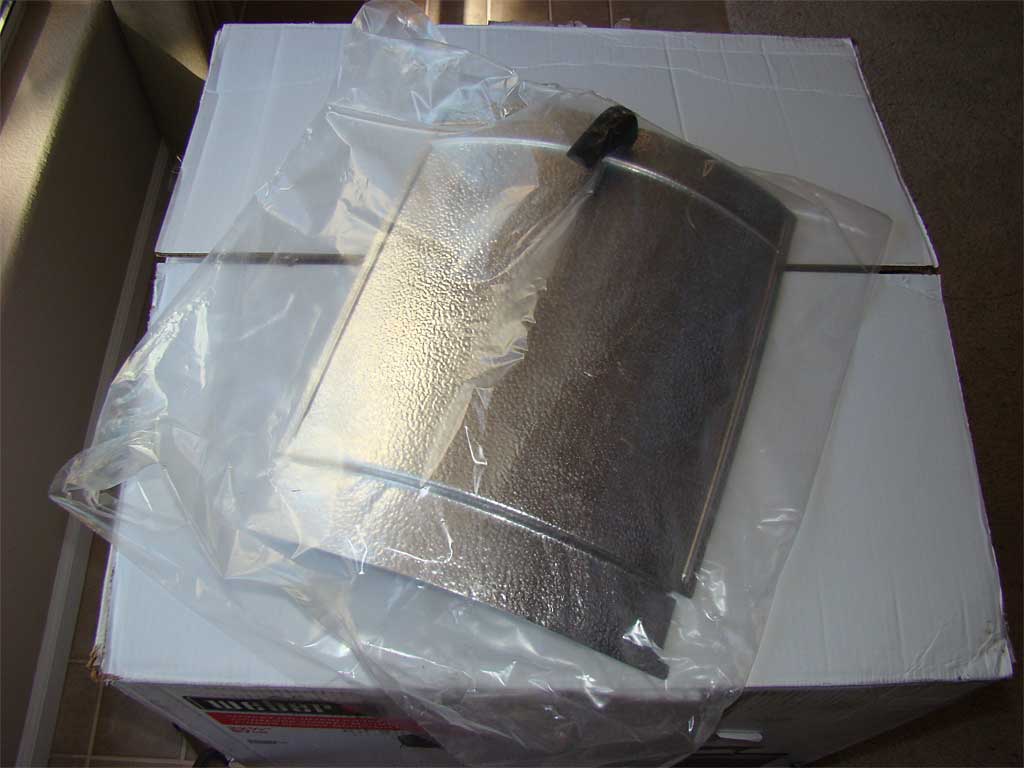
The access door is wrapped in a plastic bag (Photo 10) and shipped in place, fastened to the side of the middle cooking section.
Layer 3: Charcoal Bowl
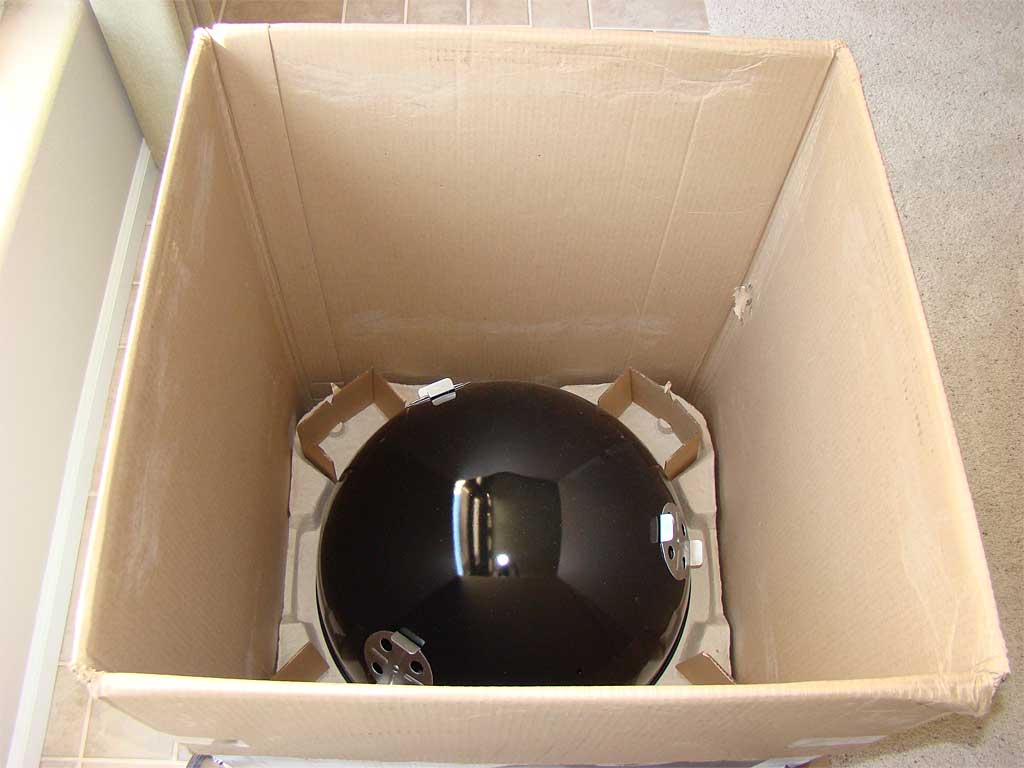
Removing the second molded pulp separator fully reveals the third layer—the charcoal bowl layer. It consists of the charcoal bowl and a third molded pulp separator and 4 cardboard pieces that help support the weight of the middle cooking section and all the component parts above.
Layer 4: Lid
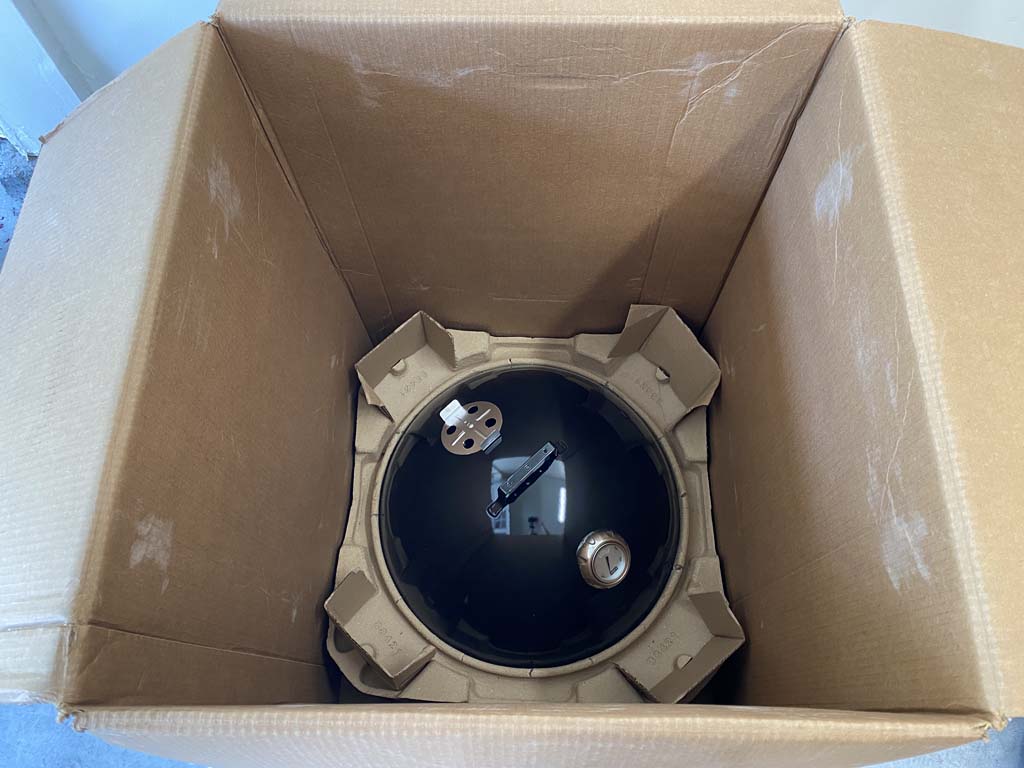
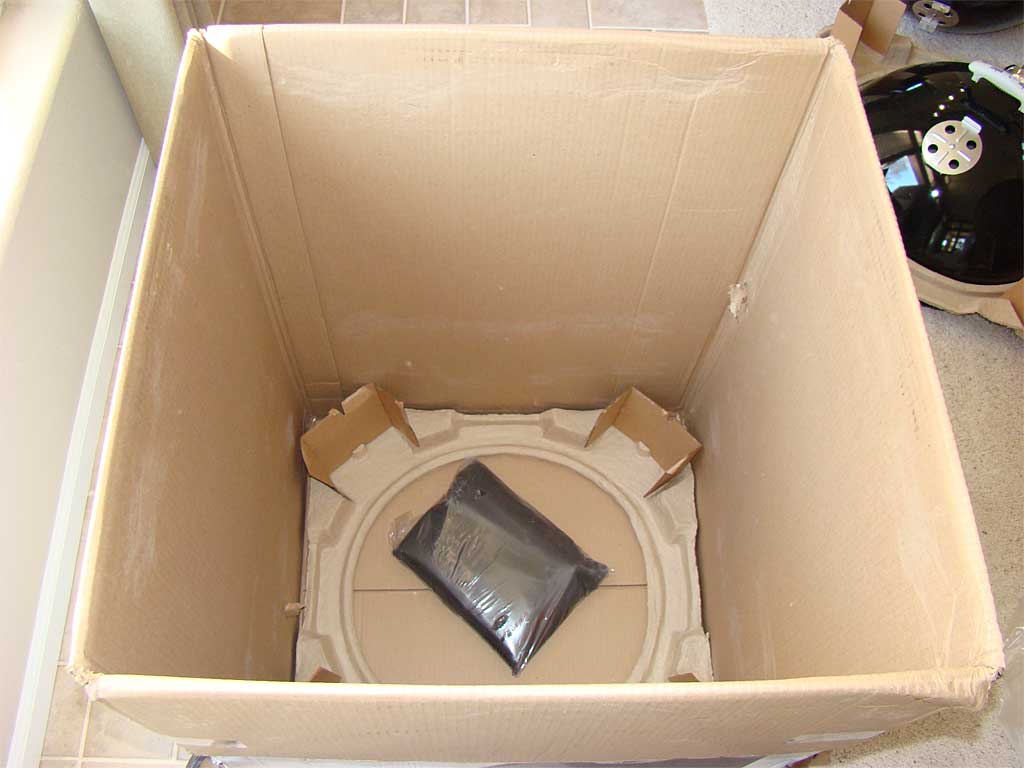
Removing the charcoal bowl and the third molded pulp separator reveals the fourth and final layer—the lid layer. It consists of the lid, a fourth and final pulp separator, 4 more cardboard pieces, and the vinyl cover hiding under the lid.
2008 & Earlier Packaging
The Shipping Box
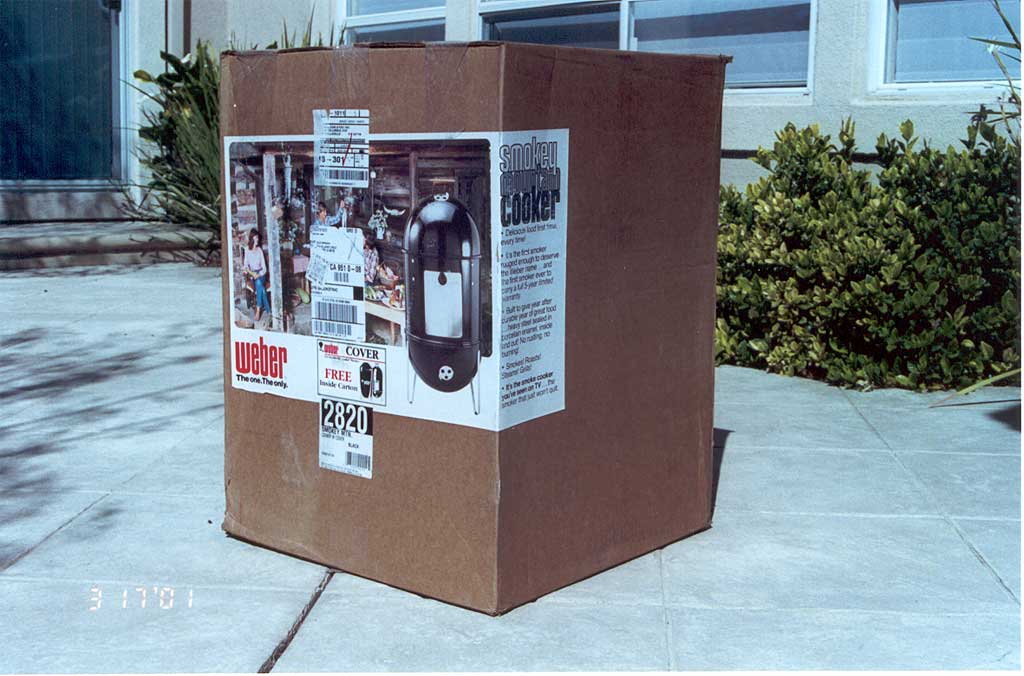
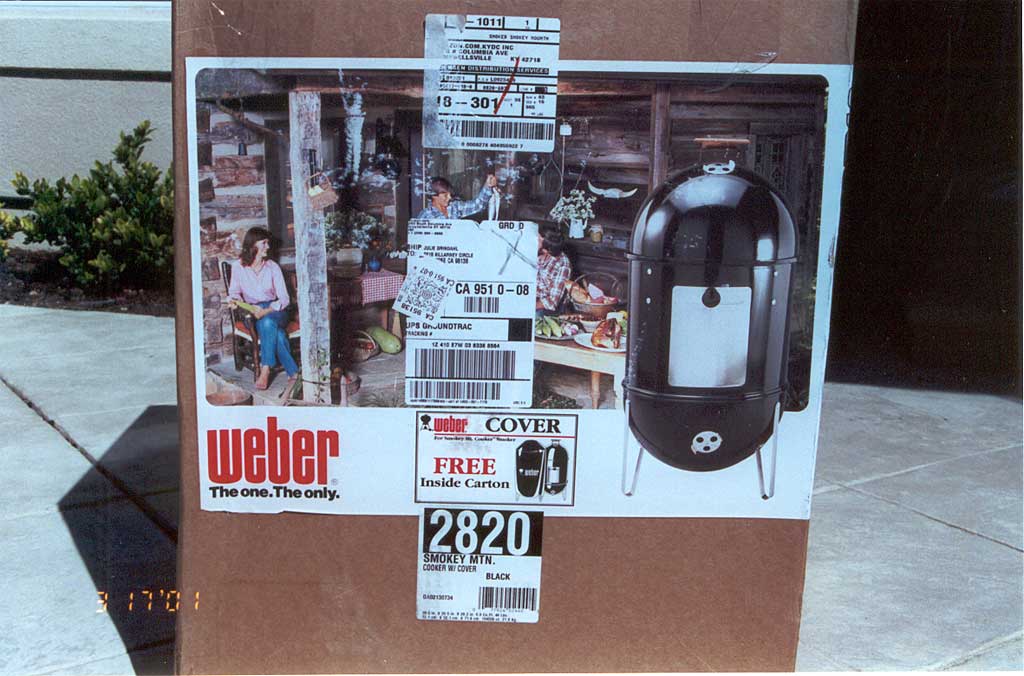
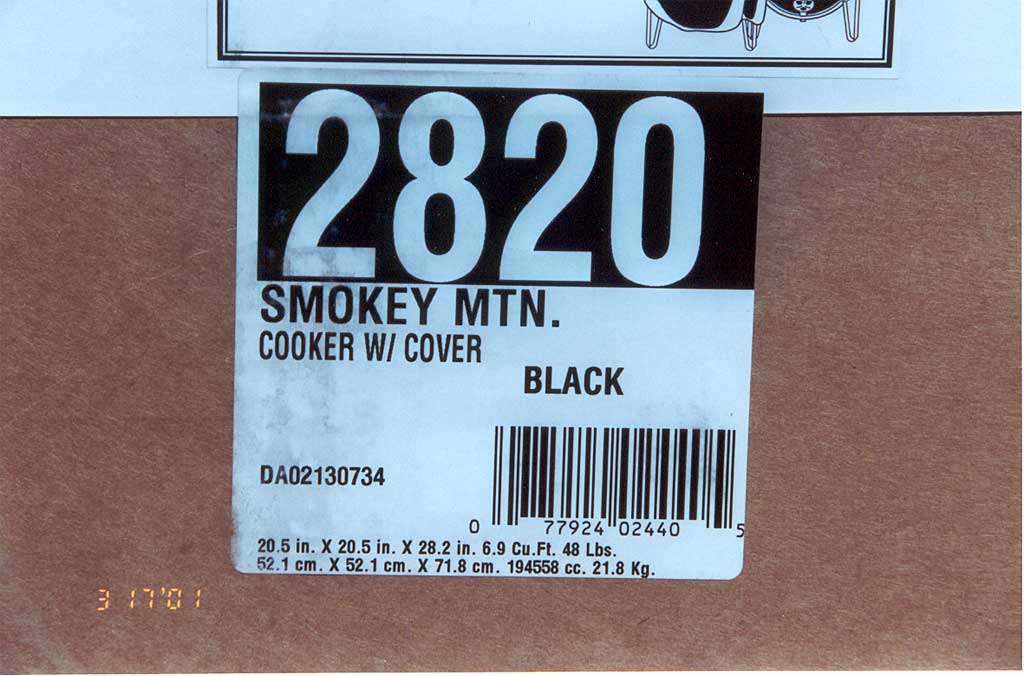
These photos show the exterior of the Weber Smokey Mountain Cooker box. To see photos of past versions of the WSM box, visit WSM Box Art.
The number “2820” is the cooker’s model number. The fine print at the bottom of the label indicates that the box measures 20.5″ x 20.5″ x 28.2″ and has a shipping weight of 48 pounds.
The box is made of corrugated fiberboard with single wall construction. The top and bottom flaps are sealed with ordinary packing tape; no staples or adhesives are used.
Upon opening the box, you discover that the Weber Smokey Mountain Cooker is broken down into pieces that are packed vertically in four layers. Each layer is described below.
Layer 1: Charcoal Bowl
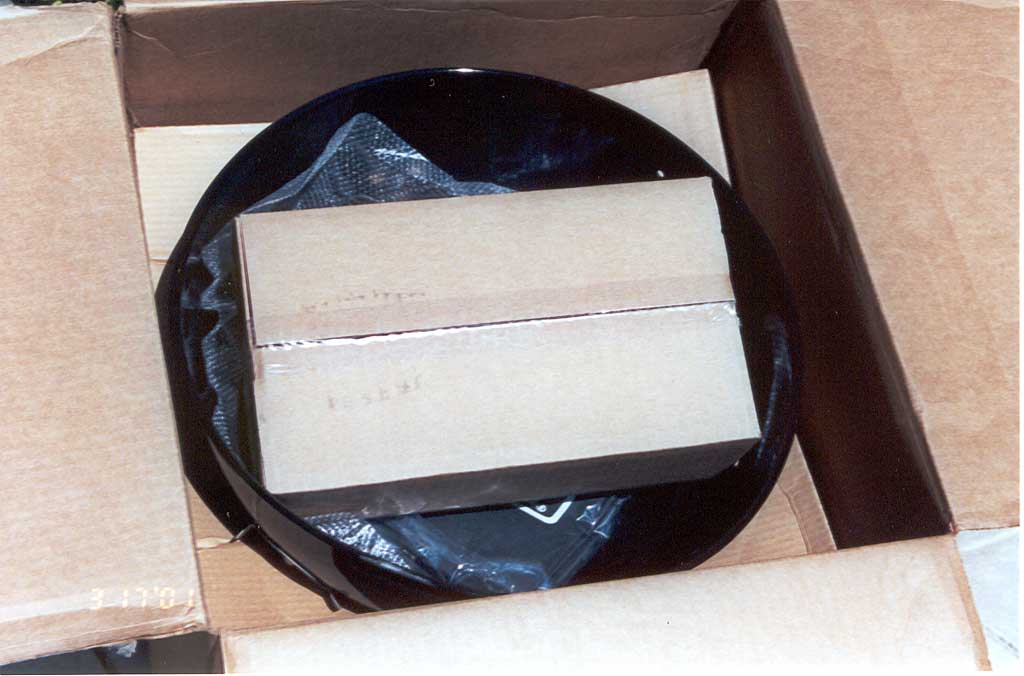
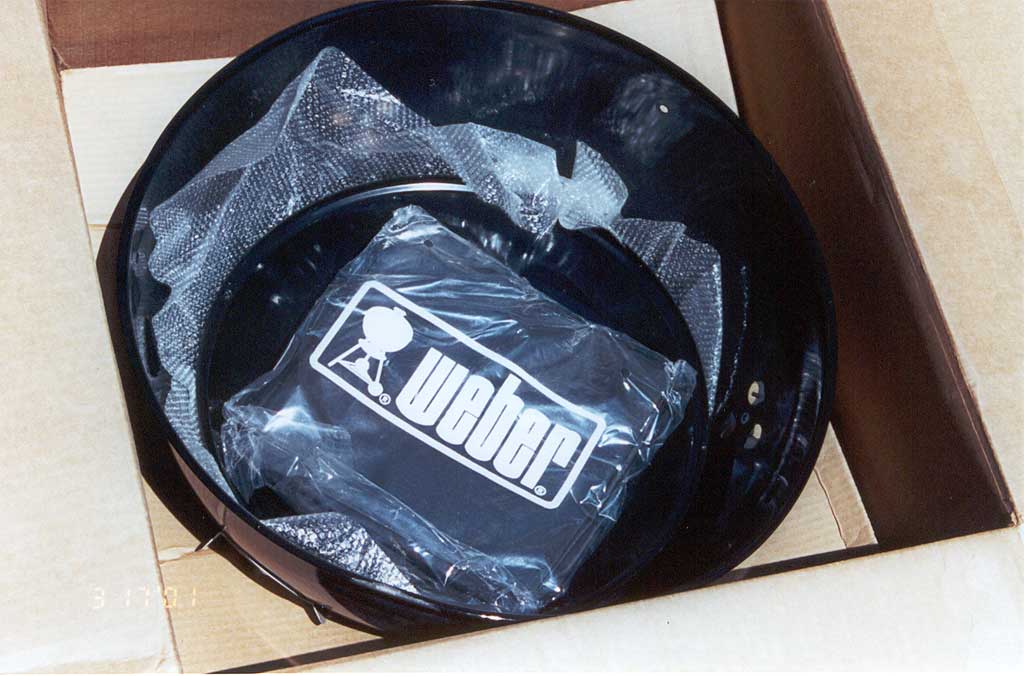
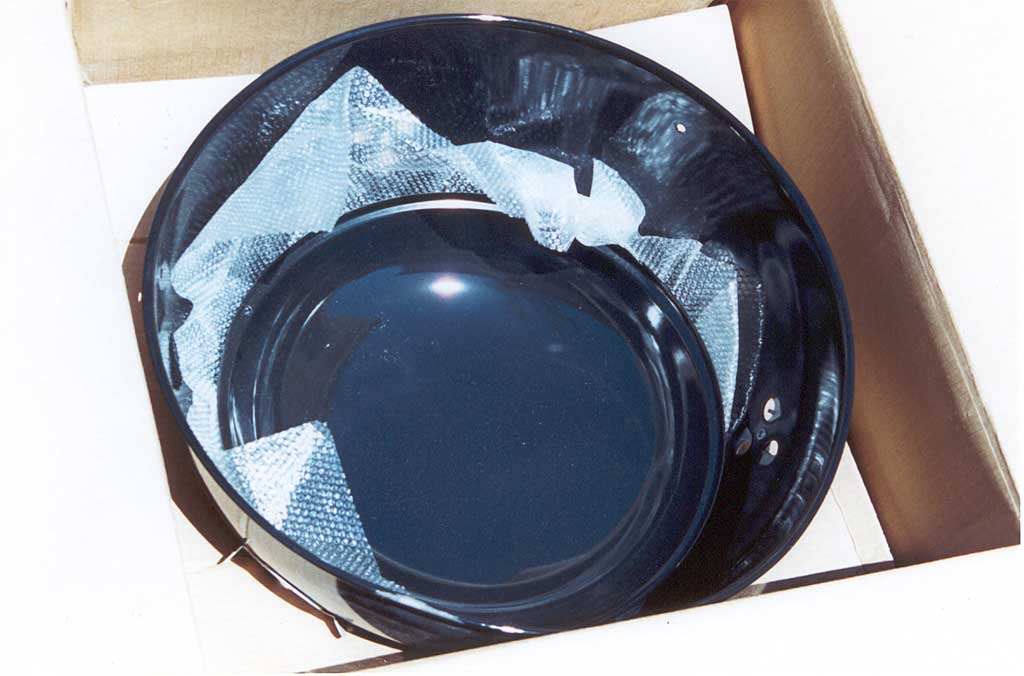
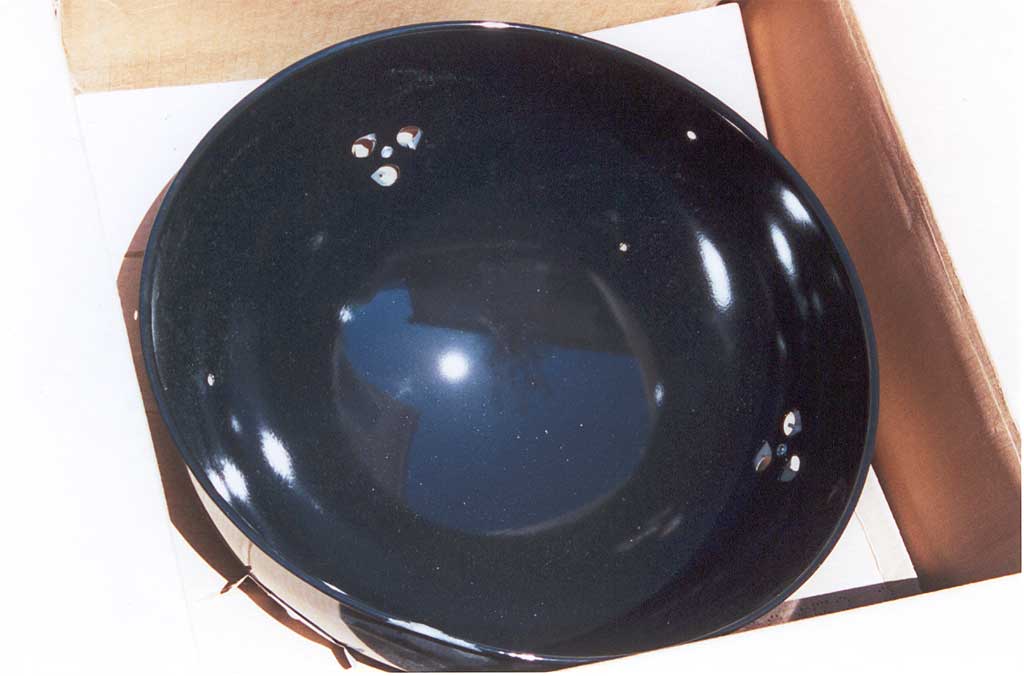
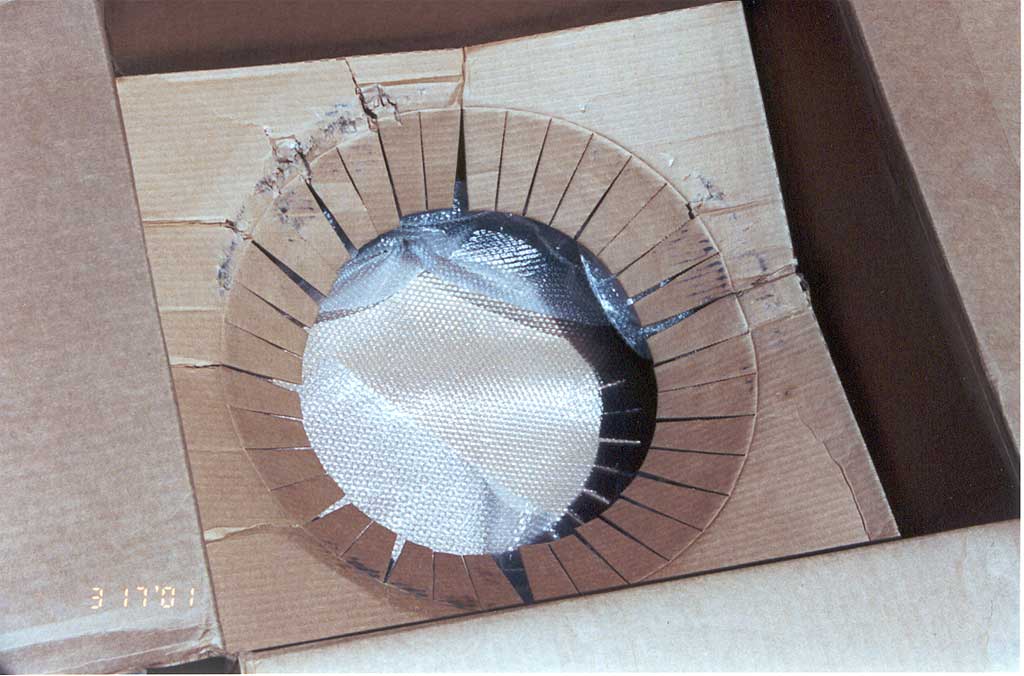
These photos show the contents of the first layer—the charcoal bowl layer. Photo 1 shows what you see when you first open the box. A small sealed cardboard box holds the owner’s manual, access door and a brown paper bag containing the legs, grate support brackets, nuts, bolts and washers.
Removing the hardware box reveals the vinyl cover, folded neatly into a square and sealed in plastic (Photo 2).
Removing the vinyl cover reveals the water pan resting in a sheet of protective bubble wrap (Photo 3).
With the water pan and bubble wrap removed, the charcoal bowl is now exposed and ready to be removed from the box (Photo 4).
Finally, a square cardboard insert separates and protects the charcoal bowl from the layer below. The hole in the middle of the insert has a series of cuts around the perimeter that conform to the shape of the charcoal bowl (Photo 5).
Layer 2: Lid
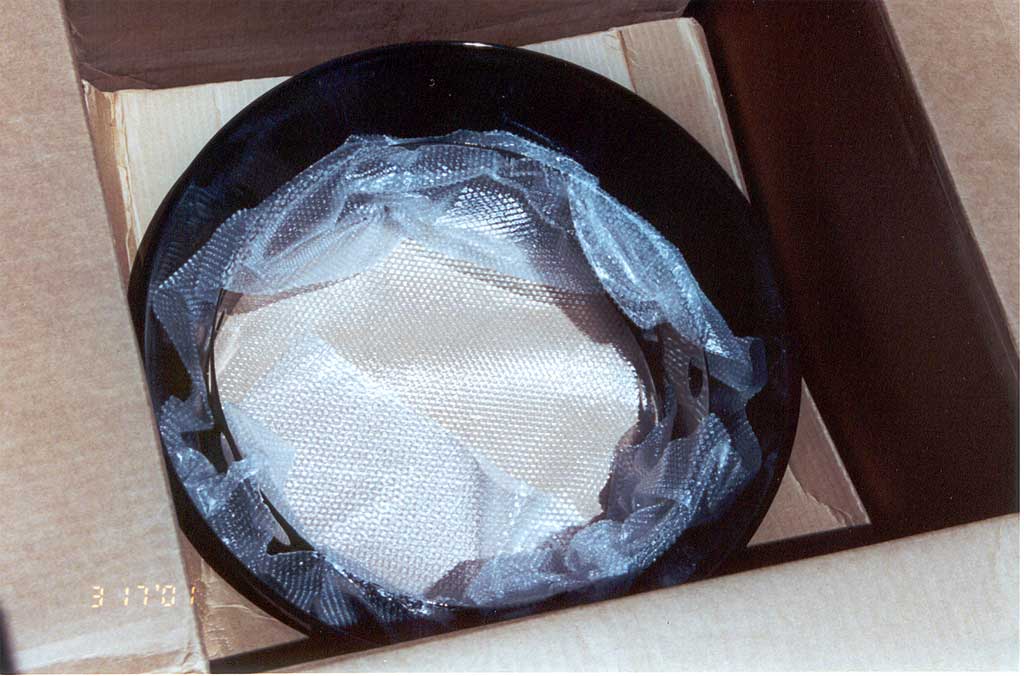
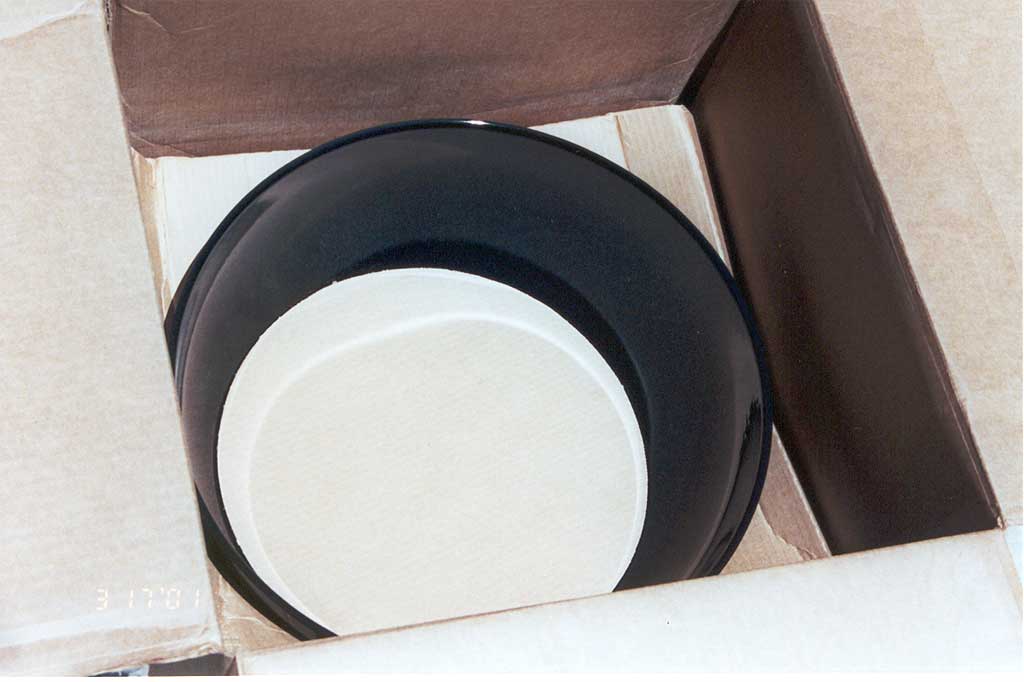
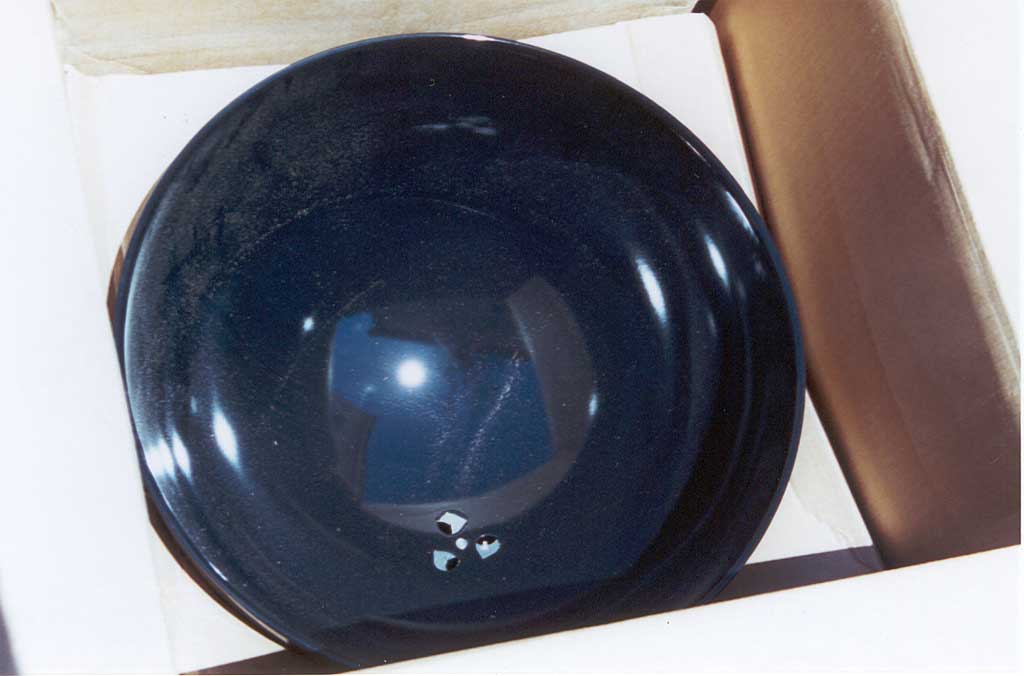
With the cardboard insert removed, we proceed to the second layer—the lid layer. This layer begins with the charcoal chamber wrapped in protective bubble wrap (Photo 1).
The charcoal chamber sits on a round disc of cardboard placed inside the lid (Photo 2).
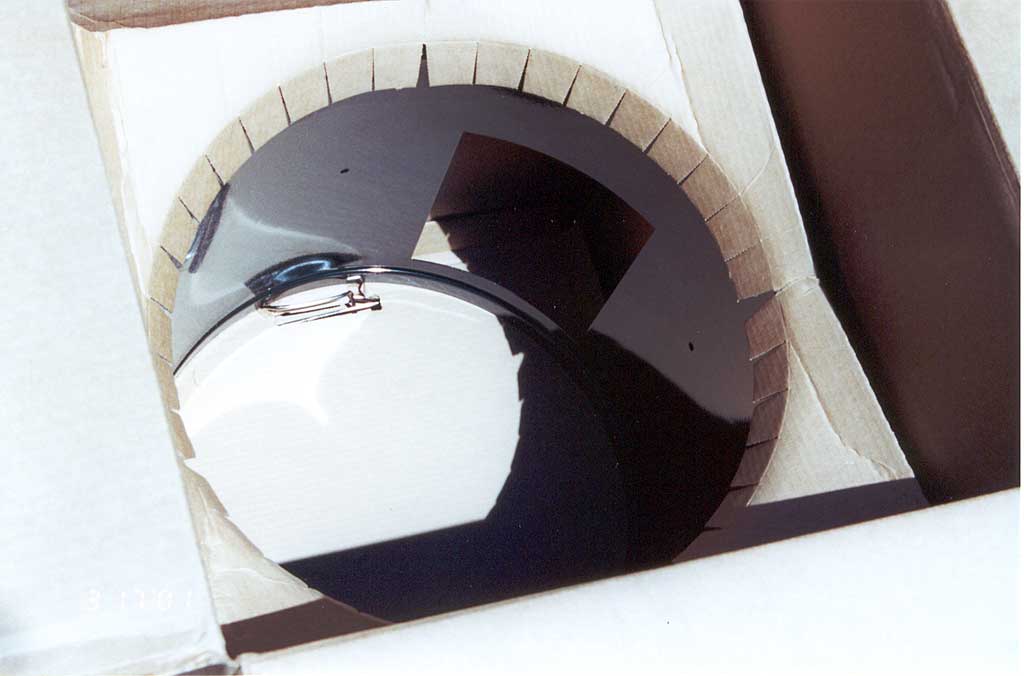
With the cardboard disc removed, the lid is now exposed and ready to be removed from the box (Photo 3).
This layer also has a square cardboard insert that separates the lid from the layer below. This insert has a larger hole in the middle and similar, but shorter, cuts around the perimeter (Photo 4).
Layer 3: Middle Cooking Section
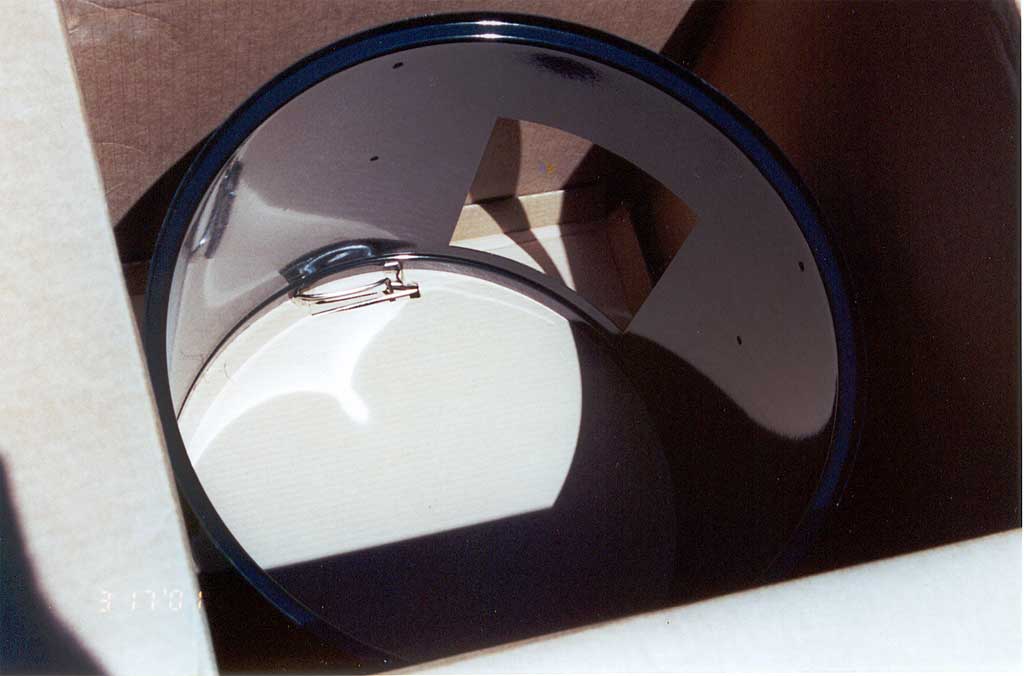
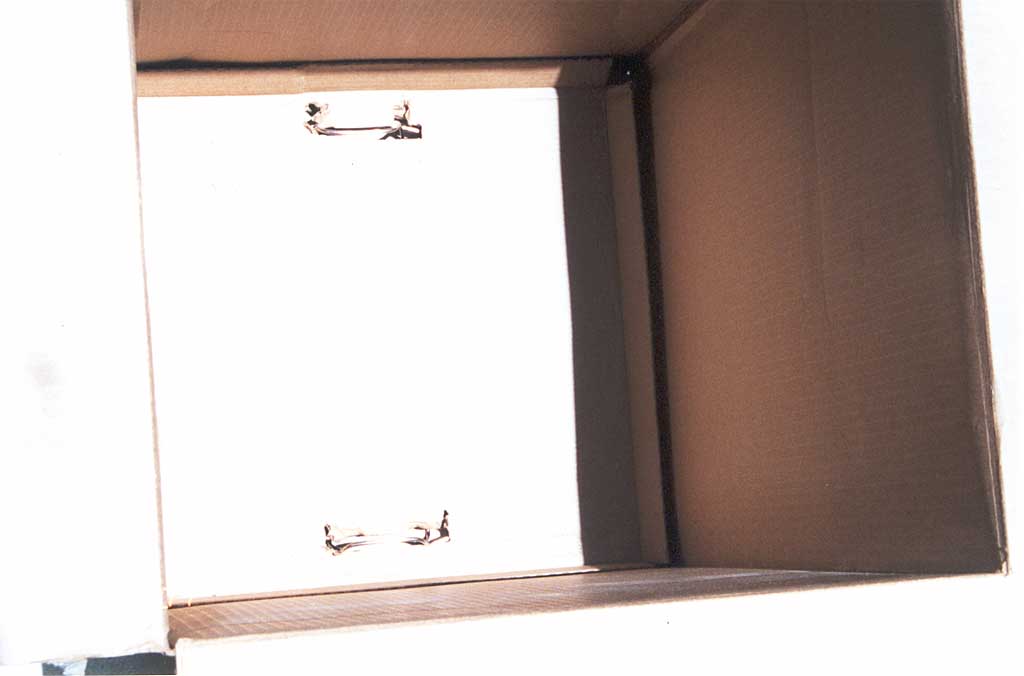
After removing the second cardboard insert, we proceed to the third layer—the middle cooking section layer. This layer contains only the middle cooking section sitting on what appears to be the bottom of the box. However, removing the section reveals that the top cooking grate handles are sticking out of a cardboard insert at the bottom of the box.
Layer 4: Grates
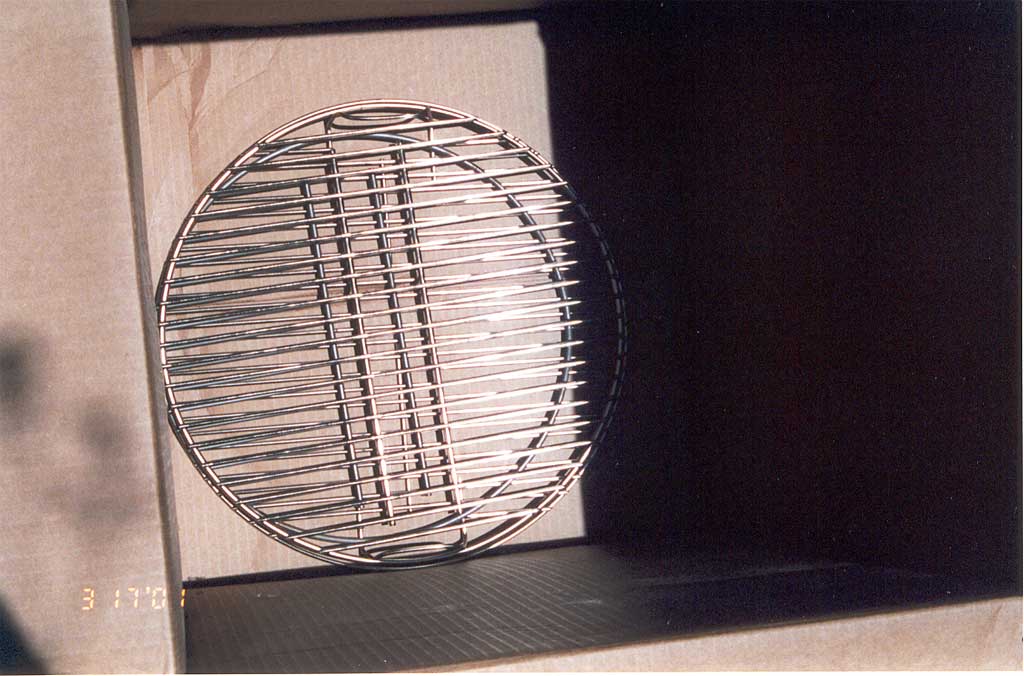
Removing the third cardboard insert reveals the fourth and final layer—the grates layer. The charcoal grate is placed on the top cooking grate, and the bottom cooking grate is slipped over the top grate’s handles, making a nice, neat package.
Packaging Improvements In 2009
Prior to 2009, WSM packaging left something to be desired. It was fine for shipping the product from the factory to retail stores, but it just couldn’t stand up to rigors of UPS or FedEx shipping. The materials weren’t strong enough and the packaging design wasn’t quite right. Sometimes the packing tape that sealed the box would fail. If the box was dropped during shipping, the stacked parts would compress into one another, tearing the cardboard separators between layers. The edges around the top of the box were susceptible to crushing, resulting in damage to the charcoal bowl.
Today, WSM packaging is more substantial and better designed to protect parts during shipping, even if the box is dropped or shipped on its side.
When buying a Weber Bullet from a retail store, examine the condition of the box before taking it home. If you see any crush marks or holes, open the box and check the contents.
When buying from an online retailer, check the condition of the box upon delivery and have the carrier note any major damage in their records. Check the contents carefully for any damaged or missing parts.
If you find any dents or damaged porcelain finish or you’re missing a part, your best bet is to contact Weber Customer Service directly at 800-446-1071. Weber is quick to replace any damaged or missing parts free of charge, and it’s much faster than contacting your online retailer or shipping company.
See Parts Troubleshooting for problem areas to look for as you unpack and assemble a new Weber Bullet.
Recycling The Packing Materials
Virtually all WSM packaging is recyclable or reusable. The cardboard, molded pulp separators, and paper can be recycled. The bubble wrap can be saved and reused when shipping other packages. The plastic bag covering the access door can be recycled in some communities.
The packaging does not indicate what percentage of the material is made from pre- or post-consumer recycled materials.