Chipotles are red, ripe (but sometimes green) jalapeño chile peppers that are dried at low temperature in the presence of smoke. The Scoville Heat Unit (SHU) rating of chipotles is said to be in the range of 5,000-20,000 SHUs, making them medium hot. Sometimes, other pepper varieties are sometimes used, but when most people talk about chipotles, they’re talking about dried jalapeños.
At the time of this writing, chipotle is a trendy flavor ingredient in all sorts of commercial products, including salad dressings, salsas, dipping sauces, flavored mayonnaise, and even a new variety of Tabasco sauce. You can make your own chipotles in the Weber Bullet, then grind them into a fine powder using a spice mill or coffee grinder. They add a smokey zing to any recipe.
Here are some photos from when I made chipotles using the WSM on July 4, 2003.
Prepping The Peppers
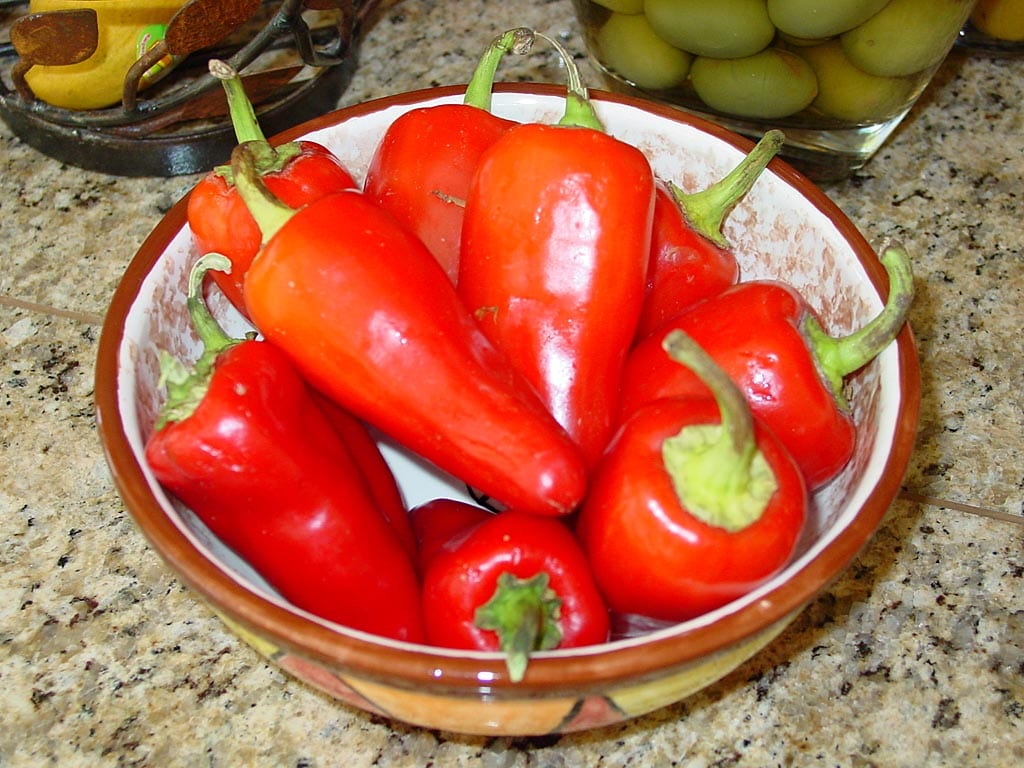 Buy fresh, red jalapeño peppers of good size and color. Rinse under cold water and pat dry.
Unless you have cast iron hands, now is the time to put on a pair of disposable food service gloves to protect your hands while cutting and handling the peppers. Also, do not touch your eyes, nose, or face while working with the peppers, or you’ll regret it!
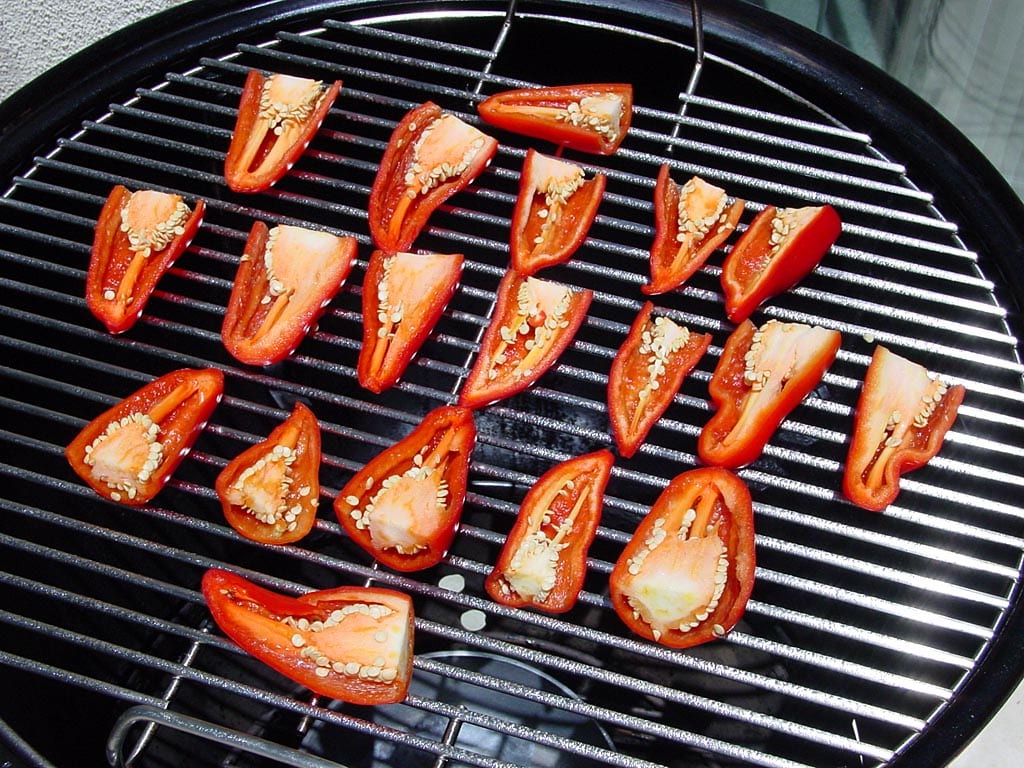
Cut off the top of each pepper to remove the stem, then cut in half lengthwise. This promotes faster drying in the cooker.
If you want to retain all of the pepper’s heat in the finished product, leave the ribs and seeds intact; if not, remove them now using a paring knife.
Spray the cooking grates with non-stick spray and arrange the peppers cut-side up.
Setting Up The WSM For Smoke Drying
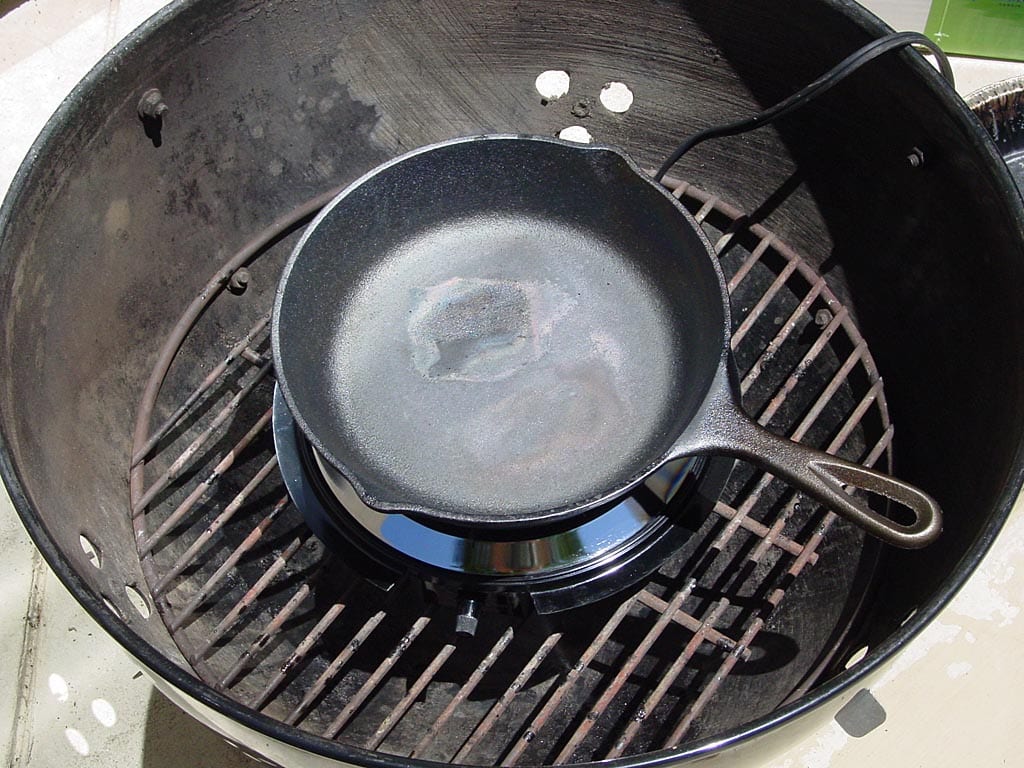
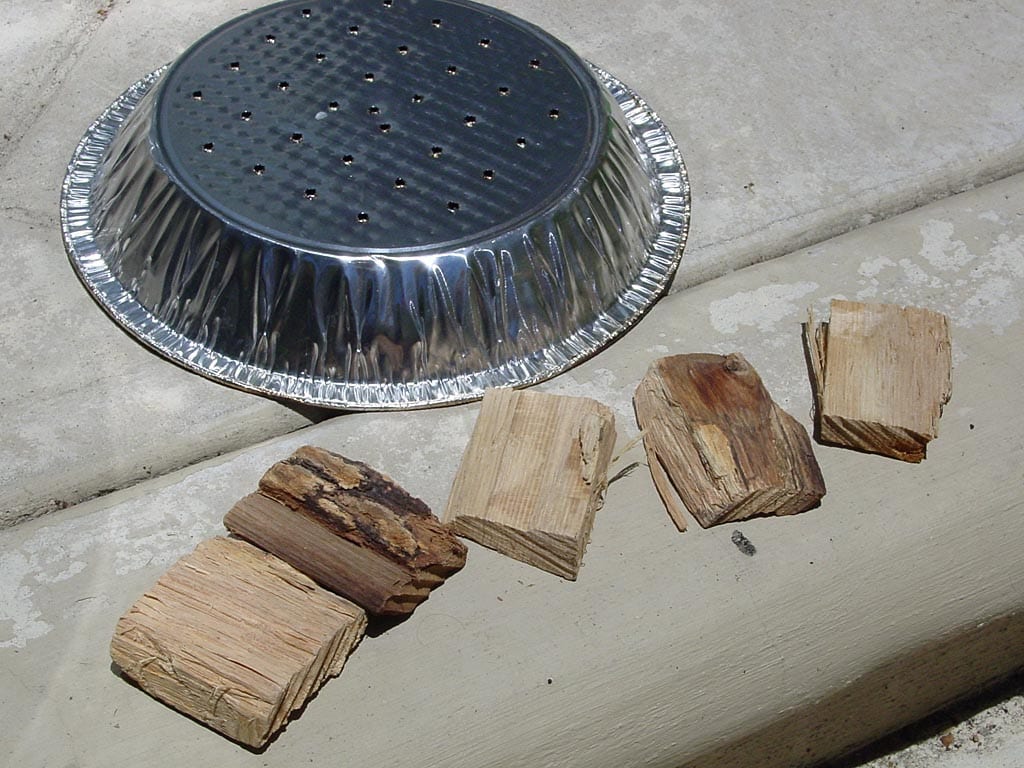
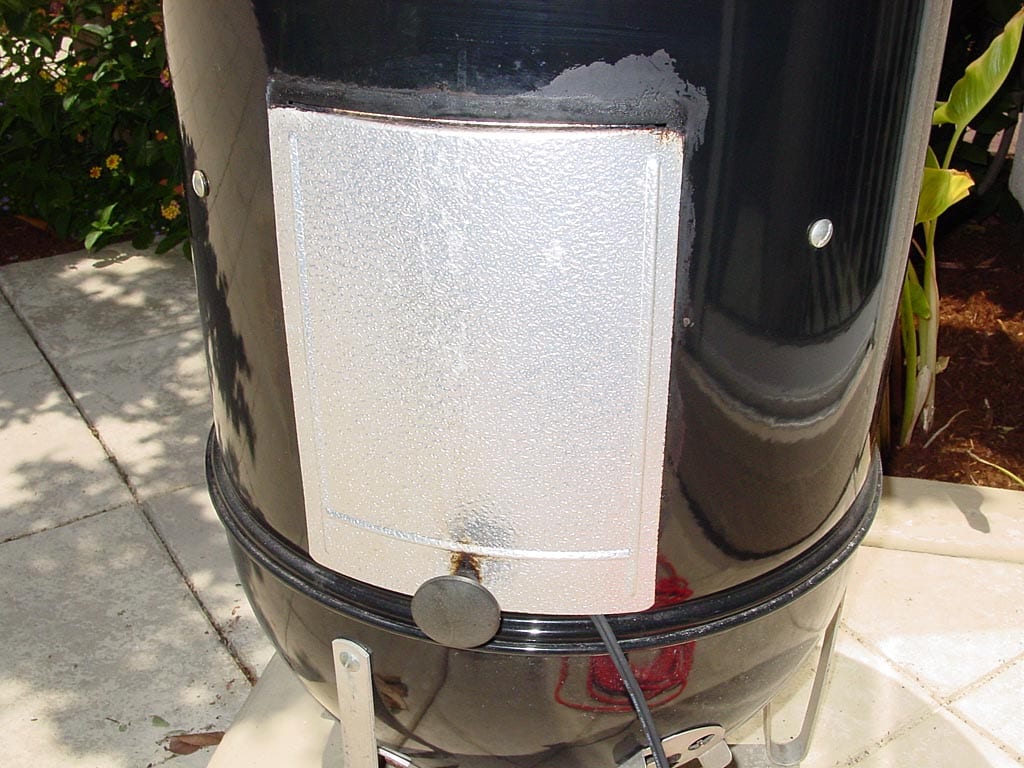
I smoked these jalapeños using the hot plate method described in the Smoke-Dried Tomatoes article.
Put an electric hot plate and 8″ cast iron skillet on the charcoal grate. Set the hot plate to HIGH. Put 1 small chunk of dry oak or pecan smoke wood in the skillet and place a perforated disposable pie tin over the skillet as a lid. The pie tin protects the skillet from drips and ensures that the wood does not burst into flames.
Put the middle cooking section in place and run the electrical cord out the access door opening. Fasten the door upside down so the cord exits at the bottom of the opening.
Do not put the water pan in the cooker. Put the peppers in the cooker and replace the WSM lid.
Set all vents, top and bottom, to 100% open. Plug in the hot plate and within a few minutes you’ll have smoke and 150-160°F temperatures in the cooker.
Depending on weather conditions, the amount of food being smoke-dried, and the heat output of the hot plate, you may need to adjust the hot plate to a lower setting to maintain the 150-160°F temperature that’s ideal for smoke drying peppers. If the cooker runs a bit hotter than this range, that’s OK. If it gets over 200°F, just unplug the hot plate, let the cooker cool down, then adjust the hot plate temperature setting.
About once an hour, open the access door and add a small chunk of smoke wood to the skillet. Five or six applications of smoke wood should be enough.
Smoke Drying The Jalapeños
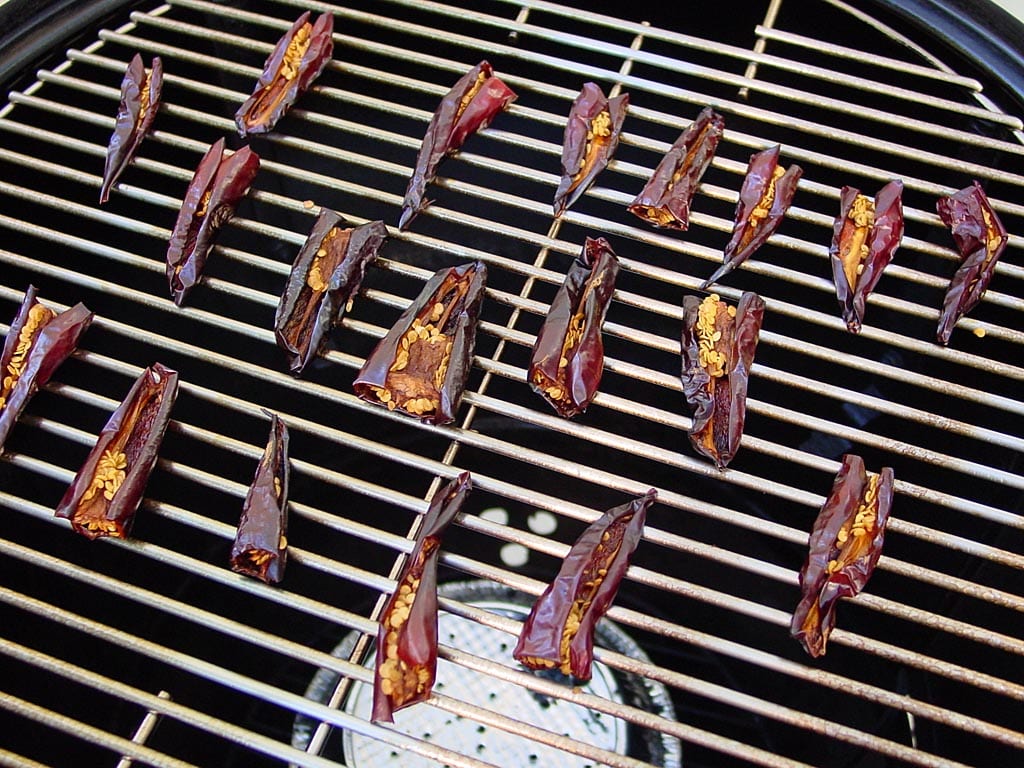
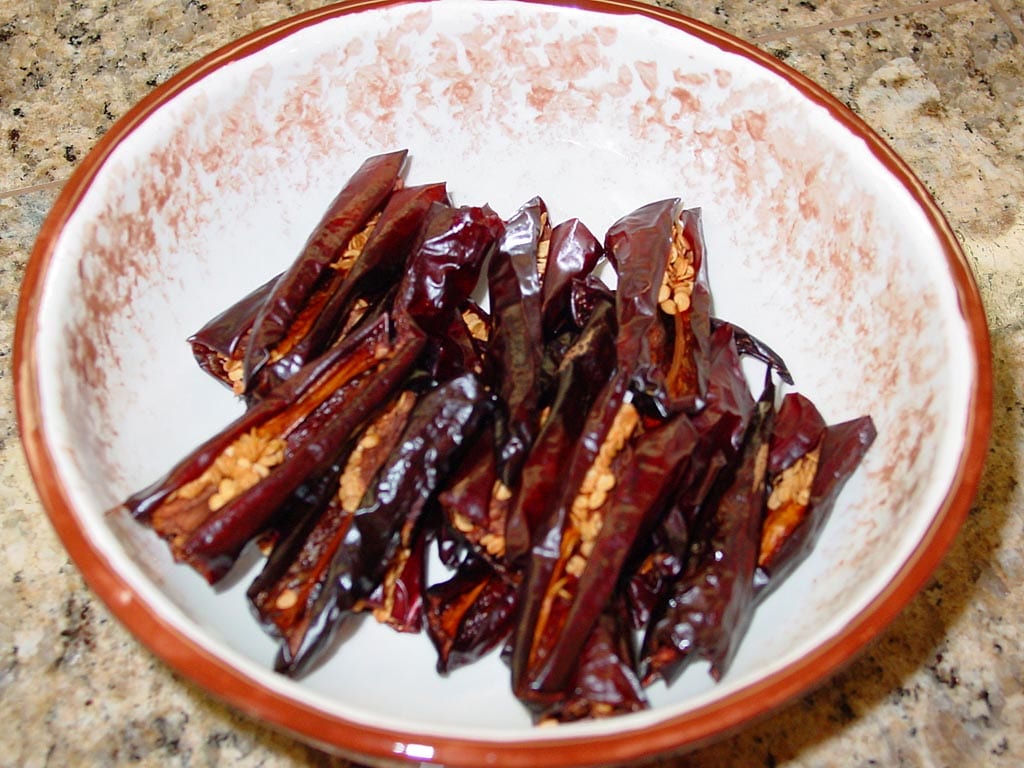
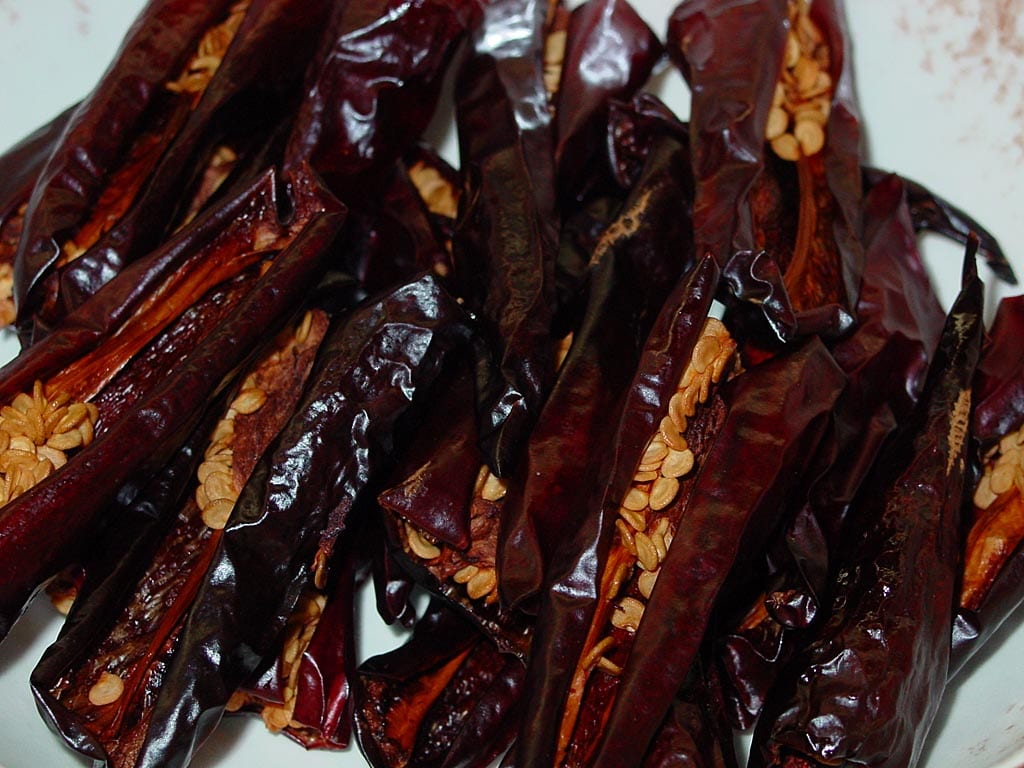
For these jalapeños, I used 5 small chunks of oak smoke wood, each one applied about an hour apart. After burning all 5 pieces, I just let the hot plate finish the drying process.
I started smoke drying the peppers at 12:35pm, and they were finished at 7:20pm.
After smoke drying, let the chipotles air-dry for 1-2 days to make sure they’re good and dry. Place in an air-tight container and store in a cool, dark location with the rest of your spices.
Click on the photos above for a larger view of the finished product.